
Reviewed · MANILA TOURS
Half-Day Manila City Tour
Manila’s story comes in layers: Spanish rule inside Intramuros, the memory of José Rizal at Rizal Park, and the heavy silence of the American Cemetery and Memorial. This four-hour guided tour links those places in one practical sweep, so you can get your bearings without wrestling with Manila’s transport system.
I like the small maximum group of six, which gives you a better chance to ask questions. I also like that entrance fees and hotel transfers are included, making the $107.70 price easier to judge. The main caution is traffic. One tour that should take half a day ran longer, and one guest felt the guide did not enter the sites to explain them.
Key points at a glance
- Intramuros in one focused visit: Casa Manila, San Agustin Church, and Fort Santiago cover Spanish colonial life, religion, and military power.
- A guide-led history lesson: Guides such as Jonas, Richard, Amy, Joan, Jen, and Vangie have been praised for clear explanations and strong local knowledge.
- Hotel pickup from selected areas: Transfers are included for hotels in Manila Bay or Makati.
- World War II remembrance: The American Cemetery and Memorial adds a solemn, moving stop beyond the usual city sights.
- Entrance fees are covered: You do not need to sort out admissions during this short tour.
- Traffic is part of the bargain: Manila’s roads can stretch a four-hour outing, so avoid scheduling a tight connection afterward.
Why this half-day route works in Manila
Manila is not a city you understand from a single viewpoint. Modern streets, Spanish walls, wartime scars, churches, parks, and the bay all sit within a broad urban spread. This tour helps you connect those pieces quickly.
I see it as an orientation tour rather than a leisurely day of exploration. You will stop at the main places, hear the historical links between them, and get a useful first look at Manila. You will not have hours to wander every courtyard or museum room, but you will cover more ground than you likely would alone in four hours.
The English-speaking guide is central to the experience. Strong guides have included Jonas, Richard, Amy, Joan, Jen, Vangie, Jezzy, and others praised for their humor, patience, and clear explanations. Richard, in particular, was described as eager to share his understanding of the city, while Jen was praised for being flexible and helpful beyond the formal tour.
That human element matters here. A church can look like an old building until someone explains its age. A fortress can seem like a wall and a gate until you learn how it fit into Manila’s colonial defenses. The tour’s best value comes from those connections.
A few more Manila day trips to weigh up
- Manila: Intramuros, Chinatown, and Old Manila Half-Day Tour
★ 4.8 · 475 reviews - Discover Tagaytay’s Countryside: Half-Day Sightseeing Tour
★ 4.5 · 207 reviews - From Manila: Tagaytay Countryside Wonders: A Half-Day Tour
★ 4.4 · 187 reviews
Casa Manila and the Spanish colonial home
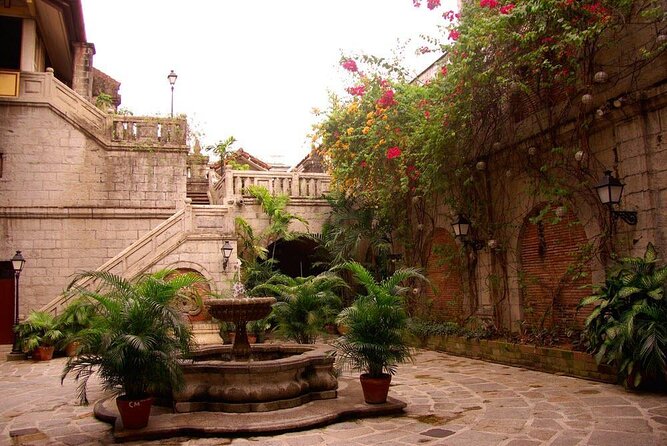
Casa Manila is your first close look at life during the Spanish colonial period. This house museum in Intramuros presents the furnishings and domestic setting associated with an upper-class colonial home.
The stop lasts about 30 minutes, with admission included. That is enough time to look through the rooms and listen to the guide explain how the home reflects social rank and colonial influence. You should expect a compact introduction rather than a long museum visit.
I like Casa Manila because it gives Intramuros a personal scale. Fortifications and churches tell you about institutions, but a house hints at how colonial power shaped everyday life. Details of furniture, room arrangement, and household customs help make the period easier to picture.
The drawback is time. Thirty minutes passes quickly, especially if the house is busy or you enjoy examining interiors. Stay close to the guide and ask questions while you can. The point is not to inspect every object at length, but to understand what kind of society the walled city once held.
Rizal Park and the memory of José Rizal
Rizal Park brings you into the national story of the Philippines. It was formerly known as Bagumbayan during the Spanish colonial era and is closely linked with José Rizal, the Filipino national hero.
The park offers a change of pace from the enclosed spaces of Intramuros. You get open public ground, a major historical setting, and a place where the country’s national identity is part of the conversation. One strong itinerary places this stop between the colonial sites and the later wartime memorial, giving the day a clear historical sequence.
I especially like this stop because it widens the tour beyond Spanish buildings. Manila is not only a colonial relic. Rizal Park points toward Filipino resistance, national pride, and the long process of defining the country on its own terms.
The supplied schedule does not give a separate time for Rizal Park, so your actual stop may depend on traffic and the guide’s pacing. If this is a place you particularly want to see, tell the guide early. You will get more from it if you know why Rizal matters before arriving.
San Agustin Church, the oldest church in the country
San Agustin Church is one of the tour’s most important stops. Completed in 1607, it is described as the oldest church in the Philippines and remains under the care of the Order of St. Augustine.
You have about 30 minutes here, and admission is included. The church gives you a direct sense of the Spanish Catholic presence that shaped Manila for centuries. Its age alone makes it worth seeing, but the guide’s explanation is what helps place it in the wider story of Intramuros.
I would pay attention to the difference between seeing a church as a place of worship and seeing it as a historical institution. This building survived through long changes in government, society, and war. That makes the visit more meaningful than a quick photograph from outside.
As with Casa Manila, half an hour is a brisk visit. If religious art or architecture matters greatly to you, you may want more time than this tour allows. The advantage is that you see San Agustin as part of a larger route instead of spending your entire morning on one site.
Same island, a completely different kind of day:
- Intramuros, Manila: Historical Bamboo Bike Tour
★ 4.8 · 583 reviews - Experience Intramuros with Bamboo Bicycle – Ecotours
★ 5.0 · 508 reviews - Manila: Old & New 4-Hour City Tour
★ 4.5 · 458 reviews - Manila Food Tour: Introduction to Philippine Street Food
★ 5.0 · 417 reviews
Walking through Intramuros, Manila’s Walled City
Intramuros is the heart of the colonial portion of the tour. The name means within the walls, and the district once served as the seat of Spanish government and political power in Manila.
The itinerary gives roughly 30 minutes to the area itself, apart from the dedicated stops at Casa Manila, San Agustin Church, and Fort Santiago. That can mean a short walk, exterior views, and a chance to understand how the walled district was organized.
This is where the route’s pieces begin to fit. Casa Manila shows colonial domestic life. San Agustin shows the role of the church. Intramuros provides the physical setting where government, religion, and military defense were concentrated.
I like having a guide here because the walls and streets do not explain themselves. A guide can point out why the district mattered and help you separate older colonial features from later changes. The small group should make it easier to hear and stay with the guide.
One practical point deserves attention. A critical account said the guide remained on the vehicle or outside some sites rather than walking in and explaining them. That is not how the strongest accounts describe the tour, but it is a fair question to ask at the start: Will you accompany me inside each included site? The answer can affect the experience more than any brochure detail.
Fort Santiago and the city’s defensive past
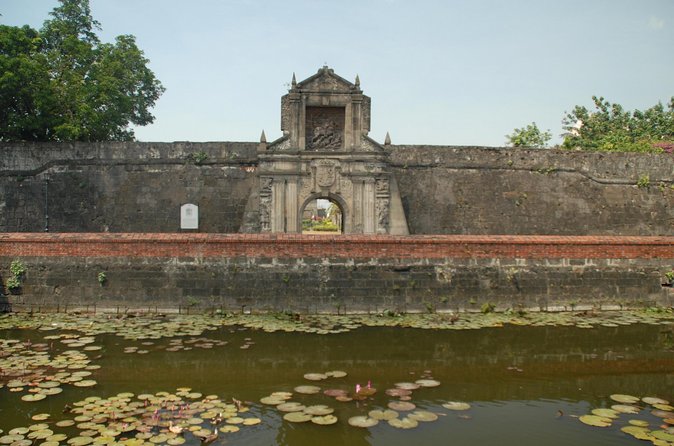
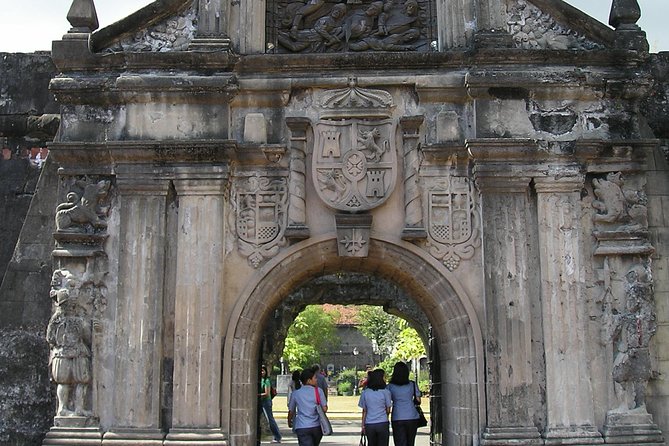
Fort Santiago is the military anchor of the Intramuros visit. It was first built by Spanish navigator and governor Miguel López de Legazpi for the newly established city of Manila and became part of the city’s defensive walls.
You receive about 30 minutes here, with admission included. The fort gives you a different angle on Spanish rule. Instead of a home or church, you are looking at a place built to control access and protect the colonial capital.
I find this stop useful because it gives physical shape to Manila’s political past. The fort was not an isolated monument. It was part of the wider wall system and the government center inside Intramuros.
Again, the schedule is tight. You will get an introduction and a focused look, but not the leisurely exploration that a dedicated Fort Santiago visit would permit. Ask the guide to point out the parts most closely tied to Manila’s colonial and wartime story.
Manila Bay and the changing city outside the walls
Manila Bay is included as a stop along the route. It is a natural harbor and serves the Port of Manila, so it offers a broad view of the city’s connection to trade, shipping, and the sea.
The information provided does not specify a separate visit length or exactly how much time you will spend there. Think of it as a brief viewpoint or drive-by stop unless your guide confirms otherwise.
I like its place in the route. After the compact streets and walls of Intramuros, the bay gives you a wider sense of Manila. It reminds you that the city’s story is tied not only to colonial buildings but also to its port and coastal setting.
Do not make the bay your only reason for booking. This is a short city tour, not a dedicated sunset or waterfront outing. Its value is in the contrast it adds to the historic core.
The American Cemetery and Memorial
The American Cemetery and Memorial is the tour’s World War II stop and, for some people, its most affecting one. It honors veterans of the war and shifts the focus from Spanish colonial rule to the twentieth-century conflict that left such a deep mark on the Philippines.
You are scheduled for about 30 minutes. That is enough for a respectful visit and a basic explanation, though you should not expect an extended cemetery tour. The setting is very different from Intramuros: quieter, more formal, and centered on remembrance.
I would not skip this stop simply because it lies outside the Spanish colonial story. It helps you understand that Manila’s past did not end with the colonial period. The transition from Rizal Park and Intramuros to the cemetery gives the tour a useful sequence: national identity, colonial rule, then wartime memory.
The stop may also be emotionally heavier than the others. If you prefer a tour made only of architecture and city views, keep that in mind. For me, the cemetery adds seriousness and balance.
How the guide affects the experience
The guide can make or break this tour. The strongest guides appear to be warm, punctual, and eager to explain rather than simply point out buildings. Jonas was praised for his enthusiasm and historical detail. Joan was noted for clear communication and professionalism, while Amy was praised for answering questions during a one-on-one experience.
Jezzy was singled out for making the tour memorable, and Vangie was described as both informed and fun while walking through the city. Richard and driver Frances were praised for working as a highly professional team.
Those details tell you what to look for. A good guide should explain the connection between the places, not just announce their names. You should feel comfortable asking why a site matters, how Spanish rule affected Manila, and how World War II changed the city.
The group limit of six is a real advantage. You are less likely to be lost in a large crowd, and the guide can respond to individual interests. Still, the actual quality depends on the assigned guide, and you should politely confirm that the guide will enter the sites with you.
Four hours, hotel pickup, and Manila traffic
Pickup is offered from hotels in the Manila Bay or Makati areas. That removes one of the most annoying parts of a short Manila visit: figuring out how to reach a meeting point through unfamiliar streets.
The pickup time is provided at least one day before the tour. You need to be ready at your hotel entrance, and the stated waiting limit is 30 minutes from your agreed pickup time. If you do not appear within that window, it is treated as a no-show.
The tour lasts approximately four hours, but traffic can stretch the day. One account specifically noted that city traffic made the outing longer than expected. I would not schedule an airport transfer, ferry, business appointment, or expensive timed attraction immediately afterward.
The tour requires a moderate level of physical fitness. You will get in and out of the vehicle and walk around historic areas and sites. Children must be accompanied by an adult, and the child rate applies only when sharing with two paying adults.
Food and drinks are not included. For a half-day outing, that is easy enough to manage, but eat before pickup if you tend to get hungry. The key convenience is transportation, not refreshments.
Is $107.70 a fair price?
At $107.70 per person, this is not the cheapest way to see Manila. Its value comes from what is bundled into a short schedule: hotel pickup in selected districts, a driver, an English-speaking guide, entrance fees, and a small group capped at six.
If you tried to arrange each stop yourself, you would need to plan transport between Manila Bay, Makati, Intramuros, Rizal Park, Fort Santiago, and the American Cemetery. Traffic and unfamiliar routes could eat up much of your available time. For a first visit, paying for a coordinated route can be sensible.
The price is harder to justify if you are staying outside the pickup areas, already know Manila well, or prefer to spend a full morning at one or two sites. You may also find the value reduced if your guide does not accompany you inside the attractions.
I would judge the price by your time in the city. If you have only a day or two, the tour gives you a fast historical framework. If you have several days, you might prefer independent visits with longer stays at Intramuros and Fort Santiago.
Who should book this tour?
I would recommend it most strongly for a first visit to Manila, especially if you want historical context without handling local transport alone. It suits you if you enjoy moving between several major sites and want a guide who can answer questions as the day unfolds.
It is also a good fit if you are staying in Manila Bay or Makati and value pickup. The small group makes it more personal than a large coach tour, and the included admissions keep the day simple.
I would hesitate if you want deep time inside each museum, church, or fort. The half-day format means quick visits. I would also think twice if you dislike fixed schedules or have a hard deadline afterward because traffic is unpredictable.
Before the vehicle leaves, ask two practical questions: How much time will we have inside each stop, and will you come in with us to explain the sites? That small conversation can help you get the experience you want.
FAQ
How long does the Manila City Tour last?
The tour lasts approximately four hours.
What sites are included?
The route includes Casa Manila, Rizal Park, San Agustin Church, Intramuros, Manila Bay, Fort Santiago, and the Manila American Cemetery and Memorial.
Are entrance fees included?
Yes. Entrance fees to all listed sites are included.
Is hotel pickup available?
Yes. Hotel pickup is provided for hotels located in the Manila Bay or Makati areas.
How many people can join the tour?
The tour has a maximum group size of six people.
What happens if bad weather cancels the tour?
The experience requires good weather. If poor weather causes cancellation, you will be offered another date or a full refund. The booking itself is otherwise non-refundable and cannot be changed for any reason.
My verdict on the Half-Day Manila City Tour
I would book this tour if I wanted a fast, guided introduction to Manila’s major historical chapters. The route is well chosen: colonial home, church, walled city, fortress, national park, bay, and World War II memorial.
The best reason to book is the guide. Names such as Jonas, Richard, Joan, Jen, Vangie, Amy, and Jezzy appear repeatedly in the strongest experiences, with praise for clear English, punctuality, humor, and real enthusiasm for Manila. The main risk is uneven site commentary, so confirm that your guide will walk inside the attractions with you.
For a first-time visit, the included transfers and admissions make the price reasonable, especially when your time is short. Just leave room in your day for traffic, wear comfortable shoes, and treat this as a well-organized introduction rather than a slow, exhaustive tour.
Just added around Manila
- Makati Street food walking tour with Dinner★ 5.0 · 3 reviews
- Philippines Intro 3 days 2 nights Tour Best of Manila and Beyond★ 5.0 · 3 reviews
- MANILA: HISTORICAL KALESA RIDE TOUR EXPERIENCE IN INTRAMUROS★ 4.0 · 3 reviews
- Bites and Sights: Tagaytay Food and Nature Excursion from Manila★ 4.0 · 3 reviews
- Authentic Manila Chinatown Food Tour Exploration★ 5.0 · 3 reviews
- 4 Day Banaue Ifugao Rice Villages Private tour Trekking★ 4.5 · 3 reviews
- Embark on a 7-Day Banaue-Sagada Adventure of a Lifetime★ 5.0 · 3 reviews
- From Manila: Philippines Private Tour Guide★ 4.1 · 3 reviews
Manila Tours, compared.

Intramuros, Manila: Historical Bamboo Bike Tour
Read our review →
Experience Intramuros with Bamboo Bicycle – Ecotours
Read our review →
Manila: Intramuros, Chinatown, and Old Manila Half-Day Tour
Read our review →
Manila Food Tour: Introduction to Philippine Street Food
Read our review →
Spectacular Manila to Tagaytay: Full-Day Sightseeing Tour
Read our review →
Makati Nightlife: VIP Access to Clubs, Rooftops & Go-Go Bars
Read our review →
Discover Tagaytay’s Countryside: Half-Day Sightseeing Tour
Read our review →
From Manila: Tagaytay Countryside Wonders: A Half-Day Tour
Read our review →Browse the lists this tour appears in