
Reviewed · MANILA TOURS
2 Days Private Bataan Tour with Corregidor
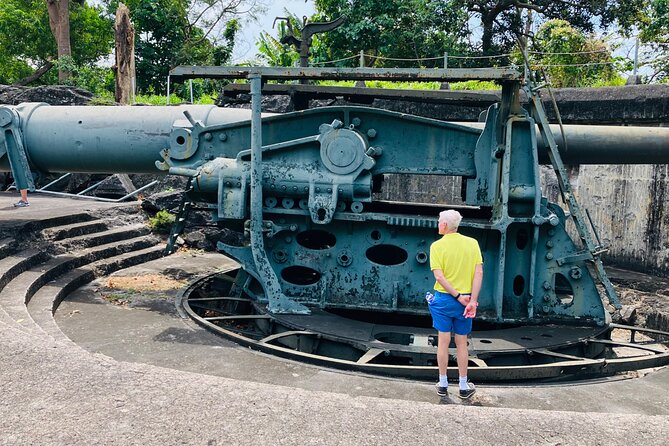
The most powerful part of this two-day trip is the link between places that are often visited separately. You begin at Capas National Shrine, where Filipino and American prisoners were held after Bataan, then trace the Death March route before reaching Corregidor, the island that guarded Manila Bay.
I like the private format, since your guide and driver can give the day a personal pace. I also like the strong history focus, especially the chance to visit the small Bamban Museum and hear extended battlefield discussions on Corregidor. The main drawback is the price: at $1,150 per person, this is a major outlay for two days, and the schedule begins early.
Key points
- Capas and San Fernando connect the Death March story: You see both the former prison camp and the railway station where prisoners were loaded for transport.
- Bamban Museum adds a personal collection: This private World War II museum is maintained by a war historian and displays wartime artifacts.
- Corregidor gets a full seven-hour visit: A boat ride, island bus tour, and detailed battlefield discussion form the centerpiece of the second day.
- The tour is fully private: Only your group takes part, with a private car, guide, and driver.
- Guide JB Quemado can adjust the visit: The tour is suited to specific interests, and one guest had requested particular sites.
- You need two early starts: The tour begins at 7:00 a.m., and Corregidor requires reaching the pier by that time.
Why this Bataan and Corregidor route matters
If you want more than a quick look at old guns and ruined buildings, this is the right kind of route. The sites tell a connected story: the defense of Bataan, the surrender, the forced march of prisoners, the prison camp at Capas, and the last defense of Corregidor.
That connection is the tour’s greatest strength. You are not simply ticking off memorials. You move from military events to the human cost of defeat, then spend a full day on the island where the campaign continued.
I would especially recommend this trip if your interest is personal. One person who took the tour had a grandfather who walked the Death March, and the route carried a clear family meaning. You do not need that family connection to find the sites moving, but it helps to know that this is a serious history tour, not a light sightseeing outing.
The schedule is private, so you are not tied to the preferences of a large group. Guide JB Quemado is named as the guide for the overall trip, and the tour is designed around discussion as much as transport. That matters at places where a marker alone cannot explain what happened.
A few more Manila day trips to weigh up
- From Manila: 2-Day Buscalan Tour with Apo Whang-od
★ 3.6 · 29 reviews - Cebu: 2-Day Private Tour Moalboal and Oslob
★ 4.7 · 4 reviews - 2 Days SSI Advanced Open Water Course in Boracay
★ 5.0 · 3 reviews
Day one at Capas National Shrine and Camp O’Donnell
The first stop is Capas National Shrine, also known as Camp O’Donnell. It was the former concentration camp for Filipino and American prisoners of war after the Battle of Bataan.
You have about an hour here, with admission included. The value of the stop comes from its role in the wider Death March story. Bataan is often remembered as a battlefield, but Capas makes you think about what happened after the surrender, when prisoners were forced onward in terrible conditions.
Give yourself time to consider the change in setting. The tour begins with the failed defense and ends at a place connected to captivity and death. That makes the first stop more than a memorial photo opportunity.
The one-hour visit is enough for a focused introduction, but it is not a long independent study session. If you want extended time at every memorial, ask about the schedule before booking. The route covers several major locations in only two days.
A private World War II museum in Bamban
Bamban Museum of History is a private World War II museum maintained by a war historian. You spend about an hour there, and entry is free, though donations are appreciated.
This may be the most personal stop of the first day. Large memorials can give you scale and solemnity, but a private museum can show the objects and details that make wartime history feel close. The collection includes World War II artifacts, and the museum adds another voice to the better-known official sites.
I like the fact that this stop is not treated as a grand public attraction. It has a more individual character, and that can suit a history-minded visitor who wants to ask questions and examine objects rather than simply follow a signposted path.
The donation note is worth remembering. Admission is free, but bringing some cash for a contribution is a thoughtful gesture. No donation amount is specified, so you should not treat it as a required fee.
Bataan’s surrender site and the Death March marker
Next comes the Bataan World War II Museum, identified as the surrender site of American General Edward King to Japanese forces on April 9, 1945. The visit lasts about an hour, and admission is included.
This stop gives the tour its clearest military turning point. You can place the surrender within the sequence of the campaign, then move to the nearby Zero Kilometer Death March Marker, described as the march’s starting point.
The marker visit is shorter, about 30 minutes, and admission is free. Its importance is not based on the size of the site. It marks the beginning of the route that links the battlefield to the suffering at Capas.
Here, your guide’s explanation matters a great deal. A marker can tell you where you are, but it cannot by itself explain the scale of the surrender or why the march became such a lasting part of Philippine and American memory. The tour promises extensive battlefield discussion, which is one reason this private arrangement may suit you better than a basic transfer between sites.
Same island, a completely different kind of day:
- Intramuros, Manila: Historical Bamboo Bike Tour
★ 4.8 · 583 reviews - Experience Intramuros with Bamboo Bicycle – Ecotours
★ 5.0 · 508 reviews - Manila: Intramuros, Chinatown, and Old Manila Half-Day Tour
★ 4.8 · 475 reviews - Manila: Old & New 4-Hour City Tour
★ 4.5 · 458 reviews
Day two and the boat to Corregidor
The second day begins early. You are instructed to go to the pier at 7:00 a.m. for a boat ride of about 20 minutes to Corregidor Island.
Corregidor is the centerpiece of the trip. Once on the island, you use a tour bus to get around and spend about seven hours there. The island admission is listed as free, but the boat and island transport are part of the planned visit rather than something you arrange independently.
Seven hours is a useful amount of time for a site with several military locations and a large amount of wartime context. You are not being asked to squeeze the island into a quick morning visit. The length also gives JB time to discuss battle movements and explain what you are seeing.
One of the strongest details from the trip is that a private group had Corregidor nearly to itself and received what felt like a VIP-style visit. You should not assume the same conditions every day, but the private format does give you a better chance of asking questions and keeping the discussion focused on your interests.
The practical tradeoff is the early start. You need to reach the pier by 7:00 a.m., and the tour is dependent on boat operations and weather. Pack patience into the morning, since the island portion is the day’s main commitment.
What makes Corregidor different
Corregidor is not just another memorial stop. It is an island battlefield, and the setting helps explain why it mattered in the defense of Manila Bay.
The tour uses a bus to move around the island, so you are not expected to cover it all on foot. That is useful because the visit lasts seven hours and includes extended battlefield discussion. You can focus on the sites and the story instead of spending the day working out transport.
I would book Corregidor as the main reason for choosing this tour. The first day gives you the human and military background. The second day brings you to the island where the defense continued, creating a much fuller picture than a single-site visit.
The listing does not give a detailed list of every Corregidor stop, so you should ask JB or the provider what the island route includes if you have a particular ruin, tunnel, memorial, or battery in mind. The tour is described as flexible for specific interests, and that is worth using before departure.
Mount Samat and the final battle of Bataan
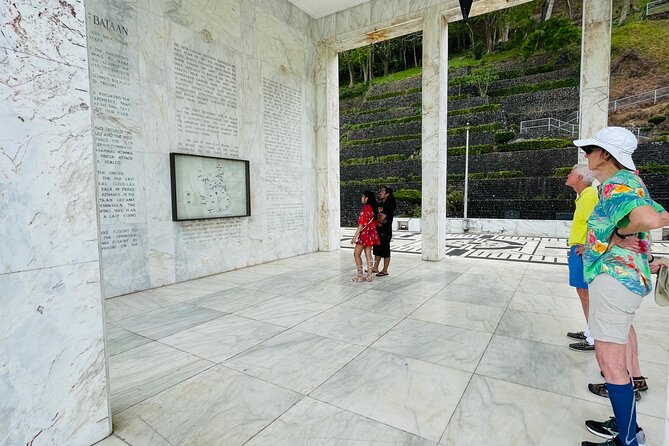
Mount Samat National Shrine, also called Dambana ng Kagitingan, is scheduled for about two hours. It marks the mountain where the final battle of Bataan took place before the American surrender, according to the tour details.
This is the stop where the physical setting and the military story come together. A mountain position gives you a better sense of the defensive ground than a museum display can provide. The two-hour visit also gives the guide room to explain why the site mattered rather than rushing you through.
Admission is included. You should also note that Mount Samat appears in the second day schedule after Corregidor, even though the wider route includes locations around Bataan and San Fernando. Since the order may affect the day’s timing, confirm the exact pickup, return, and stop sequence before you go.
That is not a reason to reject the tour. It is simply a reason to ask clear questions. A private trip is most useful when you know how the hours will be allocated.
San Fernando and the prison transport story
San Fernando is a short stop of about 30 minutes. The site is the train station where prisoners of war were loaded before being taken to the concentration camp.
This stop works best when you understand its place in the route. Capas shows the prison camp. The Zero Kilometer marker identifies the beginning of the Death March. San Fernando shows the next stage, when prisoners were loaded for transport.
Half an hour is brief, but the stop is still valuable because it fills a gap between the march and the camp. It also shows why this tour is built for people who want the full sequence rather than one famous monument.
Admission is free. Since the stop is short, keep your expectations focused: you are there for the historical link and the guide’s explanation, not a long museum visit.
Private transport and the pace of the trip
The tour uses a private car with a guide and driver. Only your group participates, which is a major advantage for a subject that can raise personal questions and strong emotions.
You can ask JB to spend more time on the parts that matter most to you. One person specifically had requested certain sites and was accommodated. That does not mean every request can be guaranteed, but it shows how the private setup can work in practice.
The pace is still demanding. Day one includes four stops, and day two combines a pier departure, a seven-hour island visit, Mount Samat, and San Fernando. You should be comfortable with early mornings and long touring days.
The supplied details say most people can participate, but they do not provide a detailed accessibility description. If you need specific assistance, ask before booking. The same applies to meals, hotel arrangements, and exact pickup details, which are not specified here.
Is $1,150 per person a fair price?
At $1,150 per person, this is expensive. You should not compare it with a simple day trip or a shared sightseeing bus.
The price buys a private two-day structure, a car, driver, guide, the Corregidor boat plan, island transport, and admission at several included sites. It also buys time with a guide who can discuss the battlefields at length and adjust the focus to your interests.
That can be good value for a couple, family, or small group with a serious interest in the war. Sharing the cost among several people may also make the private format more reasonable, though the quoted price is per person and no group discount is provided.
I would not choose it if you only want a general introduction to Philippine history. You would be paying for a level of focus and personal attention that you might not use. I would consider it more fairly priced if Corregidor is a must-see and you want Bataan, Capas, and San Fernando explained as part of one connected story.
Check what is and is not included before paying. Admission is specifically included at Capas, the Bataan World War II Museum, and Mount Samat. Bamban has free entry with donations appreciated, and Corregidor admission is listed as free. The details do not state that accommodation, meals, or other personal expenses are included.
Who should book this tour?
This is aimed at history buffs, family-history researchers, and anyone who wants to understand the World War II campaign in the Philippines through actual sites.
It is also a good fit if you value privacy. You can ask questions without holding up a large group, and you can tell JB which subjects or locations matter most. The guide’s role is especially important here because several stops are meaningful mainly when placed in sequence.
I would be cautious about booking it for young children unless they already have an interest in the subject. The tour is long, serious, and built around surrender, imprisonment, forced movement, and battlefield loss. The supplied information says most people can participate, but it does not describe child-specific activities.
You should also think about your emotional comfort. Visiting the route connected to a relative, as one participant did with a grandfather who walked the Death March, can be deeply affecting. That personal connection may be exactly why you choose the tour, but it is worth allowing quiet time rather than treating the day as ordinary sightseeing.
Booking, weather, and cancellation terms
Confirmation is provided when you book, and mobile tickets are available. Pickup is offered, though the exact pickup area is not stated in the details provided.
Weather matters because this trip requires good conditions. If poor weather forces cancellation, you can choose another date or receive a full refund.
The standard cancellation terms are strict. You receive a full refund if you cancel at least six full days before the start time. Cancellation two to six full days ahead brings a 50 percent refund, while cancellation less than two full days ahead brings no refund. Changes inside those same time limits are not accepted, so check the local cutoff time carefully.
Should you book the Bataan and Corregidor tour?
Book it if you want a serious, private World War II tour that connects the Bataan battlefield, the Death March, the prison camp, San Fernando, Mount Samat, and Corregidor.
The strongest reasons are the private car, personal guide, flexible focus, and unusually long Corregidor visit. JB Quemado is the key person to contact if you have a family connection or a specific site you want included.
Skip it if the $1,150 price is outside your budget, if you prefer a relaxed schedule, or if you only want a short introduction. For the right history-minded visitor, though, this is one of the more focused ways to connect the major Philippine World War II sites in two demanding but meaningful days.
FAQ
Where does the tour take place?
The tour is based in Manila, Philippines, and visits World War II sites in Bataan, Capas, Bamban, San Fernando, Mount Samat, and Corregidor Island.
How long does the tour last?
The tour lasts approximately two days.
What time does the tour start?
The stated start time is 7:00 a.m. On the second day, you go to the pier at 7:00 a.m. for the boat to Corregidor.
Is this a private tour?
Yes. Only your group participates, and the tour uses a private car with a guide and driver.
Who is the tour provider and guide?
The experience provider is JB Quemado. JB is named as the guide for the overall trip.
How long is the Corregidor visit?
The Corregidor portion lasts about seven hours. It includes a roughly 20-minute boat ride to the island and travel around the island by tour bus.
Are admission tickets included?
Admission is included at Capas National Shrine, the Bataan World War II Museum, and Mount Samat National Shrine. Bamban Museum has free admission and welcomes donations. Corregidor admission is listed as free.
What happens if bad weather cancels the tour?
If poor weather causes cancellation, you are offered a different date or a full refund.
Just added around Manila
- Philippines Intro 3 days 2 nights Tour Best of Manila and Beyond★ 5.0 · 3 reviews
- MANILA: HISTORICAL KALESA RIDE TOUR EXPERIENCE IN INTRAMUROS★ 4.0 · 3 reviews
- Makati Street food walking tour with Dinner★ 5.0 · 3 reviews
- Bites and Sights: Tagaytay Food and Nature Excursion from Manila★ 4.0 · 3 reviews
- Authentic Manila Chinatown Food Tour Exploration★ 5.0 · 3 reviews
- 4 Day Banaue Ifugao Rice Villages Private tour Trekking★ 4.5 · 3 reviews
- Embark on a 7-Day Banaue-Sagada Adventure of a Lifetime★ 5.0 · 3 reviews
- From Manila: Philippines Private Tour Guide★ 4.1 · 3 reviews
Manila Tours, compared.

Intramuros, Manila: Historical Bamboo Bike Tour
Read our review →
Experience Intramuros with Bamboo Bicycle – Ecotours
Read our review →
Manila: Intramuros, Chinatown, and Old Manila Half-Day Tour
Read our review →
Manila Food Tour: Introduction to Philippine Street Food
Read our review →
Spectacular Manila to Tagaytay: Full-Day Sightseeing Tour
Read our review →
Makati Nightlife: VIP Access to Clubs, Rooftops & Go-Go Bars
Read our review →
Discover Tagaytay’s Countryside: Half-Day Sightseeing Tour
Read our review →
From Manila: Tagaytay Countryside Wonders: A Half-Day Tour
Read our review →Browse the lists this tour appears in