
Reviewed · MANILA TOURS
Private Half-Day Manila with Rizal Park and Fort Santiago
Manila’s past comes into focus quickly on this private half-day tour. You move from the modern Makati and Fort Bonifacio area to the American Cemetery, Rizal Park, and the Spanish colonial streets of Intramuros, ending among the walls of Fort Santiago. It is a compact lesson in war, faith, empire, and Philippine independence.
I like the private format, since your guide can explain the places at your pace rather than shepherding a large group. I also like the hotel pickup and air-conditioned vehicle, especially in a city where traffic can make a short sightseeing plan tiring. The tradeoff is time: four hours gives you a useful introduction, but most stops are brief, so this is not a slow, museum-by-museum visit.
Key points to know before booking
- The tour connects several parts of Manila: You travel from Makati and Fort Bonifacio to the historic center, with transport between the main sights.
- Fort Santiago carries the strongest historical weight: Its walls recall Manila’s defenses and some of the country’s darkest wartime moments.
- Casa Manila offers an indoor look at colonial life: The recreated 19th-century home displays European and East Asian decor alongside Philippine antiques.
- San Agustin Church is more than a photo stop: It is the oldest stone church in the Philippines and contains religious art and objects.
- The American Cemetery adds a moving World War II chapter: Its grounds and memorial give the tour a quieter, more solemn pause.
- The pace suits a layover or first day: You see major landmarks without arranging several taxis, but you will need a longer visit to explore Manila in depth.
What this half-day Manila tour is really trying to show you
This experience is built around contrast. You begin in the financial district of Makati, pass through Fort Bonifacio, and visit the American Cemetery before reaching old Manila. The shift is striking even on a short route: modern business districts give way to monuments, church architecture, colonial homes, and defensive walls.
The tour lasts about four hours and starts at 8:30 a.m. Your English-speaking guide travels with only your group, and an air-conditioned vehicle handles the transfers. That matters in Manila, where the distance between sights is part of the experience and traffic can easily eat into a self-guided morning.
I would think of this as an orientation tour, not a complete survey of the capital. It gives you the main historical names and places, then leaves you with a clearer idea of where to spend more time later. Guides Joan and Jonas are specifically associated with strong history explanations and an easy sense of humor, and the guiding is one of the main reasons to choose a private tour rather than simply hiring a car.
A few more Manila day trips to weigh up
- Manila: Intramuros, Chinatown, and Old Manila Half-Day Tour
★ 4.8 · 475 reviews - Discover Tagaytay’s Countryside: Half-Day Sightseeing Tour
★ 4.5 · 207 reviews - From Manila: Tagaytay Countryside Wonders: A Half-Day Tour
★ 4.4 · 187 reviews
The American Cemetery and the weight of World War II
The Manila American Cemetery and Memorial is allotted about 15 minutes, with admission included. That sounds short for such a large and serious site, but even a brief stop can give the morning a powerful beginning, or, depending on the route used, a reflective closing chapter.
The cemetery links Manila to World War II and honors American military personnel. Its scale and memorial setting offer a very different experience from the crowded streets and old churches elsewhere in the city. You will not have time for a long, unhurried visit at 15 minutes, so listen closely to your guide and use the stop to understand its role in the city’s wartime story.
One account of the tour describes the American Cemetery as an impressive part of the experience, particularly for its World War II history. That is useful context when deciding what sort of sightseeing day you want. If memorials and military history matter to you, this stop adds substance. If you prefer markets, food, or present-day Manila, the cemetery may feel more formal than exciting.
The location in the Fort Bonifacio area also helps explain the route. You are not seeing only the old walled city. You are being shown how several chapters of Manila fit across its wider urban area.
Rizal Park and the story of the national hero
Rizal Park receives about 15 minutes. It is named for Dr. Jose Rizal, the Philippine national hero, whose life and execution are central to the country’s national story. The park and shrine give your guide a natural place to explain Rizal’s importance and the role he plays in Philippine identity.
This is one of those stops where the guide makes a real difference. A quick view of a monument can seem ordinary if you do not know why it matters. With context, Rizal Park becomes part of a larger story about colonial rule, reform, patriotism, and independence.
Do not expect a long stroll through the park. The timing is designed for orientation and photographs rather than a relaxed walk. I would treat it as a historical pause between the modern districts and Intramuros, not as the main attraction of the morning.
The national hero theme returns later in the tour through the places connected with Manila’s colonial past. That sequence helps you understand that the tour is not just collecting sights. It is building a basic timeline, moving from foreign rule and religious power toward Philippine national consciousness.
Intramuros: Manila behind the old walls
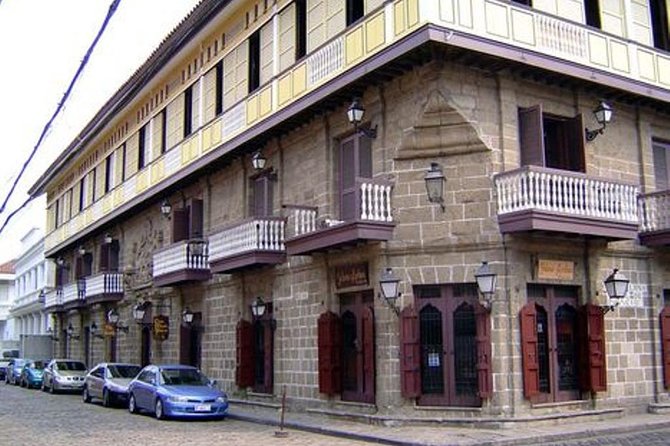
After a brief picture stop, you enter Intramuros, the historic Walled City. This is where the tour changes tone. The cobbled streets and preserved colonial setting make the past easier to picture than it is in a modern city district.
The stop is listed at about 15 minutes for the initial visit, but the surrounding sights extend the experience. Intramuros is best understood as the setting for San Agustin Church, Casa Manila, and Fort Santiago, rather than as a single attraction you can finish in one quick look.
The short timing has a benefit and a cost. You get a clear taste of the old city without spending the entire morning in one district. But you will have little room for wandering, browsing, or stopping whenever an interesting street catches your eye. If your ideal Manila day involves lingering among old walls and side streets, plan a separate return visit.
The tour’s private setup helps here. You can ask your guide to connect the buildings and streets to the wider history of Manila, rather than simply taking photographs and moving on. Still, the schedule remains fixed enough that you should not expect a fully flexible walking tour.
Same island, a completely different kind of day:
- Intramuros, Manila: Historical Bamboo Bike Tour
★ 4.8 · 583 reviews - Experience Intramuros with Bamboo Bicycle – Ecotours
★ 5.0 · 508 reviews - Manila: Old & New 4-Hour City Tour
★ 4.5 · 458 reviews - Manila Food Tour: Introduction to Philippine Street Food
★ 5.0 · 417 reviews
San Agustin Church and the oldest stone church
San Agustin Church is described as the oldest stone church in the Philippines. The visit includes a look at its ecclesiastical icons, vestments, and other religious articles, with about 15 minutes allotted.
For me, the appeal is the combination of architecture and daily life. This is not only a monument from the past. One account of the tour happened to see a baptism in progress, a reminder that historic churches can still function as living places of worship. You may find that ordinary use adds more feeling than a silent display ever could.
Because a religious service or ceremony may be taking place, behave respectfully and follow your guide’s instructions about photographs. The tour does not promise a long interior visit, so you should be prepared for a concise look rather than a detailed church study.
The stop is particularly useful for first-time visitors who might otherwise see Intramuros only as a collection of old walls. San Agustin gives those walls a spiritual and social setting. It also shows the kind of religious influence that shaped Spanish colonial Manila.
Casa Manila and a recreated colonial home
Across from San Agustin Church, Casa Manila recreates a 19th-century house. The interior combines East Asian and European decor with Philippine antique furniture, and the planned visit lasts about 30 minutes.
This is likely to be one of the most engaging stops for anyone curious about how wealthy colonial-era households were arranged. Rather than viewing a church or fort from the outside, you move through domestic rooms and see how different cultural influences appeared inside the home.
The word reproduction matters. Casa Manila is not presented as an untouched private residence from the 1800s. It is a recreation, so you are looking at an interpretation of colonial domestic life. That does not make it less useful. It gives you a visual sense of furnishings, taste, and social status that is hard to gain from monuments alone.
I would give Casa Manila the full time available. Half an hour is still brief, but it is the longest scheduled stop on the route. The interior also offers a break from Manila’s heat, traffic, and hard surfaces. One account singled it out as a favorite part of the tour, which makes sense: it is unusual, visual, and easy to appreciate even if you are not a serious history buff.
Fort Santiago, where Manila’s defenses meet its painful past
Fort Santiago receives about 30 minutes and is the tour’s main historical anchor. The stone fort guarded the entrance to Manila from Manila Bay and served as a key line of defense against attacks from the sea.
The walls are important, but the site’s emotional force comes from the tragic events tied to it. Your guide can place the fort within the larger story of Manila, including the suffering associated with wartime destruction and political violence. This is not a light sightseeing stop, though it is an essential one if you want more than a surface view of the capital.
Thirty minutes is enough to see the main area and hear the essential background. It is not enough for every corner, exhibit, and plaque. If Fort Santiago is your top priority, ask your guide how to use the time well and consider returning later.
The fort also gives the tour a strong ending. After the cemetery, park, church, and house, you arrive at a place where defense, colonial power, and national memory come together. It is the stop most likely to stay with you after the vehicle heads back to your hotel.
What the private vehicle and guide add
The tour includes pickup and drop-off at hotels in Manila and Makati, plus transport in an air-conditioned vehicle. That is a practical advantage, not just a comfort feature. You avoid arranging separate rides between districts and can use the short morning for sightseeing rather than route planning.
Since this is a private activity, only your group participates. That gives you room to ask questions about Jose Rizal, World War II, church customs, or the buildings you pass. It also makes the experience better suited to families, couples, and small groups with different interests.
The guide quality matters more than the vehicle. Joan is associated with an excellent layover introduction, while Jonas is noted for clear Philippine history and a good sense of fun. Other guide assignments are possible, but the experience clearly depends on having someone who can turn short stops into useful explanations.
The driver and guide are separate roles, and both are described as friendly and personable. Their English is reported as very good. Still, remember that the tour covers a lot of ground in four hours. Even a strong guide cannot turn 15 minutes into an hour.
Is $121.80 per person a fair price?
At $121.80 per person, this is not the cheapest way to see Manila. The price makes more sense if you value private transport, hotel pickup, an English-speaking guide, and a carefully arranged route through several districts.
Admission fees, taxes, and handling charges are included. Food, drinks, and personal expenses are not, so plan to eat before or after the tour rather than expecting a meal during the four-hour schedule.
For a solo visitor, the price may feel high compared with using public transport or hiring a car. For two or more people, the private format becomes easier to justify, especially if you are in Manila for only a short time. Group discounts are available, though the exact savings are not provided.
This is especially useful during a long airport layover, provided your timing allows for the pickup, four-hour tour, and return to the airport. The tour does not promise airport pickup, so you would need to arrange the connection separately. For a hotel-based stay in Makati or Manila, the included transfers remove much of the usual hassle.
Who should book this tour?
I would recommend it to first-time visitors who want historical context without spending a full day planning routes. It also suits anyone with limited time, including people making a long stop in Manila and families who prefer a private vehicle.
The tour is a good match if you want:
- Major historic sights in one morning
- A guide who can explain Philippine history
- A private schedule for your own group
- Hotel pickup in Manila or Makati
- A mix of memorials, churches, homes, parks, and fortifications
I would be more cautious if you want food tours, shopping, nightlife, or a close look at everyday Manila. The route focuses on major historical sights, and one assessment of the experience felt that the city itself remained somewhat out of reach. That is a fair criticism. You see important places, but not every side of the capital.
The cancellation rule is strict: the experience is non-refundable and cannot be changed for any reason. Check your date, hotel location, and party size carefully before paying.
Should you book the Private Half-Day Manila tour?
Book it if you want an efficient first look at Manila’s major historic sites and prefer a private guide to handling traffic and transport yourself. Fort Santiago, Casa Manila, San Agustin Church, and the American Cemetery give the morning real depth, while Rizal Park connects the sights to the country’s national hero.
Skip it if you want a slow, wandering day or hope to explore Manila’s food and street life. The four-hour schedule is tight, and several stops are brief. For a short visit, though, this tour offers solid coverage, thoughtful historical context, and the convenience that can make Manila feel far easier to approach.
FAQ
How long does the tour last?
The tour lasts approximately four hours and begins at 8:30 a.m.
Is hotel pickup included?
Yes. Free hotel pickup and drop-off are included for hotels in Manila and Makati.
Is this a private tour?
Yes. Only your group participates in the activity.
Which attractions are included?
The route includes the Manila American Cemetery and Memorial, Rizal Park, Intramuros, San Agustin Church, Casa Manila, and Fort Santiago.
Is admission included?
Admission to the listed included attractions is covered, along with taxes, fees, and handling charges.
Are food and drinks included?
No. Food, drinks, and personal expenses are not included.
Just added around Manila
- Philippines Intro 3 days 2 nights Tour Best of Manila and Beyond★ 5.0 · 3 reviews
- MANILA: HISTORICAL KALESA RIDE TOUR EXPERIENCE IN INTRAMUROS★ 4.0 · 3 reviews
- Makati Street food walking tour with Dinner★ 5.0 · 3 reviews
- Bites and Sights: Tagaytay Food and Nature Excursion from Manila★ 4.0 · 3 reviews
- Authentic Manila Chinatown Food Tour Exploration★ 5.0 · 3 reviews
- 4 Day Banaue Ifugao Rice Villages Private tour Trekking★ 4.5 · 3 reviews
- Embark on a 7-Day Banaue-Sagada Adventure of a Lifetime★ 5.0 · 3 reviews
- From Manila: Philippines Private Tour Guide★ 4.1 · 3 reviews
Manila Tours, compared.

Intramuros, Manila: Historical Bamboo Bike Tour
Read our review →
Experience Intramuros with Bamboo Bicycle – Ecotours
Read our review →
Manila: Intramuros, Chinatown, and Old Manila Half-Day Tour
Read our review →
Manila Food Tour: Introduction to Philippine Street Food
Read our review →
Spectacular Manila to Tagaytay: Full-Day Sightseeing Tour
Read our review →
Makati Nightlife: VIP Access to Clubs, Rooftops & Go-Go Bars
Read our review →
Discover Tagaytay’s Countryside: Half-Day Sightseeing Tour
Read our review →
From Manila: Tagaytay Countryside Wonders: A Half-Day Tour
Read our review →Browse the lists this tour appears in