
Reviewed · MANILA TOURS
Shared Old Manila Tour
Manila’s past comes into focus inside the walls of Intramuros, where a Spanish fortress, a centuries-old church, and a recreated colonial home tell very different stories. The tour then shifts to Binondo, giving you a taste of Manila’s Chinese Filipino side by horse-drawn calesa.
I like the small maximum of six people, which leaves room for questions and makes a four-hour city introduction feel personal. I also like the choice of morning or afternoon departure, plus the chance of local food stops in Chinatown with a guide such as Jonas.
The main drawback is traffic. Manila transfers can take longer than planned, and this short tour gives you an overview rather than much free time at each stop. Hotel pickup is also limited to selected hotels.
Key points to know before booking
- Fort Santiago sets the historical tone: Walk through an old Spanish fortress at the mouth of the Pasig River, with admission included.
- Intramuros is explored through several viewpoints: San Agustin Church, Casa Manila, and the cobbled streets each reveal a different part of old Manila.
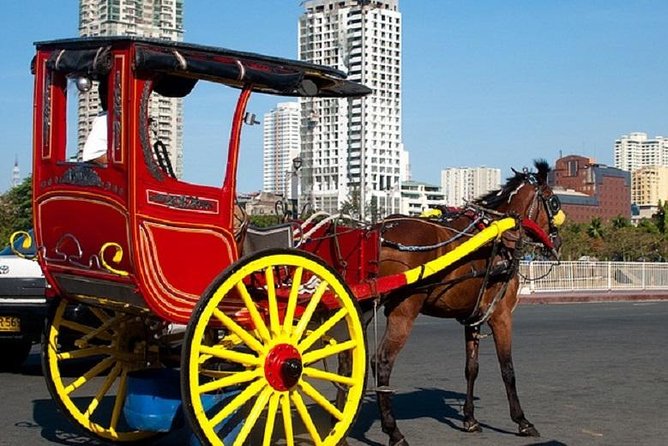
- A calesa ride adds local character: The horse-drawn carriage carries you toward Binondo and Binondo Church.
- Chinatown may include food tasting: Jonas stopped at two food stalls for spring rolls and bao buns, though food stops should not be treated as guaranteed.
- The group is capped at six: That is a useful advantage if you prefer conversation over a large coach tour.
- The price covers more than sightseeing: At $142.31 per person, the package includes a guide, selected hotel pickup and drop-off, lunch, taxes, fees, and entrance tickets.
Why old Manila is the focus
This is not a general tour of every corner of Manila. It concentrates on the city’s historic center, especially the walled district of Intramuros, then adds a short look at Binondo.
That focus makes sense for a four-hour outing. Manila is spread out, and traffic can be slow. Rather than spend the whole morning crossing the city, you stay with a clear theme: Spanish colonial rule, Philippine national memory, Catholic heritage, and the long Chinese Filipino presence around the Pasig River.
The tour begins at Rizal Park, named for Dr. Jose Rizal, the country’s national hero. The stop is brief and intended for photographs, so do not expect a long guided walk through the park. It is a useful opening marker, though. Rizal’s name appears throughout the Philippines, and starting here gives you a quick reminder that Manila’s story is not only about colonial buildings.
From there, the route heads to Intramuros. The shift is immediate. Modern Manila gives way to cobbled streets and thick defensive walls, though the exact traffic and road conditions affect how quickly you get inside and move between sites.
A few more Manila day trips to weigh up
- Intramuros, Manila: Historical Bamboo Bike Tour
★ 4.8 · 583 reviews - Experience Intramuros with Bamboo Bicycle – Ecotours
★ 5.0 · 508 reviews - Manila: Intramuros, Chinatown, and Old Manila Half-Day Tour
★ 4.8 · 475 reviews
Fort Santiago and the Pasig River
Fort Santiago is one of the tour’s strongest stops. The old Spanish fortress sits at the mouth of the Pasig River, a strategic position that helped control movement into the city.
You have about 30 minutes here, with the entrance ticket included. That is enough time for a guided look and photographs, but it is not a leisurely museum visit. Listen closely as your guide explains the events connected with the fort. The site has witnessed major moments in Philippine history, and a good explanation matters more here than simply walking among old walls.
Guides are the heart of this experience. Jonas is described as following the planned route closely while adding a Chinatown bonus, and his historical explanations were a major part of the day. Joan also brought attention to landmarks, food, and Filipino culture, while Richard worked with the driver to explain Manila’s past. Your assigned guide may be different, but these examples show the sort of guide-led context the tour aims to provide.
I would bring a phone or camera, but I would not treat Fort Santiago as a quick photo backdrop. Give your attention to the stories. The stonework is only part of what makes the place important.
San Agustin Church, Manila’s oldest stone church
The route continues through Intramuros to San Agustin Church, described as the country’s oldest stone church. The allotted visit is about 15 minutes, with admission included.
That is a short stop, so you will need to move at a steady pace. The church is known for its collection of ecclesiastical icons, vestments, and other religious objects. Even if you are not especially interested in church architecture, the collection gives you a clearer sense of how Catholic institutions shaped Manila during the Spanish period.
I like the contrast with Fort Santiago. The fort shows military power and political control. San Agustin Church shows the religious side of the same colonial era. You get both without needing to spend an entire day in museums.
The short timing is the tradeoff. You may have enough time to see the main interiors and hear the key explanation, but not enough to examine every object at length. If church art is a priority for you, pay attention from the moment you enter.
Casa Manila and the colonial home recreated
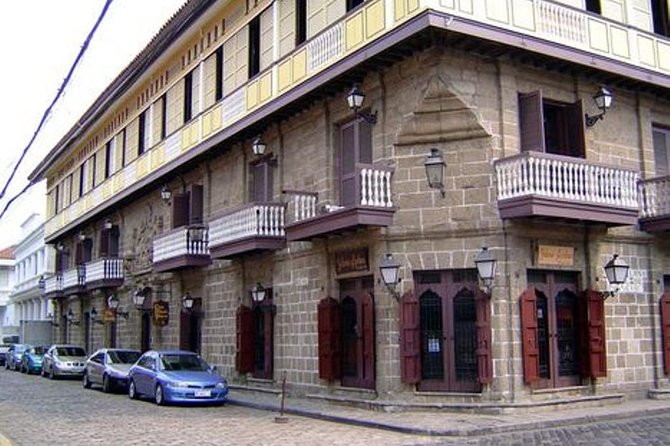
Across the street, Casa Manila offers another angle on the past. This is a reproduction of a 19th-century home, furnished with Oriental and European décor and Philippine antique furniture.
The visit lasts about 30 minutes, twice as long as the church stop. That extra time helps because Casa Manila is about domestic life rather than one grand monument. Rooms, furniture, and decorative details can show how wealth and social position were expressed in colonial Manila.
It is important to understand what you are seeing. Casa Manila is a reconstruction, not an untouched private residence from the 19th century. That does not make it useless. In fact, a recreated home can help you picture daily life more readily than a bare shell, as long as you keep the distinction in mind.
For me, this is one of the most useful stops for putting the official history into human terms. Fort Santiago tells you about power. Casa Manila suggests how that power reached into homes, furnishings, and social customs.
Same island, a completely different kind of day:
- Manila: Old & New 4-Hour City Tour
★ 4.5 · 458 reviews - Manila Food Tour: Introduction to Philippine Street Food
★ 5.0 · 417 reviews - Spectacular Manila to Tagaytay: Full-Day Sightseeing Tour
★ 5.0 · 349 reviews - Makati Nightlife: VIP Access to Clubs, Rooftops & Go-Go Bars
★ 4.9 · 278 reviews
A calesa ride toward Binondo
The tour then changes pace. You board a horse-drawn carriage called a calesa and travel toward Binondo, crossing the Pasig River and continuing toward Binondo Church.
The calesa is more than transport between two points. It gives you a different view of Manila’s streets and creates a clear break between the Intramuros portion and the Chinatown portion. The ride itself is listed as part of the route, but the time assigned to the Binondo Church stop is only about 15 minutes.
Binondo Church is another historic landmark, built by the Spaniards. The description does not promise a long interior visit, so expect a short look and an explanation rather than a full church tour.
This portion is also where timing can become less predictable. Traffic, road conditions, and the time of day affect transfers. The tour’s stated duration is approximate, and that is worth taking seriously in Manila. If you have a flight, cruise departure, or fixed appointment afterward, leave a generous buffer.
Chinatown food stops and the value of the guide
One particularly appealing part of the experience is the possibility of tasting local food in Binondo. Jonas stopped at two food stalls for traditional spring rolls and bao buns. Those samples added a sensory element that the formal historic sites cannot provide.
The provided details do not establish that every departure includes the same food stops, so I would treat them as a welcome guide-led addition rather than a guaranteed part of the schedule. Lunch is listed as included, while food and drinks are also listed under items not included. That wording is unclear, so ask the operator what lunch covers before booking if the meal matters to you.
This is where a good guide can change the feel of the tour. Amy, for example, was described as flexible about personal interests. That matters in a six-person group. You can ask about food, religion, colonial rule, local customs, or the parts of Manila you see from the vehicle, instead of simply listening to a fixed speech.
The guides praised in the supplied material are Jonas, Joan, Richard, and Amy. You cannot choose among them based on the available details, but their roles suggest that the guide is not just there to point out buildings. Expect the best value from the conversation and explanations, not only from the admissions included in the price.
What $142.31 buys you
At $142.31 per person, this is not a budget walking tour. The price needs to be judged as a package.
It includes:
- A professional English-speaking guide
- Hotel pickup and drop-off from selected hotels
- Admission to Fort Santiago
- Admission to San Agustin Church
- Admission to Casa Manila
- Lunch, according to the inclusions
- Taxes, fuel surcharges, service fees, and handling charges
- A small group capped at six people
That is a solid list for a short private-feeling experience, though it is still a shared tour. You are paying for transport, planning, entry fees, and a guide who can connect separate sites into one story.
The value is strongest if you are staying at an eligible hotel, want help with Manila’s traffic, and prefer a structured introduction to the old city. It is weaker if you already know Intramuros, want long independent visits, or can comfortably arrange a cheaper self-guided route.
The listing also says food and drinks are not included, despite lunch appearing in the included section. I would clarify that point before payment. Carry some cash for personal snacks and drinks, and do not assume that the Chinatown tastings replace a full meal.
Morning or afternoon, and the four-hour limit
The stated start time is 8:00 a.m., and the tour also offers a choice of morning or afternoon departure. The exact afternoon time is not provided, so confirm it when booking.
A morning departure may suit you if you want to use the rest of the day for another Manila activity. It may also help you avoid some later traffic, though the tour provider does not promise a fixed travel time. An afternoon departure can work well if you arrive late in the morning or prefer a slower start.
The four-hour length is useful for a first look, but it requires realistic expectations. You visit several major places in a compact period:
- Rizal Park for a brief photo stop
- Fort Santiago for about 30 minutes
- San Agustin Church for about 15 minutes
- Casa Manila for about 30 minutes
- Binondo and Binondo Church for about 15 minutes, plus the calesa transfer
The remaining time goes toward transfers, explanations, and lunch. You will see the main markers of old Manila, but you will not have hours to wander every street.
Group size, pickup, and practical comfort
A maximum of six people is a major practical advantage. Small groups tend to make it easier to hear the guide, ask questions, and adjust the pace when the schedule allows. It also avoids the slow loading and unloading that can affect larger coach tours.
Hotel pickup and drop-off are offered at selected hotels only. Do not assume the service applies to every address in Manila. Confirm eligibility and the pickup details before the day of the tour.
The experience uses several forms of transport, including the tour vehicle and a horse-drawn calesa. The tour information says transfer times are approximate and depend on traffic and time of day. Manila traffic is therefore not a minor footnote. It is part of the day’s planning.
Most people can participate, and children must be accompanied by an adult. A child rate applies only when the child shares with two paying adults. The tour is also subject to favorable weather, so keep that in mind for the outdoor sections and calesa ride.
You receive confirmation at booking, and a mobile ticket is available. Free cancellation applies if you cancel at least 24 hours before the start time. Changes or cancellations inside that window are not accepted for a refund, and missed departures caused by a late or non-arriving cruise ship are not refundable.
Who will get the most from this tour
I would recommend this experience to a first-time Manila visitor who wants historical context without spending a full day on a large organized tour. It suits you especially well if you value a guide’s explanation as much as the sites themselves.
It is also a good match for:
- Families who want a planned route and included transport
- Couples looking for a short cultural introduction
- Cruise passengers with a confirmed shore schedule, provided they allow enough time
- People who want to combine monuments with a calesa ride and Chinatown
- Anyone who prefers a small group to a large bus
You may want something else if you prefer slow photography, independent wandering, or long museum visits. The schedule is full, and the oldest parts of Manila deserve more time than four hours can provide.
Should you book the Shared Old Manila Tour?
Book it if you want a well-organized first look at Manila’s historic core, with a small group, hotel transport, entrance fees, and a guide who can explain the connections between the sites. The strongest parts are Fort Santiago, the contrast between San Agustin Church and Casa Manila, and the change of scene in Binondo.
Before booking, confirm three things: your hotel qualifies for pickup, what lunch includes, and the exact afternoon departure if you do not choose the 8:00 a.m. start. Also plan around traffic and avoid scheduling a tight flight or ship departure afterward.
At $142.31, this is a convenience-and-context purchase, not the cheapest way to see Intramuros. For a first visit, that can be worthwhile. You get a compact history lesson, a calesa ride, Chinatown, and the chance to ask a local guide your own questions. If that sounds like your ideal Manila introduction, this tour makes a sensible choice.
FAQ
How long is the Shared Old Manila Tour?
The tour lasts approximately four hours. Transfer times can vary with traffic and the time of day.
What time does the tour start?
The listed start time is 8:00 a.m. A choice of morning or afternoon departure is also offered, so confirm the available time when booking.
What sites are included?
The route includes Rizal Park, Fort Santiago, San Agustin Church, Casa Manila, Binondo, and Binondo Church.
Is hotel pickup available?
Hotel pickup and drop-off are offered from selected hotels only. Confirm that your hotel is included before booking.
Is lunch included?
Lunch is listed among the inclusions. Food and drinks are also listed as not included, so clarify what the provided lunch covers with the tour operator.
Is admission included at the historic sites?
Admission is included for Fort Santiago, San Agustin Church, and Casa Manila. Binondo Church is listed with no admission charge.
How many people can join the tour?
The maximum group size is six people.
Is the tour suitable for children?
Most people can participate, but children must be accompanied by an adult. The child rate applies only when sharing with two paying adults.
Can I cancel for a refund?
Yes. You can receive a full refund if you cancel at least 24 hours before the experience start time. Cancellations or changes made less than 24 hours in advance are not accepted for a refund.
What happens if I miss the tour because my cruise ship is late?
A refund will not be issued if you miss the tour because of a late or non-arriving cruise ship. Allow plenty of time between the tour and your ship’s departure.
Just added around Manila
- Philippines Intro 3 days 2 nights Tour Best of Manila and Beyond★ 5.0 · 3 reviews
- MANILA: HISTORICAL KALESA RIDE TOUR EXPERIENCE IN INTRAMUROS★ 4.0 · 3 reviews
- Makati Street food walking tour with Dinner★ 5.0 · 3 reviews
- Bites and Sights: Tagaytay Food and Nature Excursion from Manila★ 4.0 · 3 reviews
- Authentic Manila Chinatown Food Tour Exploration★ 5.0 · 3 reviews
- 4 Day Banaue Ifugao Rice Villages Private tour Trekking★ 4.5 · 3 reviews
- Embark on a 7-Day Banaue-Sagada Adventure of a Lifetime★ 5.0 · 3 reviews
- From Manila: Philippines Private Tour Guide★ 4.1 · 3 reviews
Manila Tours, compared.
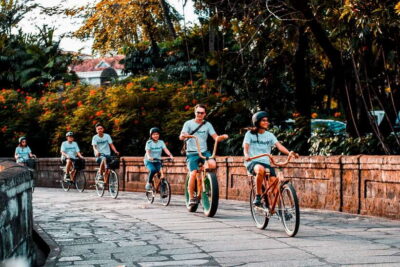
Intramuros, Manila: Historical Bamboo Bike Tour
Read our review →
Experience Intramuros with Bamboo Bicycle – Ecotours
Read our review →
Manila: Intramuros, Chinatown, and Old Manila Half-Day Tour
Read our review →
Manila Food Tour: Introduction to Philippine Street Food
Read our review →
Spectacular Manila to Tagaytay: Full-Day Sightseeing Tour
Read our review →
Makati Nightlife: VIP Access to Clubs, Rooftops & Go-Go Bars
Read our review →
Discover Tagaytay’s Countryside: Half-Day Sightseeing Tour
Read our review →
From Manila: Tagaytay Countryside Wonders: A Half-Day Tour
Read our review →Browse the lists this tour appears in