
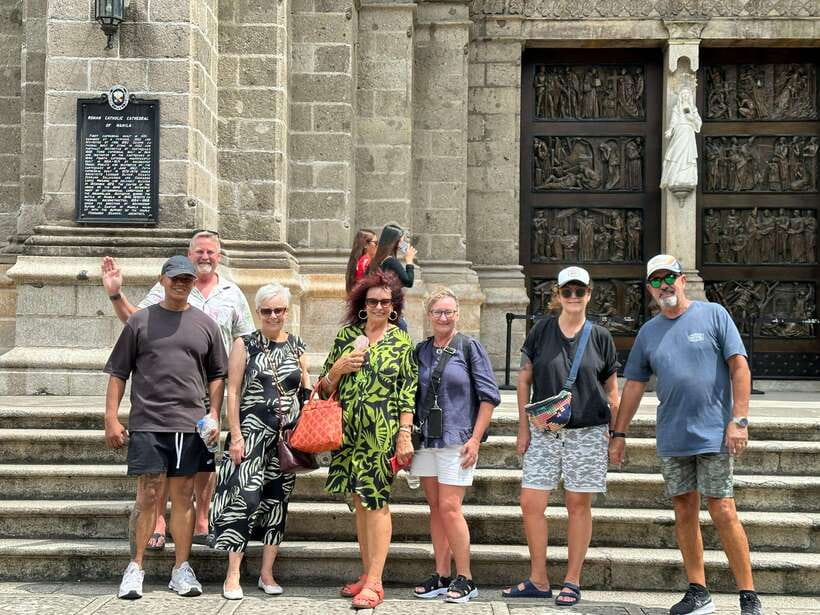
Reviewed · MANILA TOURS
Explore Intramuros The Spanish City of Philippines
Intramuros is Manila’s Spanish-era core, a compact walled city where cobblestone streets lead to churches, forts, and old houses. In two hours, you visit Fort Santiago, San Agustin Church, Casa Manila, and Manila Cathedral while a local guide ties the buildings to colonization, faith, and Philippine heroes. I like the clear historical focus and the fact that the tour takes you to several major sights without making you plan the route yourself.
I also like that Fort Santiago admission and bottled water are included, and guides such as Jane and Richard have earned especially strong praise for bringing the stories to life. The main drawback is the pace: two hours is enough for an informed introduction, not a slow, detailed visit to every room and corner. Add uneven cobblestones and plenty of walking, and comfortable shoes are essential.
Key points to know before booking
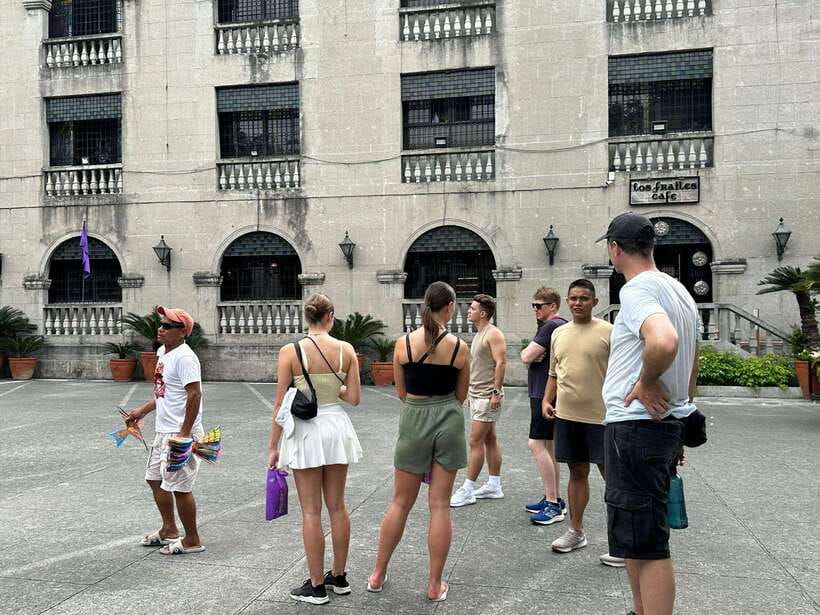
- Fort Santiago and its dungeon give the tour its strongest military and wartime setting.
- San Agustin Church is the major religious stop and a UNESCO World Heritage Site.
- Casa Manila is the meeting point and adds a look at Spanish-period domestic life.
- Manila Cathedral completes the tour with one of Intramuros’s best-known church landmarks.
- English-speaking guides Jane and Richard have received particularly strong praise for clear storytelling.
- The $50 price includes the guide, Fort Santiago entrance, and bottled water, but the short duration makes this best as an introduction.
Why Intramuros still feels different from modern Manila
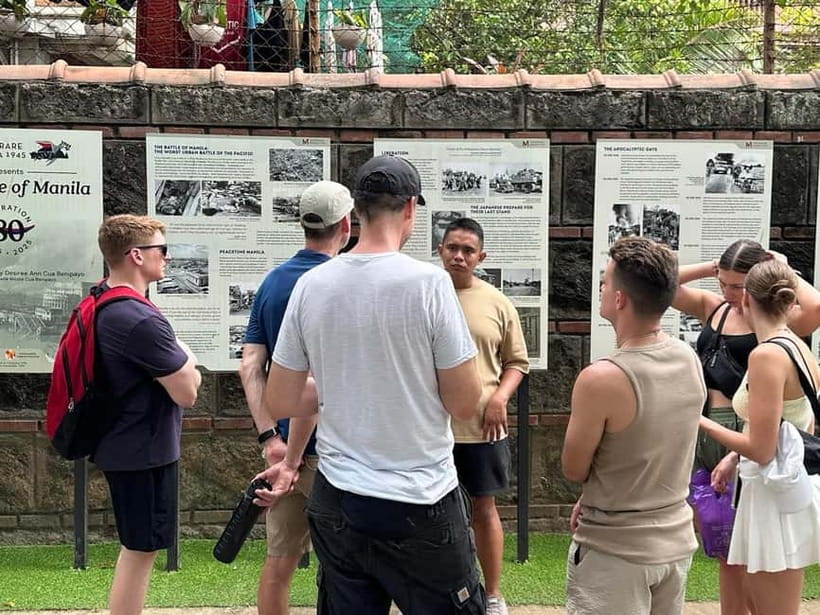
Intramuros gives you a concentrated look at Manila’s Spanish colonial past. The walls create a clear boundary between the old city and the rest of the capital, while the narrow streets and historic buildings make the area easier to read on foot than a scattered collection of landmarks would be.
That compact setting matters. You are not spending half the tour in a vehicle moving between sites. Instead, you walk from one place to the next, with the guide providing the links between military power, religion, domestic life, and Philippine identity.
The tour is also useful if you have limited time in Manila. A two-hour visit will not cover every part of Intramuros, but it gives you the main landmarks and a working sense of why this district matters. I would treat it as a first meeting with the walled city rather than a final word on it.
The setting is not polished in every spot. Cobblestones can be uneven, and the amount of walking may feel tiring in warm weather. The guide’s stories help keep the pace purposeful, but you should arrive ready to walk rather than expecting a museum visit with long seated sections.
More walks through old Manila:
- Intramuros, Manila: Historical Bamboo Bike Tour
★ 4.8 · 583 reviews - Experience Intramuros with Bamboo Bicycle – Ecotours
★ 5.0 · 508 reviews - Manila: Intramuros, Chinatown, and Old Manila Half-Day Tour
★ 4.8 · 475 reviews
Starting at Casa Manila outside Barbara’s Restaurant
The meeting point is Casa Manila, outside Barbara’s Restaurant, in the center of Intramuros. This is a practical place to begin because Casa Manila is part of the historic district itself, so you start among the old buildings rather than at a modern pickup point on the edge of town.
Casa Manila represents the residential side of the Spanish period. Forts and churches often dominate first impressions of Intramuros, but a house such as this helps you think about daily life, interiors, social rank, and the way Spanish influence shaped Manila homes.
You may not have time for a long examination of Casa Manila during a two-hour route. Its real value here is as an anchor for the walking tour and as a reminder that Intramuros was not only a military or religious center. It was also a place where people lived, worked, worshipped, and governed.
Finding the exact meeting point should be straightforward once you are inside the walled city, but the information provided does not include hotel pickup or transport. Plan your route to Casa Manila in advance and arrive ready to begin on foot.
Fort Santiago and the dungeon
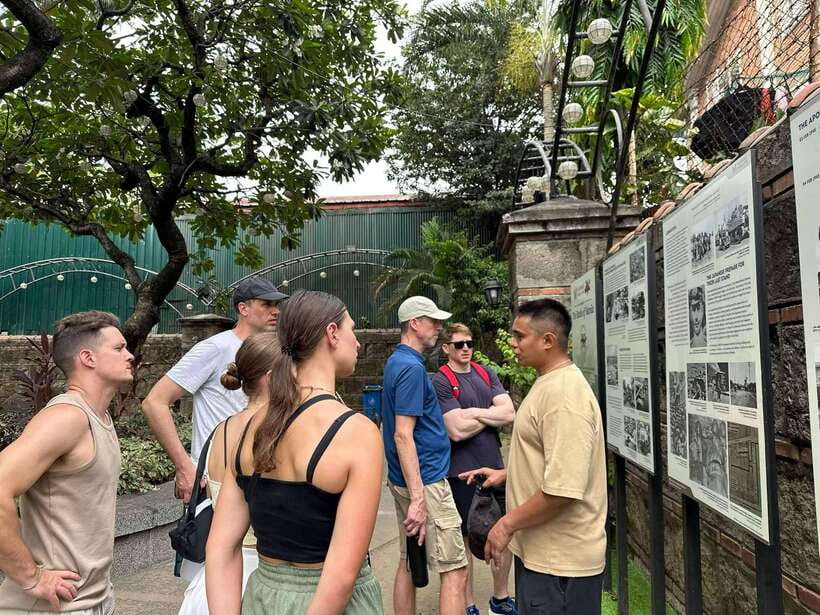
Fort Santiago is the tour’s most powerful stop. The fort connects Intramuros with defense, imprisonment, and the difficult chapters of Philippine history. Its walls and passageways give the past a physical quality that a lecture alone cannot provide.
The visit includes the Fort Santiago entrance fee, which is important when judging the price. You are not simply paying for a walking guide outside the site. The tour brings you inside one of Intramuros’s key landmarks and adds context as you move through it.
The dungeon is a particularly serious part of the visit. It points to the human cost behind the fort’s imposing walls and gives the guide a chance to discuss the people who suffered there. This is not a light sightseeing stop, and you should expect the subject matter to turn somber.
Fort Santiago can also be the place where the two-hour limit becomes most noticeable. There is enough to see that a short visit will focus on the main areas rather than every detail. If you prefer to read every panel and spend long periods photographing architecture, you may want more time in Intramuros after the guided portion ends.
A guide makes a real difference here. Jane is praised for knowing the subject well and making the stories understandable, while Richard is also singled out for leading an enjoyable tour. Guide assignments can vary, but the experience clearly depends on having someone who can give the fort a human story instead of treating it as a series of old walls.
San Agustin Church and the religious heart of the walled city
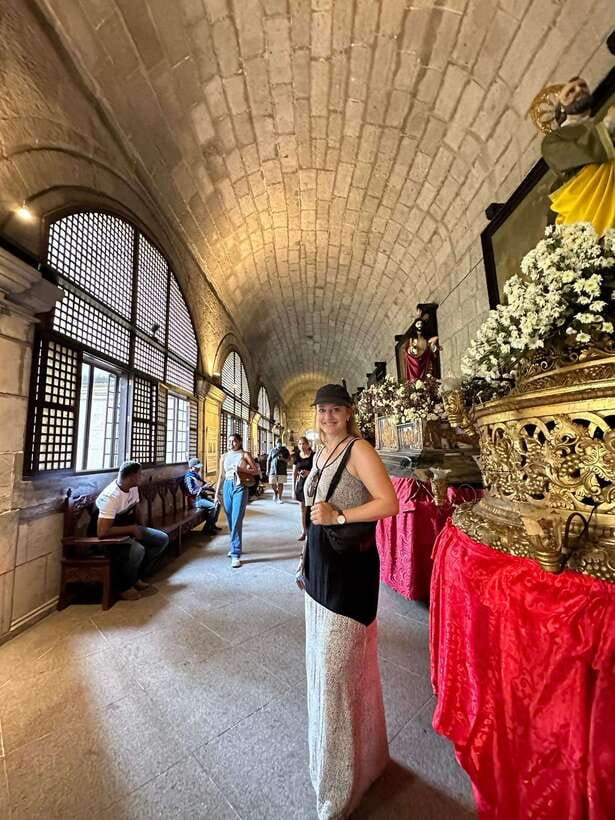
San Agustin Church is the tour’s key church visit and the only UNESCO World Heritage Site specifically named among the highlights. Its importance is not just visual. It helps explain the role of Catholic institutions in Spanish Manila and shows how religion shaped the city’s buildings and public life.
The church gives the route a different mood from Fort Santiago. At the fort, the focus is defense and confinement. At San Agustin, the emphasis shifts to worship, architecture, and the long presence of the church in the colonial city.
You should listen closely to the guide here because the building is easier to appreciate when you understand its place in Intramuros. A quick photograph can show you the exterior, but the historical explanation helps connect the church to the wider story of Manila.
The tour description does not promise a long interior study or special access, so keep your expectations practical. You are visiting an important landmark as part of a brisk walking route. If the church is your main reason for coming, you may want to ask the guide how much time is available at the stop.
A few more Manila day trips to weigh up
- Manila: Old & New 4-Hour City Tour
★ 4.5 · 458 reviews - Manila Food Tour: Introduction to Philippine Street Food
★ 5.0 · 417 reviews - Spectacular Manila to Tagaytay: Full-Day Sightseeing Tour
★ 5.0 · 349 reviews - Makati Nightlife: VIP Access to Clubs, Rooftops & Go-Go Bars
★ 4.9 · 278 reviews
Manila Cathedral and the final landmark sequence
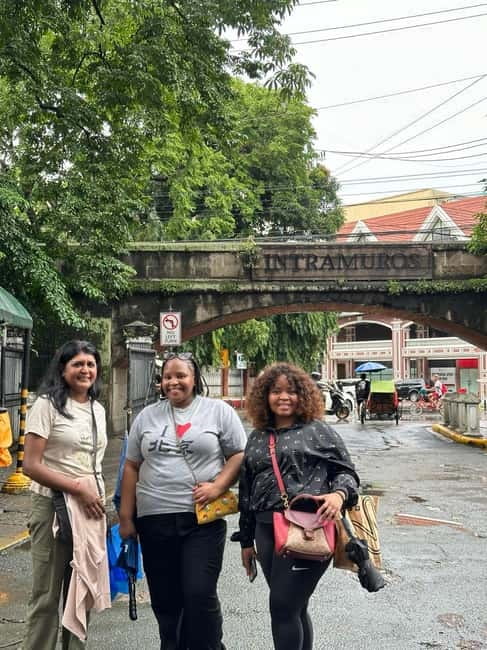
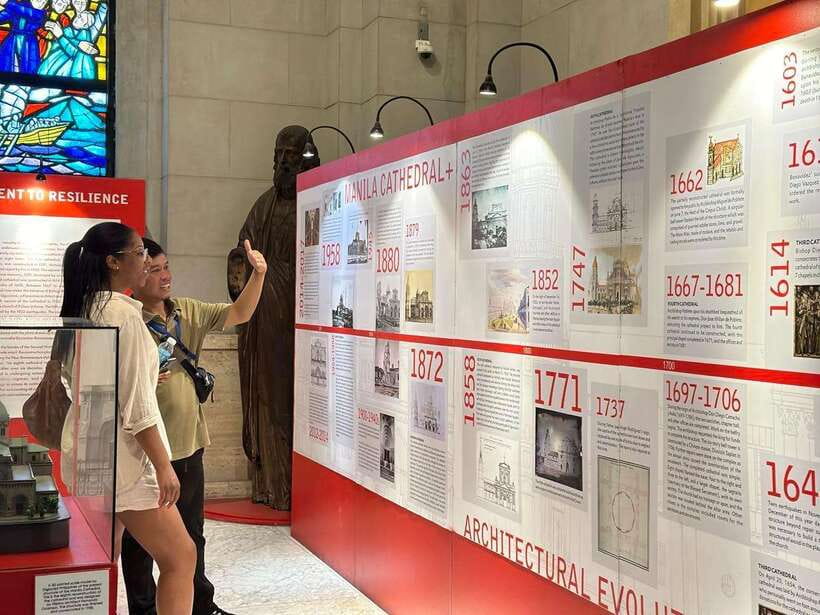
Manila Cathedral completes the main circuit. Along with San Agustin Church, it shows how central religious buildings are to the identity of Intramuros. Its inclusion means the tour does not focus only on forts and colonial streets. You also see the cathedral that remains one of the district’s best-known landmarks.
By this point, the route has covered several different sides of the walled city: the home at Casa Manila, the military setting of Fort Santiago, the church at San Agustin, and the cathedral. That mix is one of the tour’s strengths. You get a broader picture than you would from visiting only one monument.
The cathedral stop may feel brief, depending on walking time and the group’s pace. Two hours must cover the route between sites as well as the explanations at each location. Still, it gives you a useful set of landmarks to revisit if you plan to spend more time in Intramuros later.
This is also where a good guide can help you place the buildings in context. The individual sites are memorable, but the value of the tour comes from seeing how they functioned together within the walled city.
What the guide adds to the experience
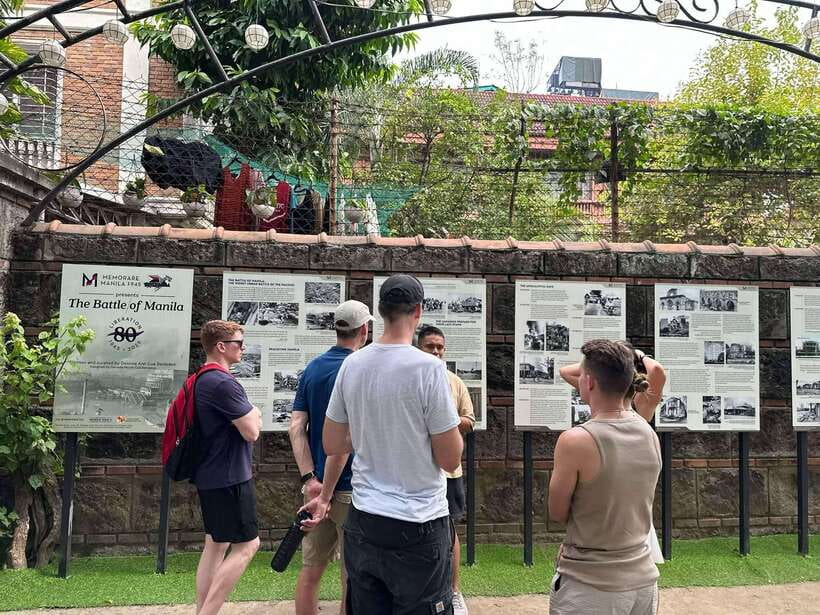
This is a history tour, so the guide is not a minor extra. The buildings provide the setting, but the explanations provide the connection between them.
Jane receives the strongest praise in the supplied feedback. Two separate five-star comments describe her as highly informed and especially good at bringing the stories of the area to life. That is exactly the skill this route needs. Intramuros has many old walls and facades, but a clear narrative helps you understand why each stop matters.
Richard also receives a five-star rating for making the tour enjoyable. The five ratings in the feedback average 4.5 out of 5, with the positive comments focusing on guide quality and the way the tour reveals places you might not enter on your own.
That last point is useful. A guide can direct you toward historic corners that are easy to miss when you walk without a plan. One comment describes a private-looking visit with a local guide and says the route included places the participant would not have visited alone. You should not assume every group will be private, but you can expect the guide to shape the route and point out details beyond the most obvious photo stops.
The tour is offered in English. If you want a self-guided visit with complete control over timing, this may feel restrictive. If you want the basic story explained without researching each building yourself, the live guide is the main reason to book.
Is $50 a fair price for two hours?
At $50 per person, this is not the cheapest way to walk around Intramuros. The value depends on what you want from the visit.
The price includes a local English-speaking guide, bottled water, and the entrance fee to Fort Santiago. Those inclusions remove some of the small costs and planning tasks, but the tour lasts only two hours and does not list transport, meals, or admission to every named landmark as included.
I see the price as reasonable for a short, guided introduction, especially if you care about context and have limited time in Manila. You are paying for a planned route, a local explanation, and access to Fort Santiago rather than simply wandering the streets.
The calculation changes if you already know Intramuros well or prefer to explore slowly. A self-guided visit may give you more time at San Agustin Church, Manila Cathedral, Casa Manila, or Fort Santiago. The guided option earns its value through structure and storytelling, not through a long duration.
If you are making a full-day visit to the district, use the two-hour tour as your orientation. Afterward, you can return to the site that interested you most. That approach makes the short format work better.
Walking conditions and practical preparation
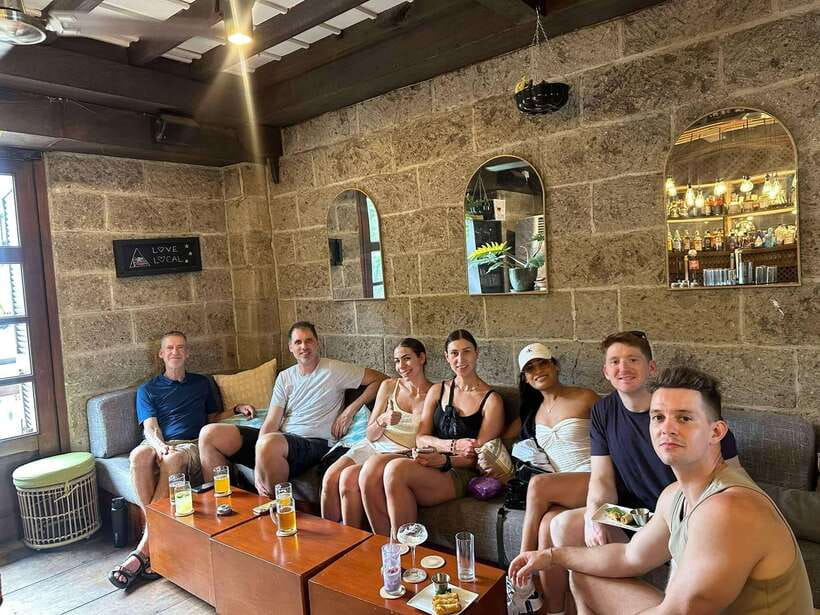
Wear comfortable shoes. This is the clearest practical advice for the tour because the route covers several sites on foot and includes cobblestone streets with uneven sections.
Bring water and use the included bottle as a backup rather than assuming one small bottle will cover the whole outing. The information specifically warns you to stay hydrated, so plan for walking in warm conditions and avoid arriving unprepared.
The tour lasts two hours, but that does not mean two hours of gentle strolling. You will move between historic sites, stand during explanations, and negotiate old street surfaces. If you have mobility concerns, the cobblestones and walking requirements deserve careful thought before booking.
A compact camera or phone is useful, but do not let photographs take over the short route. The guide’s explanations are one of the main reasons to join, and stopping constantly can make the itinerary feel rushed.
Who will get the most from this tour?
I would recommend this experience to a first-time visitor who wants a clear introduction to Intramuros without spending hours researching the district. It suits anyone interested in Spanish colonial architecture, Philippine history, churches, forts, and stories connected to national heroes.
It is also a good match for a short Manila stay. The route gathers major landmarks into one compact outing, and the meeting point is in the historic center of Intramuros.
Families with older children may find the variety helpful. Fort Santiago offers a strong visual setting, while the churches and Casa Manila broaden the subject beyond military history. Younger children may find the walking and historical explanations less engaging, especially if the group moves at an adult pace.
History-minded visitors should book with realistic expectations. You will hear useful stories and see the main places, but two hours cannot provide a complete study of Intramuros. If you want extended time inside each attraction, treat this as a starting point and continue exploring afterward.
Booking decision
Book this tour if you want the main Intramuros landmarks explained in English, value a local guide, and can manage two hours of walking on uneven cobblestones. The inclusion of Fort Santiago admission and the strong feedback for Jane and Richard add useful value.
Skip it if you want a slow, independent visit or if $50 feels high for a short route. The best reason to choose it is not the number of stops. It is the chance to understand how the fort, churches, homes, and streets fit together. Arrive at Casa Manila with good shoes, an open schedule afterward, and the expectation of a focused introduction rather than an exhaustive tour.
FAQ
Where does the Intramuros tour meet?
Meet your guide at historic Casa Manila outside Barbara’s Restaurant, in the heart of Intramuros.
How long does the tour last?
The tour lasts two hours. Starting times depend on availability when you check.
What language is the tour conducted in?
The live tour guide speaks English.
What is included in the $50 price?
The price includes bottled water, the Fort Santiago entrance fee, and a local tour guide.
Which places are visited?
The tour visits Intramuros, Fort Santiago and its dungeon, San Agustin Church, Casa Manila, and Manila Cathedral.
How much walking is involved?
The tour involves a lot of walking on cobblestone streets and uneven surfaces. Comfortable shoes and hydration are recommended.
Just added around Manila
- Philippines Intro 3 days 2 nights Tour Best of Manila and Beyond★ 5.0 · 3 reviews
- MANILA: HISTORICAL KALESA RIDE TOUR EXPERIENCE IN INTRAMUROS★ 4.0 · 3 reviews
- Makati Street food walking tour with Dinner★ 5.0 · 3 reviews
- Bites and Sights: Tagaytay Food and Nature Excursion from Manila★ 4.0 · 3 reviews
- Authentic Manila Chinatown Food Tour Exploration★ 5.0 · 3 reviews
- 4 Day Banaue Ifugao Rice Villages Private tour Trekking★ 4.5 · 3 reviews
- Embark on a 7-Day Banaue-Sagada Adventure of a Lifetime★ 5.0 · 3 reviews
- From Manila: Philippines Private Tour Guide★ 4.1 · 3 reviews
Manila Tours, compared.

Intramuros, Manila: Historical Bamboo Bike Tour
Read our review →
Experience Intramuros with Bamboo Bicycle – Ecotours
Read our review →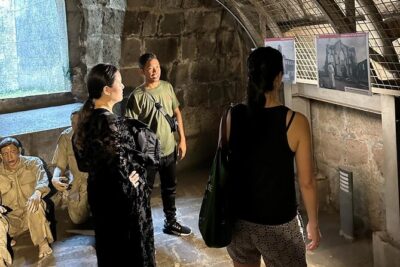
Manila: Intramuros, Chinatown, and Old Manila Half-Day Tour
Read our review →
Manila Food Tour: Introduction to Philippine Street Food
Read our review →
Spectacular Manila to Tagaytay: Full-Day Sightseeing Tour
Read our review →
Makati Nightlife: VIP Access to Clubs, Rooftops & Go-Go Bars
Read our review →
Discover Tagaytay’s Countryside: Half-Day Sightseeing Tour
Read our review →
From Manila: Tagaytay Countryside Wonders: A Half-Day Tour
Read our review →Browse the lists this tour appears in