
Reviewed · MANILA TOURS
Bataan Death March memorial tour
The most affecting part of this day is the personal connection. Guides including JB Quemado have shared stories passed down from grandfathers who endured the march and POW life, giving the memorials a human face instead of leaving you with dates and military labels.
I like the private format, which lets your group ask questions and adjust the pace. I also like the mix of major memorials and smaller museum collections, especially Bamban’s private museum. The tradeoff is clear: this is a long day with a great deal of road time, and one unhappy visitor found the route and explanation less complete than expected.
Key points to know before booking
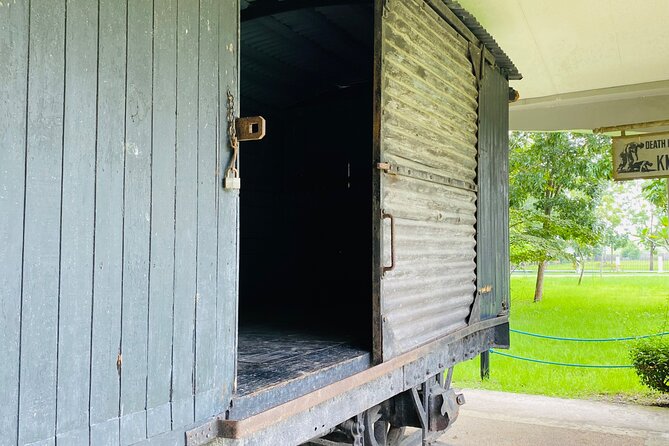
- Family stories add emotional weight: Some guides connect the tour to relatives who survived the march and imprisonment.
- Four important stops cover different chapters: Mount Samat, the surrender site, Capas National Shrine, and Bamban Museum each tell a different part of the story.
- Expect a full 10-hour day: The distance from Manila makes this a serious history outing, not a quick half-day trip.
- The tour is private for up to four people: At $350 per group, the price works out to $87.50 each when four people share it.
- The route may run in reverse: The operator has explained that starting at Camp O’Donnell can reduce the long drive toward Mariveles or Bagac later in the day.
- San Fernando is not part of the visit: The station was excluded because it was under construction from December 2022.
Why this Bataan day trip matters
The Bataan Death March memorial tour takes you away from Manila’s urban center and into places tied to the surrender, imprisonment, and suffering of Filipino and American forces during World War II. It is not designed as a light sightseeing day. The subject is painful, and some displays and stories may be difficult to absorb.
That weight is also the reason to go with a guide. A sign or monument can tell you what happened at a place. A guide can help connect that place to the people who passed through it. The strongest part of this experience is the chance to hear family history from a guide whose own grandfather took part in the march or experienced captivity.
The tour is offered as a private activity, so only your group participates. That matters here. You can ask about military events, family stories, memorial design, or Filipino history without worrying about holding up a large group. The experience can also be adjusted to suit your needs, within the limits of a long route and fixed opening hours.
A few more Manila day trips to weigh up
- Intramuros, Manila: Historical Bamboo Bike Tour
★ 4.8 · 583 reviews - Experience Intramuros with Bamboo Bicycle – Ecotours
★ 5.0 · 508 reviews - Manila: Intramuros, Chinatown, and Old Manila Half-Day Tour
★ 4.8 · 475 reviews
Setting out from Manila at 7:00 a.m.
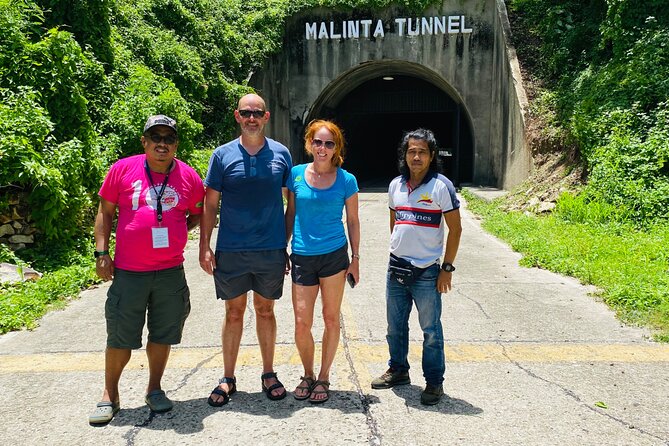
Pickup is offered from hotels in the Manila area, with a scheduled start at 7:00 a.m. You should treat that early departure as necessary rather than optional. The sites are spread across several areas, and the journey takes a large share of the day.
The exact sequence may not match the order shown in promotional material. The operator has explained that the tour is often run in reverse, beginning at Camp O’Donnell, now Capas National Shrine, because the drive toward Mariveles or Bagac can take about four hours. This is useful to know before you set out. If you expected Mount Samat to come first, ask the guide to confirm the day’s route.
The long transfer is the central practical issue. One day-trip participant found the travel time lengthy, though still worthwhile. I would book this only if you are comfortable spending many hours in a vehicle for a focused historical purpose. You are not simply moving between nearby attractions.
Capas National Shrine and the former Camp O’Donnell
Capas National Shrine occupies the site formerly known as Camp O’Donnell, a concentration camp for Filipino prisoners of war in 1942. The stop lasts about 30 minutes, so do not expect a long museum visit or a detailed walking tour.
Its value comes from the setting and the subject. After learning about the march itself, you can consider what followed for prisoners who survived the journey. The stop helps widen the story beyond the road and the battles, pointing to the imprisonment that came afterward.
Because the visit is brief, listen closely to the guide’s introduction. The personal accounts shared by guides such as JB Quemado can make this stop far more meaningful than a quick look at a marker. If your group wants extended time at memorial sites, tell the guide early. The private format gives you room to ask, but the 10-hour schedule still requires choices.
Bamban Museum of History, a personal collection
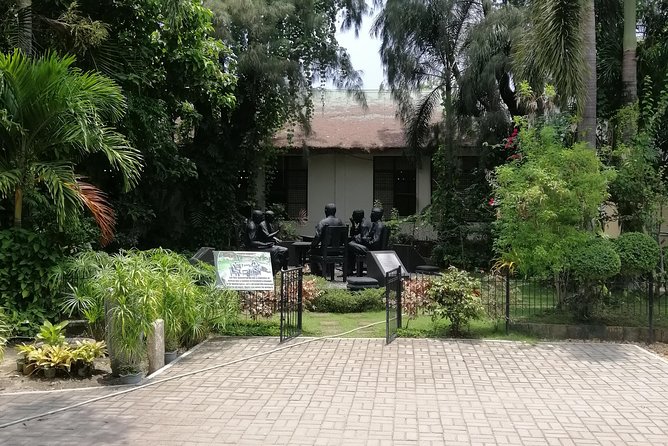
The Bamban Museum of History is a private museum with relics from the surrounding area. Its curator shares stories about local places and people connected to the war. Admission is included at no extra charge.
This may be the most distinctive stop on the route. Large national memorials give you scale and ceremony. A private collection can offer objects and local details that are harder to encounter elsewhere. One visitor singled out the Bamban museum as exceptional and felt that the trip was worth the time partly because of it.
Expect a different kind of museum from a polished national institution. The collection is private and personally presented, so the experience depends heavily on the curator and your guide. That can be a strength, especially if you prefer stories and artifacts with a clear local connection. It can also feel less formal than a major public museum.
Allow about an hour here. This is one place where slowing down makes sense. Ask about the relics, the locations they came from, and the personalities linked to the area. The guide’s role is especially important because the objects may not explain themselves fully.
Same island, a completely different kind of day:
- Manila: Old & New 4-Hour City Tour
★ 4.5 · 458 reviews - Manila Food Tour: Introduction to Philippine Street Food
★ 5.0 · 417 reviews - Spectacular Manila to Tagaytay: Full-Day Sightseeing Tour
★ 5.0 · 349 reviews - Makati Nightlife: VIP Access to Clubs, Rooftops & Go-Go Bars
★ 4.9 · 278 reviews
The Bataan World War II Museum and the 1942 surrender
The Bataan World War II Museum focuses on the surrender site of USAFFE forces in 1942. The scheduled visit lasts about 30 minutes, with admission included.
The short stop gives you a compact look at a key moment in the campaign. It works best when your guide provides the surrounding context, since the museum visit alone may not answer every detailed question. Several strong experiences on this tour have depended on guides who could explain the locations and connect them to family stories.
One important caution is to clarify what you will see before the day begins. A critical account described the tour as incomplete and said key places were not clearly identified. The operator responded that the route had been discussed and that some additional locations were declined by the group. That exchange points to a practical lesson: tell your guide which sites matter most to you, and ask which are actually included.
The Bataan museum is not the place to rush through while thinking about the next stop. Even with only 30 minutes, you can use the time well by asking what happened at the surrender site and how it relates to the march and the POW experience.
Mount Samat National Shrine and the view from the memorial
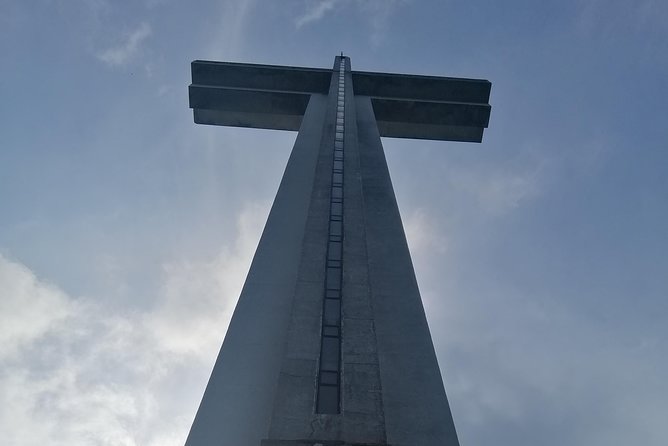
Mount Samat National Shrine, also called Dambana ng Kagitingan, is a shrine honoring those who fought in World War II. The planned visit lasts about an hour, and admission is included.
This is the grandest memorial stop of the day. The shrine provides a strong visual focus for the sacrifices of Filipino and American soldiers, while the elevated setting offers scenic views. One particularly memorable account described the mountain shrine as a highlight for both its setting and its sense of remembrance.
Give yourself time to take in the scale of the site. This is not only a photo stop. The memorial is meant to make the cost of the campaign visible, and your guide can help explain its place in Filipino memory.
Mount Samat is closed on Mondays, so do not plan this tour for that day. If the tour route is reversed, you may visit it later than expected. That can work well, since the shrine gives the day a powerful closing point, but confirm the schedule when booking.
What the personal guide adds
The guide can make or break a historical tour, and this experience has several named guides associated with strong feedback. JB Quemado is praised for explaining the story through his grandfather’s experience as a participant in the march and POW life. Ferdinand Contreras is also singled out for giving a clear overview of the Bataan Death March.
Vincent is another guide named in the tour’s correspondence. His response to a difficult experience explained why the route ran in reverse and noted that the group had declined additional sites. This shows both sides of a private tour. You have more room to shape the day, but you also need to communicate clearly about priorities.
A family connection does not replace historical detail. If you have specialist questions about troop movements, exact locations, or lesser-known events, ask before leaving Manila and again at each stop. One person found that detailed questions were not answered fully. The best approach is to see the guide as your interpreter of the sites, while recognizing that the level of detail may vary.
The private format and group value
The price is $350 per group of up to four people. For four, that is $87.50 per person before any expenses not stated as included. For two people, the same booking works out to $175 each. The value improves sharply when you fill all four places.
The price includes hotel-area transfers, admission to Mount Samat and the Bataan World War II Museum, and access to the Capas stop. Admission to Bamban Museum is free. The supplied details do not state that meals, drinks, or other personal expenses are included, so budget separately for those.
A private vehicle and driver are useful on a route this spread out. You avoid organizing several long transfers yourself, and your group can discuss the day as you go. One highly rated experience specifically praised both the guide and driver for being communicative and attentive to the group’s needs.
The private setup also helps families and small groups with different interests. Someone who wants military detail can ask questions, while someone more focused on memorials and personal stories can take a quieter approach. It is less useful if you dislike long road journeys or want a broad tour of the Philippines rather than a single historical subject.
What is missing from the route
The tour covers important locations, but it does not cover every Bataan Death March site. San Fernando station is not included because it was under construction from December 2022. The tour operator also referred to an additional 0 kilometer area that was offered but not visited by one group.
This is worth sorting out before you pay. Ask the provider to confirm the current route, the planned order, and any sites that are closed or unavailable. The itinerary includes four principal stops, but a private tour can sometimes involve choices about what to add or skip.
The route’s reverse order may also cause confusion if you arrive with a fixed mental picture of the day. A clear morning conversation with the guide can prevent disappointment. State your top two priorities and ask how much time can be spent at each.
Who will get the most from this day
I would recommend this tour to you if you have a serious interest in World War II, Filipino history, military memorials, or family history. It is particularly suited to anyone who wants more than a self-guided visit and values a guide’s personal connection to the subject.
Families can also find it worthwhile, provided younger participants are ready for a difficult topic. One account described a grandfather and grandson being moved by the guide’s family story. The material concerns surrender, abuse, imprisonment, and death, so this is not a casual entertainment outing.
You should think twice if your main goal is to see many Manila attractions in one day. The tour lasts about 10 hours and includes substantial driving. It is also not ideal if you need every stop explained at a highly specialized academic level, since one account raised concerns about unanswered detailed questions.
The 91 percent recommendation rate and 4.7 rating from 35 reviews suggest that the experience works well for most groups, while the lower rating points to the importance of route planning and communication. I would not ignore either side.
Practical advice for a smoother visit
Start by confirming the pickup area, since transfers are offered from hotels in Manila rather than from every possible location. Confirm the 7:00 a.m. start and ask if the day will begin at Capas National Shrine or Mount Samat.
Ask for the current status of San Fernando station. The supplied tour information says it is excluded because of construction beginning in December 2022, but site conditions can change, and you should know what is and is not part of your day.
Tell the guide if you want the focus to be military operations, Filipino civilian experiences, POW history, memorial architecture, or family stories. The tour can be customized, and a private setting is most useful when you make your interests clear.
Wear something suitable for a full day of stops and vehicle travel. Specific clothing requirements are not provided, so keep your choices practical and comfortable. Also remember that Mount Samat is closed on Mondays.
Free cancellation is available if you cancel at least 24 hours before the start time. Changes or cancellations made inside that period are not accepted for a refund, and poor weather may lead to a different date or a full refund.
Should you book the Bataan Death March memorial tour?
Book it if you want a serious, guided look at a painful chapter of Philippine and American history, and if you can accept a long day on the road. The combination of Mount Samat, the surrender site, Capas National Shrine, and Bamban Museum gives you different ways to understand the march.
The strongest reason to choose this private tour is the guide’s personal connection, especially when JB Quemado or a similarly experienced guide leads the day. The biggest risk is expecting every related site, every detail, and a perfectly fixed route without confirming the plan.
For four people sharing the $350 price, the cost is reasonable for a private vehicle, driver, guide, hotel-area pickup, and included admissions. For one or two people, it becomes a much more expensive day, so compare the cost with your interest in the subject.
If Bataan is a priority and you want context rather than a quick monument visit, I would book it after confirming the route and guide. If your schedule is tight or you dislike long transfers, choose a shorter Manila history outing instead.
FAQ
How long does the Bataan Death March memorial tour last?
The tour lasts approximately 10 hours, including the transfers between Manila and the historical sites.
What time does the tour start?
The scheduled start time is 7:00 a.m.
Where does the tour begin?
Pickup is offered from hotels in the Manila area. The exact pickup point should be confirmed when booking.
How much does the private tour cost?
The price is $350 per group of up to four people. A full group of four would pay $87.50 per person.
Which sites are visited?
The planned stops are Mount Samat National Shrine, the Bataan World War II Museum, Capas National Shrine, and Bamban Museum of History.
Is admission included?
Admission is included at Mount Samat National Shrine and the Bataan World War II Museum. Bamban Museum has free admission. The tour information also includes the visit to Capas National Shrine.
Is the tour private?
Yes. Only your group participates, with a maximum group size of four people.
Is Mount Samat National Shrine open every day?
Mount Samat National Shrine is closed on Mondays.
Can I cancel for a full refund?
Yes, if you cancel at least 24 hours before the experience start time. Cancellations or changes made less than 24 hours before the start are not refunded. If poor weather causes the operator to cancel, you are offered another date or a full refund.
Just added around Manila
- Philippines Intro 3 days 2 nights Tour Best of Manila and Beyond★ 5.0 · 3 reviews
- MANILA: HISTORICAL KALESA RIDE TOUR EXPERIENCE IN INTRAMUROS★ 4.0 · 3 reviews
- Makati Street food walking tour with Dinner★ 5.0 · 3 reviews
- Bites and Sights: Tagaytay Food and Nature Excursion from Manila★ 4.0 · 3 reviews
- Authentic Manila Chinatown Food Tour Exploration★ 5.0 · 3 reviews
- 4 Day Banaue Ifugao Rice Villages Private tour Trekking★ 4.5 · 3 reviews
- Embark on a 7-Day Banaue-Sagada Adventure of a Lifetime★ 5.0 · 3 reviews
- From Manila: Philippines Private Tour Guide★ 4.1 · 3 reviews
Manila Tours, compared.

Intramuros, Manila: Historical Bamboo Bike Tour
Read our review →
Experience Intramuros with Bamboo Bicycle – Ecotours
Read our review →
Manila: Intramuros, Chinatown, and Old Manila Half-Day Tour
Read our review →
Manila Food Tour: Introduction to Philippine Street Food
Read our review →
Spectacular Manila to Tagaytay: Full-Day Sightseeing Tour
Read our review →
Makati Nightlife: VIP Access to Clubs, Rooftops & Go-Go Bars
Read our review →
Discover Tagaytay’s Countryside: Half-Day Sightseeing Tour
Read our review →
From Manila: Tagaytay Countryside Wonders: A Half-Day Tour
Read our review →Browse the lists this tour appears in