
Reviewed · BORACAY TOURS
DiveGurus – Open Water Diver Course SSI/PADI
Learning to breathe underwater is the headline here, but the real value of the DiveGurus Open Water course is the steady path it gives you from nervous beginner to certified scuba diver. Over about three days, you study basic theory, practice skills in shallow water, then head out by boat for four open-water sessions.
I like the choice between SSI and PADI, both widely recognized certification systems. I also like the patient, personal teaching style associated with instructors such as Brian, Max, Karlo, and Andrew. The main consideration is time: three days is a focused course, not a casual beach activity, and you need to be ready for classroom work as well as water training.
Key points to know before booking
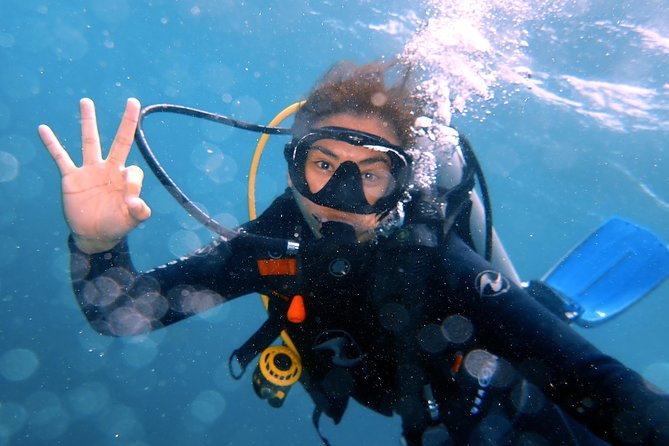
- Three phases in three days: Complete theory, confined-water skills, and four supervised open-water sessions.
- Choose SSI or PADI: Both are basic entry-level certifications recognized worldwide.
- At least nine water sessions: The course includes a minimum of five confined-water sessions and four local boat sessions.
- A personal learning setup: This is a private activity, so only your group participates.
- Several named instructors: Brian, Max, Karlo, Andrew, and Max are praised for calm, patient instruction.
- Flexible cancellation: Cancel at least 24 hours before the start time for a full refund.
Your first step toward scuba certification
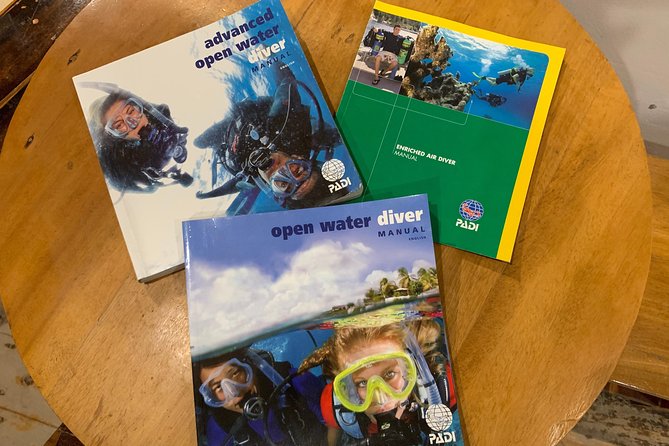
The Open Water Diver course is the standard starting point for people who want to scuba dive without an instructor attached to every future outing. It teaches the basic skills, safety habits, and equipment use needed for independent recreational diving within certification limits.
That makes this very different from a quick introductory swim beneath the surface. You are not simply following a guide for one short underwater look. You are learning a set of skills, reviewing them repeatedly, and completing formal training with an SSI or PADI instructor.
I like that the course is built in stages. You first learn why scuba equipment works and how to use it. Then you practice in shallow, confined water, where you can concentrate on breathing and movement without the added pressure of a boat trip or a deeper site.
Only after that do you complete four open-water boat dives at local sites. Those final sessions let you apply the skills in a real marine setting while your instructor supervises you.
The three-day schedule is efficient, but it is also demanding. You will need to stay focused, listen closely, and repeat unfamiliar skills until they feel natural. If you want a relaxed holiday activity with no study, this is not the right fit. If you want a qualification you can use around the world, the concentrated schedule makes good sense.
A few more Panay Island day trips to weigh up
- Boracay Sunset Cruise with Party DJ & Unlimited Food and Drinks
★ 5.0 · 211 reviews - 4 Hour Private Boracay Island Hopping Tour
★ 5.0 · 167 reviews - WaterColors – Open Water Diver Certification in Boracay
★ 5.0 · 35 reviews
Day one: theory before the sea
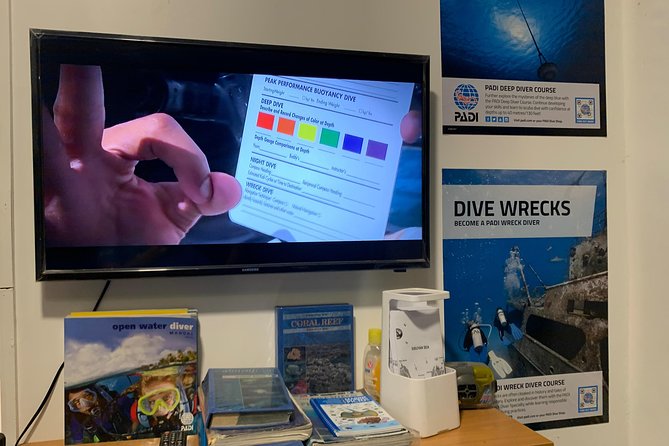
The course begins with knowledge development, offered online or in a classroom. This part covers the basic principles of scuba, including the ideas you need to understand before entering the water.
The exact classroom timetable is not provided, so I would confirm the schedule with DiveGurus before booking flights, tours, or evening plans. The online option may suit you if you prefer to work at your own pace, while classroom study gives you a direct chance to ask your instructor questions.
Do not treat the theory as filler. It helps explain why divers ascend carefully, how equipment supports breathing underwater, and what to do when a skill does not go as planned. You will get more from the later water sessions if you understand the reasons behind each exercise.
This is also the point to be honest about nerves. Some beginners arrive curious but uneasy about being underwater. That is normal. Brian is described as adjusting training gradually for people who were uncomfortable below the surface, while other instructors, including Max and Karlo, are praised for patient and encouraging teaching.
The best instructors do not rush a student through fear. They break a problem into smaller steps. That matters with skills such as removing a mask, an exercise one student found intimidating before receiving help from the teaching team.
Confined water training: building comfort slowly
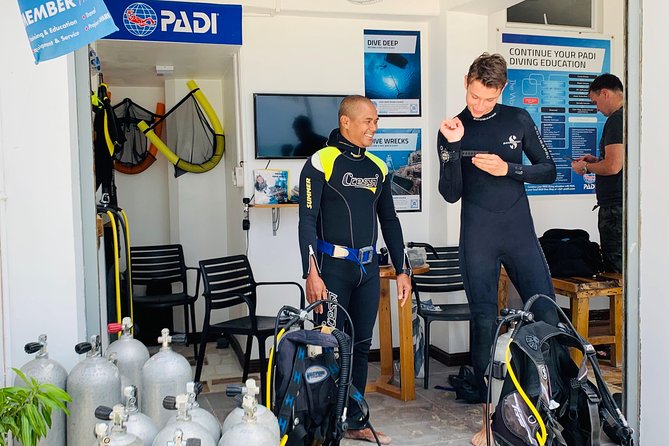
The second phase takes place in shallow, confined water. You will complete at least five confined-water sessions, practicing the basic skills needed for scuba certification.
This repeated practice is one of the strongest parts of the course. You can learn how to breathe through the regulator, manage your equipment, control your position, and respond to common problems before heading to a local site. The shallow setting gives you room to pause, ask questions, and try again.
I would expect this stage to feel awkward at first. New divers often have to think about breathing, body position, hand signals, and equipment all at once. Repetition helps turn those separate tasks into a calmer routine.
The instruction appears to be a major strength of the Boracay center. Brian is repeatedly described as clear, patient, and supportive. Karlo is praised for mixing encouragement and humor into the lessons, while Andrew is noted for explaining things in an easy-to-understand way and helping students feel safe.
Those personal qualities are not minor extras. A scuba course can be technically sound and still be a poor experience if the instructor makes you feel hurried or embarrassed. Here, the strongest pattern is steady reassurance, especially for first-time students and people who began with a fear of being underwater.
You should still ask questions whenever something is unclear. A good course is not about looking confident. It is about learning to handle each task correctly and calmly.
Four boat sessions at local sites
Once you have completed the classroom work and confined-water skills, you move to four open-water boat dives. These sessions are where the training begins to feel like real exploration.
The course information does not name the exact sites, depths, boat type, or marine life, so I would not book this expecting a particular reef or animal encounter. Conditions can vary, and the instructor will determine how the training proceeds. The clear promise is four local boat dives under the supervision of an SSI or PADI instructor.
That structure gives you a useful mix of learning and discovery. You review your skills in the open water, then have time to look around and experience the underwater environment. The setting is not just a classroom with fish added. You are learning how your body, equipment, and awareness work in a real location.
Andrew is specifically praised for taking students on good dives and providing photos for memories. Photos are not listed as a standard inclusion, so consider that an instructor-specific touch rather than something to assume is guaranteed with every booking.
The boat sessions may be the highlight, but they also require the most concentration. Open water introduces conditions that shallow practice cannot fully reproduce. You need to stay aware of your instructor, your group, and your equipment while enjoying the surroundings.
Four sessions also give you more than one chance to settle in. Your first open-water dive may be spent thinking about every small action. Later sessions should give you more freedom to look around and enjoy the underwater world.
Same island, a completely different kind of day:
- Private Boracay Parasailing Adventure
★ 5.0 · 26 reviews - DiveGurus -Scuba Diving in Boracay
★ 5.0 · 25 reviews - Scuba Diving in Boracay: SSI Basic Diver for Beginners
★ 5.0 · 20 reviews - Boracay ATV Adventure
★ 5.0 · 17 reviews
Choosing between SSI and PADI
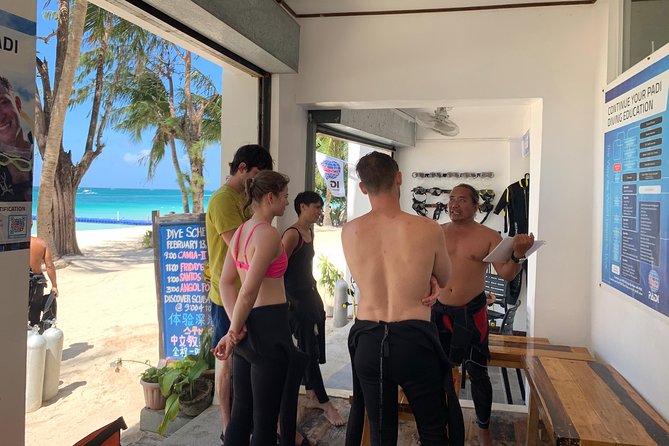
The course lets you choose an SSI or PADI certification. Both are established, internationally recognized systems, and both provide an entry-level qualification for recreational scuba.
For most beginners, the instructor and the quality of the teaching matter more than the logo on the certification card. I would choose the system that fits your future plans if you already have a preferred agency, but I would put equal weight on the instructor you feel most comfortable with.
The available information names several instructors connected with the center. Brian is a strong choice for a student who wants clear explanations and patient support. Karlo may suit someone who learns best with humor and encouragement. Andrew is a good fit if you value calm guidance and help with confidence. Max is specifically singled out as an instructor for PADI certification.
Instructor availability can change, so do not assume a particular person will lead your course unless DiveGurus confirms it. If you have anxiety, prior snorkeling discomfort, or a specific learning concern, mention it when you book.
The instructors make the difference
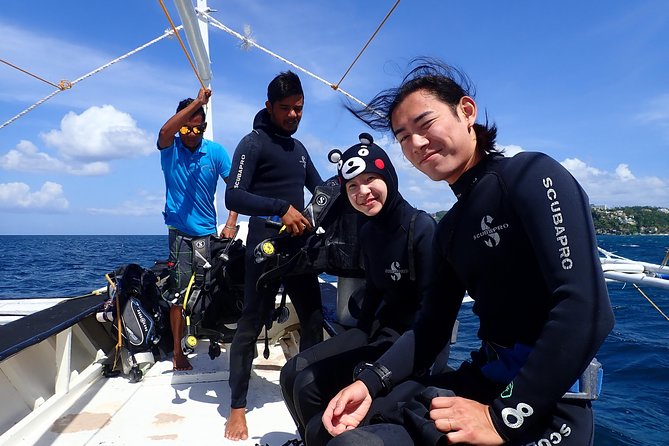
The course is built around technical steps, but scuba training is also about trust. You need to believe that your instructor will notice when you are uncertain and give you time to correct a problem.
That is why the comments about Brian, Max, Karlo, and Andrew matter. Brian is praised for helping beginners grow comfortable in the water and for answering questions throughout the course. Karlo is described as patient, funny, and encouraging. Andrew is credited with clear instruction, helpful guidance, and a calm manner.
Max receives especially strong praise for PADI instruction. The useful takeaway is not that one instructor is automatically best for everyone. It is that DiveGurus has several instructors with different teaching styles, and you can ask for a match based on your needs.
The center also appears to create a friendly atmosphere beyond the lessons. Free coffee and tea are mentioned, and one account describes the staff as warm and the rooms and dining area as comfortable. Those lodging details are separate from the course, so I would not treat accommodation or meals as part of the $580 price unless confirmed directly.
Is $580 a good value?
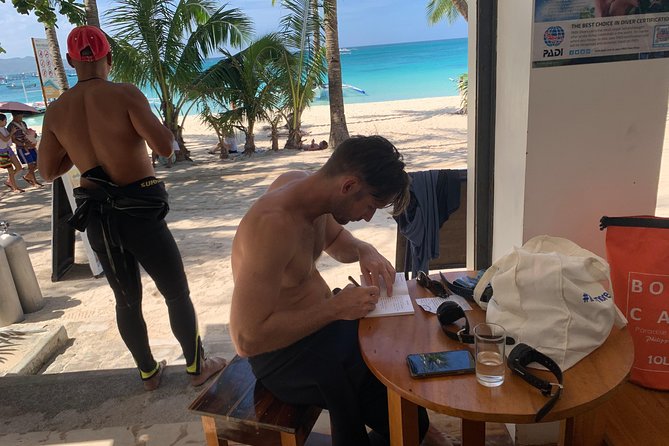
At $580 per person, this is a serious purchase, but it covers a formal three-day certification course rather than a single short underwater activity. The value comes from the instruction, the staged training, the confined-water practice, the four boat sessions, and the internationally recognized qualification.
You are paying for a process that can open up future scuba trips in other countries. That makes the price easier to justify if you expect to dive again after leaving Boracay.
Still, check exactly what the price includes before paying. The supplied details do not specify equipment rental, certification fees, study materials, meals, accommodation, transfers, or photographs. Do not assume that free coffee, rooms, or dining are included in the course price. Ask for a written list of inclusions and possible extra charges.
The private format improves the value for students who want close attention. Only your group participates, which may make it easier to ask questions and work at a comfortable pace. It may be less appealing if you prefer meeting a larger group of beginners or want the cheapest possible introduction.
Meeting point and practical planning
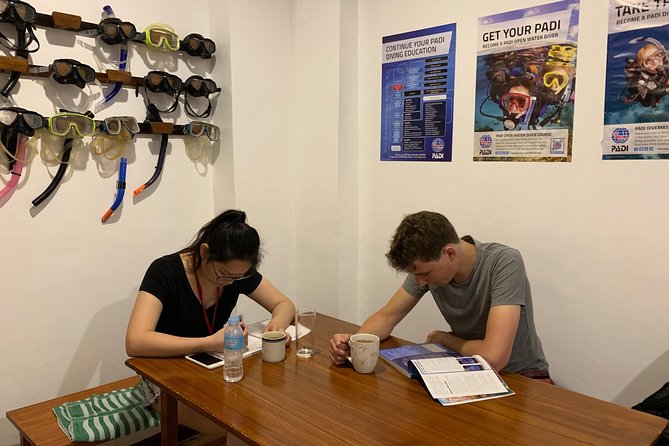
The course starts and ends at DiveGurus Boracay, on Sitio Ambulong Road, Boracay Island, Malay, Aklan, Philippines. The activity returns to the same meeting point.
The experience is listed for the Panay Island area, while the specific meeting point is on Boracay Island. Check the route carefully when planning your arrival, especially if you are staying elsewhere on Panay or connecting through another part of the Philippines.
The center is near public transportation, which helps with reaching the start point. Even so, allow enough time to arrive early for the first briefing. A three-day certification course leaves little room for late starts or missed sessions.
Most people can participate, but the course is still an active water program with formal skills to complete. If you have a medical concern, ask the operator before booking. The available information does not list specific health requirements, age limits, equipment details, or accommodation arrangements, so those points need direct confirmation.
The mobile ticket is convenient for a phone-based booking, and confirmation is received at the time of booking. Keep the booking details accessible on the first morning.
Who should choose this course?
I would recommend this course to you if you want a proper scuba qualification, have three days available, and are willing to study as well as practice in the water. It is also a good choice if you are nervous about scuba but want patient instruction rather than a rushed introduction.
The private format suits couples, families, and small groups who want to learn together. It may also help if one person in your group needs extra time with mask or breathing skills.
You may want a different activity if you have only a few free hours, do not want classroom work, or are looking for a simple sightseeing trip. Certification courses require effort, and the final result depends on completing the required skills safely.
I would also ask about the instructor before confirming. If you already know that you prefer a calm, patient teacher, tell DiveGurus. The positive accounts associated with Brian, Max, Karlo, and Andrew suggest that the human side of the course is one of its main strengths.
Cancellation and final booking advice
You can cancel up to 24 hours before the experience begins for a full refund. Cancellations or changes made within 24 hours are not accepted for a refund, and the cut-off follows local time.
I would book this course if you want to leave Boracay with a useful qualification, not just a one-time water activity. The combination of classroom theory, at least five confined-water sessions, and four supervised boat dives gives you a proper learning path.
Before booking, confirm the available instructor, SSI or PADI preference, course inclusions, and daily timetable. If those details suit your plans, DiveGurus offers a well-structured start to scuba with the personal attention many beginners need.
FAQ
How long does the SSI or PADI Open Water course take?
The course takes approximately three days to complete.
What does the course include?
It includes knowledge development online or in a classroom, confined-water skills training in shallow water, and four open-water boat dives at local sites.
How many confined-water sessions are included?
You will complete at least five confined-water dives as part of the training.
Is the certification recognized internationally?
Yes. The SSI and PADI Open Water certifications are recognized worldwide.
Where does the course start and finish?
It starts at DiveGurus Boracay, Sitio Ambulong Road, Boracay Island, Malay, Aklan, Philippines, and ends back at the same meeting point.
Can I cancel for a full refund?
Yes. You can receive a full refund if you cancel at least 24 hours before the experience start time. Cancellations within 24 hours are not refunded.
Just added around Panay Island
- 2 Days SSI Advanced Open Water Course in Boracay★ 5.0 · 3 reviews
- Iloilo City Tour (Garin Farm, Molo Mansion/Church, Vanishing Mansion)★ 3.0 · 3 reviews
- Mandala Wellness Spa in Boracay★ 4.0 · 5 reviews
- Boracay Half Day Land Tour with Puka Beach★ 3.0 · 6 reviews
- Mainland ZipLine Experience in Boracay★ 5.0 · 8 reviews
- Boracay PADI Discover Scuba Diving★ 5.0 · 9 reviews
- Boracay Island Hopping + Hot Kawa + Parasailing + Helmet Diving★ 3.0 · 10 reviews
- WaterColors – PADI Scuba Diver Certification in Boracay★ 5.0 · 12 reviews
Boracay Tours, compared.
Boracay: Island and Beach-Hopping Boat Tour with Snorkeling
Read our review →
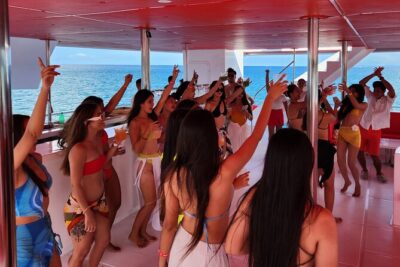
Boracay Sunset Cruise with Party DJ & Unlimited Food and Drinks
Read our review →
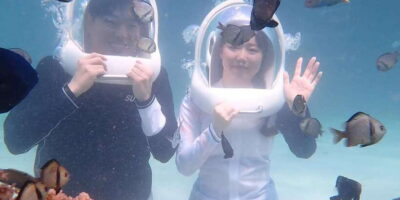
Boracay: Helmet Diving Experience with Photos and Videos
Read our review →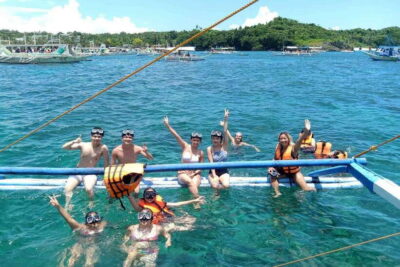
Boracay: Island Boat Tour with Crystal Cove Entry
Read our review →
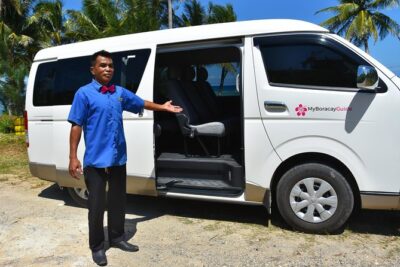
Caticlan Airport Transportation to Boracay Island Round Trip
Read our review →Browse the lists this tour appears in