
Reviewed · MANILA TOURS
Explore Intramuros: Introduction to Philippine History
Intramuros is where Manila’s Spanish past becomes easy to read. In three hours, you move from the country’s oldest stone church to a recreated colonial home, a World War II memorial, and the old fort where the independence story turns darker. It is a useful first look at more than 300 years of Philippine history, not just a stroll past old walls.
I like the small-group format, capped at 15 people, because it leaves room for questions and can sometimes feel almost private. I also like that the main admission fees are covered, so your $55 pays for more than a guide walking beside you. The main caution is pace: one past participant felt rushed and did not reach every planned stop, so speak up if you want more time at a site.
Key points
- San Agustin Church begins the story: See the oldest stone church in the Philippines and the only church in Intramuros to survive the bombing of Manila during World War II.
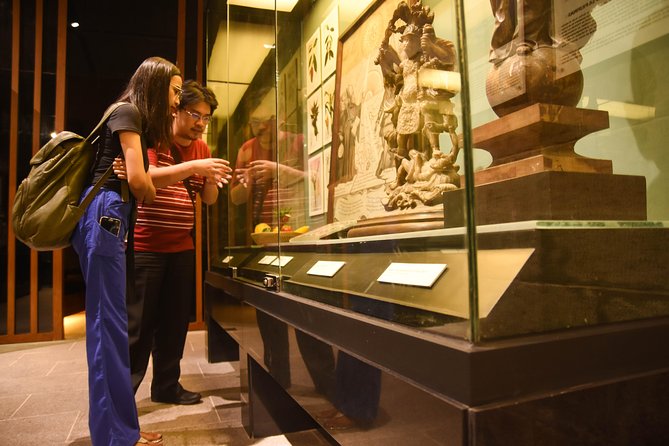
- The museum adds useful context: Museo San Agustin covers the Catholic Church and the Spanish Galleon Trade, with artifacts from several centuries.
- Casa Manila shows colonial home life: This recreated upper-class residence gives you a visual sense of how Manila’s elite lived around the turn of the 19th century.
- The route connects war and independence: Memorare Manila and Fort Santiago bring World War II and the Philippine struggle for independence into the same three-hour walk.
- Guides shape the experience: Jian is praised for detailed historical and cultural explanations, while Jerome is known for humor, interaction, and help with Filipino language and history.
- The value depends on your interests: At $55, the tour makes sense if you want context, admission fees, and a compact introduction rather than a casual walk.
Why Intramuros works as a first Manila history lesson
Intramuros means within the walls, and the old district gives you a clear setting for understanding Manila’s colonial past. Instead of seeing isolated buildings, you follow a connected route through religious power, trade, domestic life, war, and independence.
That order matters. San Agustin Church introduces Spanish Catholic influence. Museo San Agustin widens the picture to global trade and church life. Casa Manila shifts the focus to daily life among Manila’s upper class. The later stops turn toward wartime loss and the fight against Spanish rule.
You will not learn every chapter of Philippine history in three hours. You will, however, get a workable map of the subject. For a first visit, that is the point. The tour gives you enough background to make later sightseeing more meaningful, rather than leaving you to guess why each old building matters.
The route also includes backstreets and short walks between major sites. That is important because Intramuros is not only a collection of ticketed attractions. The streets, walls, churches, and open spaces help you understand how the district functioned as a fortified colonial center.
More walks through old Manila:
- Intramuros, Manila: Historical Bamboo Bike Tour
★ 4.8 · 583 reviews - Experience Intramuros with Bamboo Bicycle – Ecotours
★ 5.0 · 508 reviews - Manila: Intramuros, Chinatown, and Old Manila Half-Day Tour
★ 4.8 · 475 reviews
San Agustin Church: the strongest opening stop
The tour starts at San Agustin Church on General Luna Street, a practical meeting point inside Intramuros. You spend about 10 minutes seeing the church itself, with admission listed as free.
San Agustin is described as the oldest stone church in the Philippines and the only survivor of the bombing of Manila during World War II. Those facts give the building unusual weight. You are not simply looking at an old religious structure. You are standing in one of the few surviving pieces of old Manila after the destruction of the war.
The short time here is enough for an introduction, but it may feel brief if you want to study the architecture or sit quietly inside. I would treat this stop as the beginning of the story, not the complete church visit. The museum next door supplies the longer explanation.
Your guide may also use this first stop to explain the role of the Catholic Church in Spanish Manila. The supplied details do not promise a particular lecture or demonstration, so the depth will depend partly on your questions and the guide leading your group.
Museo San Agustin and the worldwide galleon trade
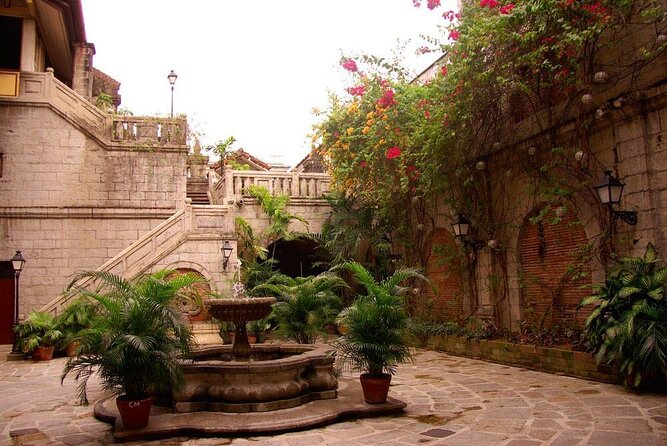
Next door, Museo San Agustin receives about 30 minutes of the tour. Admission is included, which makes this one of the places where the tour fee has a clear practical benefit.
The museum covers church life and artifacts from different centuries. It also introduces the Spanish Galleon Trade, a subject that helps place Manila in a much larger world. The district was not an isolated outpost. Its connections reached across oceans, linking the Philippines with Spain and other parts of the trading world.
This is a useful place to slow down and ask questions. Objects in a museum can seem disconnected when you walk through alone. A guide can explain what you are looking at and why it mattered to the church, the city, or the colonial system.
Thirty minutes is enough for a focused visit, though not for every display in detail. If museums are your main reason for booking, you may find the time limited. If you want a compact introduction before moving through the district, the length fits the tour well.
Guides such as Jian and Patrick have been praised for explaining Filipino culture and history in a clear way. Jian, in particular, is described as offering extra facts and small details that helped make the sites easier to understand. A private-feeling group can also give you more freedom to ask about points that interest you.
Casa Manila: seeing colonial life indoors
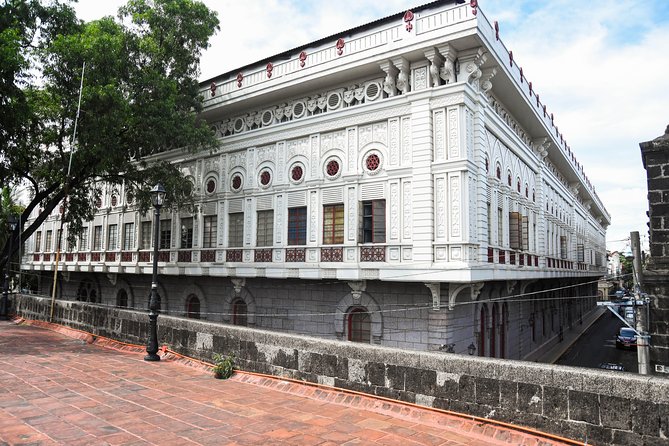
Casa Manila takes another 30 minutes. This turn-of-the-19th-century house is a recreation of an upper-class Manila home, so it gives you a different kind of evidence than a church or fort.
Religious and military buildings tell you about institutions. Casa Manila helps you picture domestic life among the wealthy. Rooms, furnishings, and household arrangements can make social divisions more visible than a history lecture alone. You begin to see that colonial Manila was not only about soldiers and priests. It was also about how people lived, entertained themselves, and displayed status.
This is one of the most accessible stops for visitors who prefer concrete details. A recreated home gives you something immediate to look at while the guide explains the period. It also breaks up the church and fort material with a more personal view of the past.
The drawback is that 30 minutes passes quickly. You may want time for photographs or a closer look at the rooms, but the tour still has three more stops ahead. Ask your guide if you want a particular room or feature explained rather than trying to inspect everything at once.
A few more Manila day trips to weigh up
- Experience Manila’s Heritage: Intramuros & More in Half a Day!
★ 5.0 · 76 reviews - Tagaytay, Taal Volcano & Heritage Town: A Journey of Discovery
★ 5.0 · 29 reviews - Half-Day Heritage Tour: Manila’s Historic Gems
★ 4.9 · 29 reviews - Manila Historical Highlights Private Half Day Tour
★ 5.0 · 20 reviews
Memorare Manila and the cost of wartime destruction
The Memorare Manila Monument is a short 10-minute stop. Admission is free, and the monument commemorates civilians killed during World War II.
This stop adds an essential correction to any overly romantic picture of Spanish Manila. Historic walls and old churches can look beautiful, but Intramuros also carries the memory of immense civilian suffering. The monument gives your guide a place to explain the Philippines’ role in the Second World War and the destruction of Manila.
Ten minutes is enough for a brief explanation and a moment to take in the memorial. It is not a full World War II tour. Still, its position in the route is effective. After seeing the old church and colonial home, you are reminded that much of Manila’s historic fabric was lost.
If you want a more detailed wartime history, this tour may only be a starting point. Its purpose is to connect the monument to the wider story, then carry you onward to Manila Cathedral and Fort Santiago.
Manila Cathedral and the religious center of the country
The route pauses for about 10 minutes at Manila Cathedral, described as the seat of the Catholic Church in the Philippines. Admission is free.
The stop is short, but it reinforces the role religion played in the country’s history. By this point, the church is no longer just an old building on the route. It forms part of a larger explanation of Spanish influence, Catholic institutions, and the place of faith in Philippine public life.
Do not expect a long interior visit or an extended service of architectural detail. The stop works best as a compact landmark visit and a link between the earlier church museum and the final fort.
The tour’s strength is this connective structure. You see several important places, but the guide’s explanations are what turn them into a story. If you walk Intramuros alone, you can photograph the cathedral. With a guide, you can ask how it fits into the history of the district and the country.
Fort Santiago brings the history to a hard finish
The tour ends at Fort Santiago, the old Spanish military stronghold inside Intramuros. You spend about 30 minutes here, and admission is included.
This is the route’s most important closing stop. The fort allows the discussion to move from Spanish control to the Philippine movement for independence. It also gives the guide a setting for explaining one of the country’s heroes and the pressures that shaped the independence struggle.
A military fort makes political history physical. Walls, gates, and defensive spaces help you picture how authority was enforced. The visit is not just about architecture. It is about who held power, who resisted it, and how the district changed over time.
Ending here is convenient if you want to continue exploring Fort Santiago after the tour. The stated tour end is inside the fort, so you are not returned to San Agustin Church. That matters when planning the rest of your day. You finish near one of Intramuros’ main attractions, with the afternoon free for more sightseeing.
Thirty minutes gives you a strong introduction, but it may not satisfy someone who wants to see every corner of the fort. If you want a slower visit, ask the guide what you should return to after the tour.
What the guides add to the walk
The guide is the main reason to choose this experience over a self-guided visit. The attractions are public, but their meaning is not always obvious. A guide can explain the Spanish period, Catholic influence, the galleon trade, World War II, and independence in one connected conversation.
Several guides are named in the supplied information. Jian is repeatedly singled out for historical detail, cultural insight, and an easy manner. He has also tailored explanations to solo participants and answered questions patiently. Jerome is described as funny, interactive, cordial, and especially good at making history feel lively. He has also helped visitors learn about Filipino language and culture. Patrick is mentioned as part of a strong guiding team.
That does not mean every departure will feel identical. One person found the tour rushed and missed some stops, while many other accounts describe the pacing as comfortable and the explanations as clear. The practical answer is simple: tell your guide at the start if you prefer a slower pace, more photographs, or extra historical detail.
Groups can reach a maximum of 15 people, but the actual size may be smaller. Some departures have had only one or two participants, creating a private-tour feel without the cost of booking a fully private experience. You should not count on that outcome, but the small-group limit is still a useful feature.
The $55 price and what it covers
The price is $55 per person. That is not the cheapest way to see Intramuros, especially if you only want to walk around and view the buildings from outside. The value improves if you plan to visit the included museums and Fort Santiago anyway.
Your fee includes an English-speaking guide, bottled water, and all entrance fees listed for Museo San Agustin, Casa Manila, and Fort Santiago. San Agustin Church, Memorare Manila, and Manila Cathedral are listed as free stops. You avoid stopping to pay at each ticket desk, and the guide handles the interpretive work throughout the route.
The tour lasts about three hours, leaving the rest of the day open. That half-day shape is useful if you are fitting Intramuros into a wider Manila schedule. You can take the tour in the morning and continue elsewhere, or use it as a structured introduction before returning to the fort or another site on your own.
Private transportation is not included. You meet at San Agustin Church and walk through Intramuros to Fort Santiago. Because the activity is near public transportation, you need to arrange your own way to the starting point and from the ending point.
I see the price as fair for someone who wants history explained and expects to use the included admissions. It is less compelling for a confident independent sightseer who prefers to spend an hour at one site and skip the rest.
Heat, timing, and the walking pace
The tour is a walking experience, though the supplied information does not give a precise distance. You should expect to move between several sites inside Intramuros over roughly three hours.
Manila can be hot, and one participant appreciated having a break during the tour. Bottled water is included, but you should still plan around the heat and tell the guide if you need a slower pace. The tour is described as suitable for most people, but no specific mobility details are provided.
The schedule gives about 10 minutes to the church, 30 minutes at the museum, 30 minutes at Casa Manila, 10 minutes at Memorare Manila, 10 minutes at Manila Cathedral, and 30 minutes at Fort Santiago. Time also has to cover walking and transitions, so the schedule is best understood as an outline rather than a promise of exact minutes.
If you want to take many photographs, ask questions at every stop, and read every museum label, three hours may feel tight. If you want the main sites and a clear explanation of how they connect, the pace should suit you well.
Who should book this Intramuros tour
I would recommend it most strongly to a first-time Manila visitor who wants a firm introduction without spending a whole day in museums. It also suits solo visitors, couples, and families with young adult children who enjoy asking questions and learning as they walk.
It is a good choice if you value:
- A guide who can connect several centuries of history
- Included admission fees
- A small group capped at 15 people
- A central start at San Agustin Church
- A finish at Fort Santiago
- A half-day schedule with free time afterward
I would think twice if you dislike group pacing or want a very slow architectural study. The itinerary has many stops, and one participant felt that the guide moved too fast and did not complete every planned visit. The best way to protect your experience is to state your preferred pace early.
Free cancellation is available up to 24 hours before the start time for a full refund. Changes or cancellations made inside that window are not accepted for a refund. The tour requires good weather, and a weather cancellation offers either another date or a full refund.
Should you book it?
Book this tour if you want Intramuros to make sense quickly. The route covers the church, trade, home life, wartime loss, religious authority, and military power in one compact morning or afternoon. Guides such as Jian and Jerome add the strongest value by making the history conversational rather than merely pointing out old buildings.
Skip it if your priority is the lowest possible cost or complete control over your schedule. You can walk through Intramuros independently, but you will need to arrange your own admissions and create the historical links yourself.
For most first visits, I think the $55 price is justified by the included tickets, small group, and broad historical coverage. Just leave room for a little flexibility, speak up if the pace is too quick, and plan to spend extra time at Fort Santiago after the tour if the story has caught your attention.
FAQ
How long does the Intramuros tour last?
The tour lasts approximately three hours and covers six listed stops inside Intramuros.
Where does the tour begin?
You meet your guide at San Agustin Church on General Luna Street, Intramuros, Manila.
Where does the tour end?
The tour ends at Fort Santiago, the old Spanish military stronghold inside Intramuros.
Are entrance fees included?
Yes. Entrance fees for Museo San Agustin, Casa Manila, and Fort Santiago are included. San Agustin Church, Memorare Manila, and Manila Cathedral are listed as free admission stops.
Is transportation included?
No. Private transportation is not included. You arrange your own transportation to San Agustin Church and from Fort Santiago after the tour.
How large is the group?
The activity has a maximum of 15 travelers.
What is included besides admission?
The tour includes bottled water and an English-speaking guide.
What happens if bad weather cancels the tour?
If the experience is canceled because of poor weather, you are offered a different date or a full refund.
Just added around Manila
- Philippines Intro 3 days 2 nights Tour Best of Manila and Beyond★ 5.0 · 3 reviews
- MANILA: HISTORICAL KALESA RIDE TOUR EXPERIENCE IN INTRAMUROS★ 4.0 · 3 reviews
- Makati Street food walking tour with Dinner★ 5.0 · 3 reviews
- Bites and Sights: Tagaytay Food and Nature Excursion from Manila★ 4.0 · 3 reviews
- Authentic Manila Chinatown Food Tour Exploration★ 5.0 · 3 reviews
- 4 Day Banaue Ifugao Rice Villages Private tour Trekking★ 4.5 · 3 reviews
- Embark on a 7-Day Banaue-Sagada Adventure of a Lifetime★ 5.0 · 3 reviews
- From Manila: Philippines Private Tour Guide★ 4.1 · 3 reviews
Manila Tours, compared.

Intramuros, Manila: Historical Bamboo Bike Tour
Read our review →
Experience Intramuros with Bamboo Bicycle – Ecotours
Read our review →
Manila: Intramuros, Chinatown, and Old Manila Half-Day Tour
Read our review →
Manila Food Tour: Introduction to Philippine Street Food
Read our review →
Spectacular Manila to Tagaytay: Full-Day Sightseeing Tour
Read our review →
Makati Nightlife: VIP Access to Clubs, Rooftops & Go-Go Bars
Read our review →
Discover Tagaytay’s Countryside: Half-Day Sightseeing Tour
Read our review →
From Manila: Tagaytay Countryside Wonders: A Half-Day Tour
Read our review →Browse the lists this tour appears in