
Reviewed · CEBU TOURS
Private 5-Hour Cebu City Tour with Lunch
Cebu City’s story comes in quick, memorable stops: Chinese religious tradition at the Taoist Temple, Spanish colonial power at Fort San Pedro, and the Catholic heart of the city at Santo Niño Basilica and Magellan’s Cross. This private half-day tour links those places without making you arrange taxis, tickets, or lunch.
I like the small group limit of six, which should make it easier to ask questions and adjust the pace. I also like the way the tour pairs famous landmarks with Casa Gorordo, a restored 1850s home that gives you a look at how wealthy Cebu families lived. The main caution is guide quality: one account praises an engaging guide and strong English, while another describes a guide named Edwin who offered little explanation and rushed the meal.
Key points to know before booking
- Four very different Cebu stops: A Chinese temple, Catholic basilica, Spanish fort, and hardwood-and-coral family home make up the visit.
- Private transport saves time: Hotel pickup and drop-off are included for hotels inside Cebu City, useful in traffic.
- Lunch and admission are covered: The price includes the guide, entrance fees, local taxes, lunch, and return transport.
- Expect a quick half-day: Each main stop is listed at about one hour, with road time between them.
- Guide performance matters: Strong guiding can make the history memorable, but the experience depends heavily on the assigned guide.
- Best for small groups: Families or groups of friends can split the cost and enjoy a private vehicle for up to six people.
A fast way to read Cebu City’s past
This tour works because Cebu’s major sights are not treated as isolated photo stops. You move from the island’s Chinese community to its Catholic traditions, then to Spanish military rule and the domestic life of a prosperous Filipino family.
That range gives you a useful first look at the city. You will not see every side of Cebu in five hours, but you will get a clear introduction to the forces that shaped its culture: trade, religion, colonial rule, and local family life.
The guide is the key to making those links clear. A strong guide can explain why Magellan’s arrival still matters, how the Santo Niño became central to Cebu, and why a small fort and an old family house belong in the same morning. One especially positive account praises the guide’s English, storytelling, and knowledge of Philippine history. Another account, involving a guide named Edwin, describes being left to tour sites alone and receiving little commentary. I would confirm the guide and pickup details before departure if the operator allows it.
The tour is priced at about $91.03 per person. That is not a bare-bones sightseeing rate, but the cost includes a private vehicle, a professional guide, entrance fees, lunch, local taxes, and hotel transport. For two people, it is a fairly substantial spend. For a group of four to six, the private format becomes easier to justify because you are sharing the transport and guide cost while avoiding the slower pace of a large coach group.
A few more Cebu day trips to weigh up
- Cebu Moalboal: Kawasan Canyoneering Adventure with Lunch
★ 4.9 · 630 reviews - Cebu City: Bohol Countryside Tour with Loboc Cruise Lunch
★ 4.5 · 488 reviews - Canyoneering Experience in Kawasan Falls with Lunch
★ 5.0 · 440 reviews
The Taoist Temple and Cebu’s Chinese community
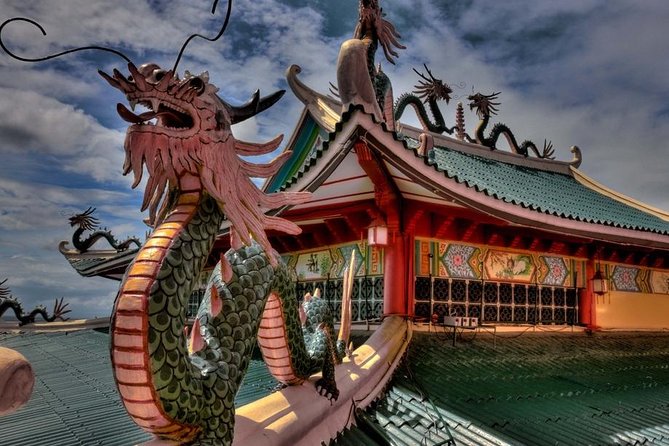
The Cebu Taoist Temple is roughly 6 kilometers from the city center, or about four miles. It was built in 1972 by Cebu’s Chinese community, so it offers a different window into the city than the older Spanish and Catholic sites that follow.
The entrance is colorful, with dragons and tiered roofs that echo the Great Wall of China. That makes the temple an appealing first stop for photographs, but its value is not just visual. It shows that Cebu’s cultural story did not begin with Spanish arrival. Chinese communities have long been part of the city’s commercial and social life.
You should dress in smart casual clothing for the tour, and that is especially sensible here because this is an active religious site. The tour information does not specify access rules inside the temple, so follow your guide’s instructions and treat the grounds as a place of worship rather than just a backdrop.
The drive also passes Carbon Market, where fresh produce arrives from around the island. You may see the market from the vehicle rather than receive a full market tour, so do not expect a long visit there. Still, the passing view adds a useful piece of daily Cebu to a morning otherwise filled with formal landmarks.
Traffic can affect the order and length of the visit. The advertised pickup time is given as 8:30 a.m. in one place and 9 a.m. in the tour description, so I would confirm the exact time with the operator. Road times are approximate, and Cebu traffic can change the morning’s rhythm.
Santo Niño Basilica and Magellan’s Cross
The Basilica del Santo Niño is one of Cebu’s most important Catholic sites. It was founded in 1565 and houses a revered 16th-century statuette of the Christ child, known as the Santo Niño.
The basilica is across from Magellan’s Cross, so two major sights come together in one stop. That pairing helps explain the city’s religious history. Magellan and the Spanish and Portuguese explorers reached Cebu in 1521, while the basilica dates from the later Spanish period. The cross marks the arrival of the expedition, while the Santo Niño represents the lasting Catholic tradition that developed afterward.
I would give this stop your full attention instead of treating it as a quick picture break. Listen for the guide’s explanation of how the cross, the basilica, and the Santo Niño connect. The supplied schedule allows about an hour here, which should provide enough time for both places, though services or local activity may affect how freely you can move.
This is also the stop where respectful behavior matters most. Keep your clothing modest and follow posted instructions. The official dress note says smart casual, which is a practical standard for the entire tour.
The area can feel crowded and active, especially compared with the quiet courtyard at Fort San Pedro. That contrast is part of the appeal, but it also means you may spend more time moving with the flow of people than standing in silence. If you want a slow, reflective church visit, tell your guide early.
Fort San Pedro’s compact military story
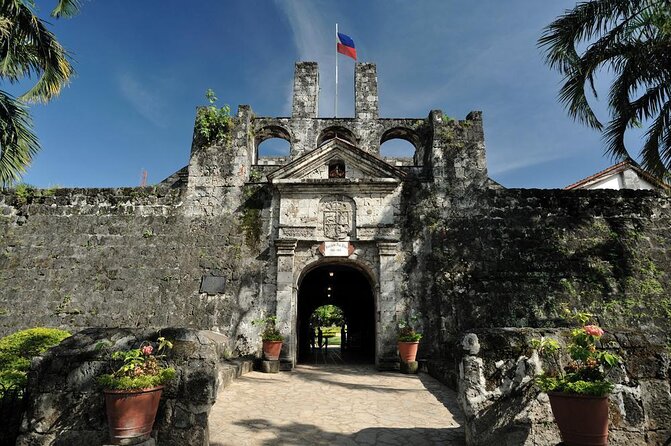
Fort San Pedro was founded in 1565 as a Spanish military outpost. Today, its inner courtyard contains a tranquil garden, giving the site a calmer feel than you might expect from a defensive structure.
The fort is compact, and the schedule gives it about one hour. That is enough time to look at the fortifications, walk through the courtyard, and hear the basic military story without turning the stop into a long technical tour.
I like Fort San Pedro because it adds physical scale to the colonial history you hear at the basilica. Religious buildings can tell you how power was expressed through faith. A fort shows how authority was protected and enforced. Seeing both on the same morning makes Cebu’s Spanish period easier to understand.
The fort is also a good place to slow down briefly. After the temple and basilica, the garden offers a change of pace. Do not expect a vast fortress complex. The appeal here is the contrast between sturdy walls and a peaceful central space, not the size of the site.
The published stop order is not entirely consistent, with the fort appearing first in one schedule and the Taoist Temple described as the first stop in the day’s narrative. Your guide may adjust the sequence to suit traffic and opening conditions. That is normal for a private tour, but it is another reason to confirm the morning plan at pickup.
Same island, a completely different kind of day:
- Cebu City: Whale Shark Swimming & Kawasan Falls Canyoneering
★ 4.7 · 665 reviews - Cebu: Oslob Whale Sharks, Tumalog Falls & Sardine Snorkeling
★ 4.3 · 343 reviews - Cebu: Whale Shark Swim and Kawasan Canyoneering Tour
★ 4.6 · 318 reviews - Cebu: Oslob Whale Sharks, Moalboal Sardine Run & Turtles
★ 4.5 · 266 reviews
Casa Gorordo and a look inside old Cebu
Casa Gorordo Museum is the most distinctive stop for understanding private life in Cebu. The house was built in the 1850s for a wealthy family and uses Mactan coral stone and Philippine hardwood. It has been restored and furnished in period style.
A fort tells you about public power. Casa Gorordo tells you about family status, domestic space, and the material world of Cebu’s elite. The old hardwood construction and coral walls give the visit a physical quality that a standard city monument cannot match.
I would pay attention to the building itself. The materials are part of the story, not just decoration. The house can help you picture how a prosperous family lived in the mid-19th century, during a period when Cebu was already tied to wider regional trade and colonial administration.
The museum also gives the tour a more personal finish. Instead of ending with another major public landmark, you finish with rooms and furnishings connected to everyday life. That makes the morning feel broader and less like a checklist of famous names.
The visit is listed at about one hour, including admission. Ask the guide to explain which features are original and which were restored if that information is available during your visit. The supplied tour details confirm the materials and period restoration, but not the full set of displays or the exact museum route.
What lunch adds, and what to watch for
Lunch is included, along with entrance fees, local taxes, and transport. That is convenient on a five-hour schedule because you do not need to stop and negotiate a restaurant plan while moving around the city.
The meal is also the least predictable part of the experience. One highly positive account specifically praises the lunch, while another describes being taken to a poor buffet at 11 a.m. and feeling rushed. I would treat lunch as a practical inclusion rather than the reason to book the tour.
The early meal time may feel odd, especially if you normally eat later. The timing may be designed to fit the half-day schedule and traffic. If you have dietary restrictions or strong food preferences, ask about the lunch arrangement before you go. No specific restaurant, menu, or dietary provision is supplied, so you should not assume a particular style of meal.
The tour ends with drop-off at your Cebu City hotel. That is useful if you are staying in the city and want a simple return after a full morning of sightseeing. Pickup and drop-off apply only to hotels located within Cebu City, so people staying elsewhere need to confirm transport arrangements.
Timing, group size, and physical effort
The experience lasts about five hours and has a maximum of six people. A private vehicle and guide make the format more flexible than a large group tour, but private does not mean slow. Four major stops, road transfers, and lunch create a fairly full morning.
You should expect some walking at the religious sites, fort, and museum. The tour asks for a moderate level of physical fitness. That wording matters for families with older relatives or anyone who finds uneven surfaces, standing, or warm weather difficult. Children must be accompanied by an adult, and the child rate applies only when sharing with two paying adults.
The small group format is especially useful for families. You can keep relatives together, ask for explanations at your level, and avoid waiting for a large bus group. It also suits first-time visitors who want a broad introduction before deciding which parts of Cebu deserve a longer return visit.
The private format may be less important if you are comfortable exploring independently and already have transport. Cebu City’s sights are spread across different areas, and the included vehicle removes some planning work. But if you prefer to spend a long time at one church or museum, five hours and four main stops may feel rushed.
How the price measures up
At $91.03 per person, the value depends on your group size and how much you value convenience. The package includes the guide, vehicle transfers from and back to a Cebu City hotel, admission to the listed sites, lunch, and local taxes.
For a group of five or six, the cost buys a private introduction with a clear historical theme. You are paying for time saved as much as for sightseeing. You do not need to find each site, arrange separate rides, pay each admission, or choose lunch while managing city traffic.
For one or two people, the price deserves more thought. A lower-cost shared option might make more sense if you care mainly about seeing the landmarks and are happy with a fixed group pace. The private option earns its premium when you want personal explanations, hotel transport, and the ability to ask questions.
The mixed guide experiences make this a service purchase as much as a sightseeing purchase. The best account praises history explanations, English skills, and a good lunch. The weakest describes almost no guiding and an unsatisfactory meal. That gap is too large to ignore, so confirm the pickup time, guide details, and lunch plan before committing if possible.
Should you book the Cebu City tour?
Book this tour if you want a compact first look at Cebu, prefer private transport, and are traveling with family or a small group. The mix of Taoist, Catholic, military, and domestic history is well chosen, and the included fees simplify the day.
I would be more cautious if you want a deep museum visit, a late lunch, or complete control over your time. The tour moves quickly, traffic can change the schedule, and the guide has a major effect on the quality of the morning.
For the best chance of a good experience, confirm the 8:30 or 9 a.m. pickup time, ask who will guide your group, and clarify the lunch setup. If those details are clear and you value convenience, this is a sensible way to get your bearings in Cebu City without spending a full day on the road.
FAQ
How long is the Cebu City tour?
The tour lasts approximately five hours, including transportation, sightseeing, and lunch.
What time does the tour begin?
The meeting information gives an 8:30 a.m. start, while the day’s description says hotel pickup begins at 9 a.m. Confirm the exact pickup time with the operator before departure.
Does the tour include hotel pickup and drop-off?
Yes. Round-trip hotel transport is included for hotels located within Cebu City.
How many people can join the private tour?
The tour has a maximum of six people.
Are lunch and entrance fees included?
Yes. Lunch, admission fees, local taxes, and a professional guide are included. Souvenir photos cost extra.
Is the tour suitable for children?
Yes, it is described as family-friendly. Children must be accompanied by an adult, and the child rate applies only when sharing with two paying adults.
Just added around Cebu
- Kawasan Falls Canyoneering Transfers from Cebu with Lunch★ 5.0 · 3 reviews
- Cebu: Oslob Whale Shark, Simala Church & Ka Treasure Argao★ 4.8 · 3 reviews
- Cebu: Pescador Island, Sardines run and Kawasan Canyoneering★ 5.0 · 3 reviews
- Private Kawasan Falls Canyoneering w/ Lunch★ 5.0 · 3 reviews
- Cebu: Moalboal Snorkeling and Kawasan Falls Canyoneering★ 5.0 · 3 reviews
- Cebu: Mantayupan Falls, Hermit’s Cove & Bojo River Eco Tour★ 4.8 · 3 reviews
- Cebu & Lapu-Lapu City Tour With Lunch at House of Lechon★ 5.0 · 3 reviews
- Cebu: Inambakan, Kawasan, and Mantayupan Waterfalls Tour★ 3.7 · 3 reviews
Cebu Tours, compared.

Cebu City: Whale Shark Swimming & Kawasan Falls Canyoneering
Read our review →
Cebu Moalboal: Kawasan Canyoneering Adventure with Lunch
Read our review →
Cebu City: Bohol Countryside Tour with Loboc Cruise Lunch
Read our review →
Canyoneering Experience in Kawasan Falls with Lunch
Read our review →
Cebu: Oslob Whale Sharks, Tumalog Falls & Sardine Snorkeling
Read our review →
Cebu: Whale Shark Swim and Kawasan Canyoneering Tour
Read our review →
Cebu: Oslob Whale Sharks, Moalboal Sardine Run & Turtles
Read our review →
Cebu: Kawasan Falls Canyoneering Tour with Ziplining & Lunch
Read our review →Browse the lists this tour appears in