
Reviewed · CEBU TOURS
Cebu and Mactan: Twin City Culture and History Half-Day Tour
Cebu and Mactan tell two connected stories: Spanish colonization and Catholic faith on one side, Filipino resistance and local craft on the other. I like that this five-hour tour brings both islands into one outing, with Magellan’s Cross, Fort San Pedro, two museums, a guitar factory, and the Liberty Shrine all on the route.
I also like the practical setup. Hotel pickup and admission fees are included, and the English-speaking guide helps connect the sites instead of leaving you to piece the story together. The main drawback is the tight schedule. With so many stops, some visits are brief, and traffic between Cebu City and Mactan can affect how much time you have at each place.
Key points at a glance
- Magellan’s Cross begins the story in 1521, linking Cebu’s Christian tradition to the arrival of Ferdinand Magellan.
- Fort San Pedro is the oldest Spanish fort in the Philippines, built from coral stone and tied to the first Spanish settlement in Asia.
- Casa Gorordo and Museo sa Sugbu give you two different views of Cebu’s Spanish and Filipino past.
- A Mactan guitar factory shows the hands-on side of Philippine culture and local manufacturing.
- The Liberty Shrine honors Datu Lapu-Lapu, who defeated Magellan on Mactan Island.
- Hotel pickup, transport, guides, and entrance fees are covered, which helps justify the $116 price for a compact private or small-group sightseeing day.
Why this half-day route works
If you have only a short stay in Cebu, this tour gives you a useful first look at both Cebu City and Mactan Island. It is not designed for slow, unplanned wandering. Instead, it gathers the main cultural stops into a five-hour route and handles the driving between them.
I see the appeal for first-time visitors staying at a Cebu City hotel or a Mactan resort. You do not need to arrange separate taxis, find each museum, or work out how to cross from Cebu to Mactan. The tour also gives the sights a clear order, beginning with Cebu’s Christian and Spanish story, then shifting toward Mactan’s local identity and resistance.
The route covers a lot. That is its strength, but also its limit. You should expect a brisk visit rather than long museum time or quiet reflection at each stop. If you prefer to spend an hour at one church or study every display in a museum, a private custom tour may suit you better.
A few more Cebu day trips to weigh up
- The Original Cebu City Historical and Food Walking Tour
★ 4.5 · 81 reviews - Cebu: Exploring Cebu City’s rich history and Uphill Tour
★ 4.5 · 68 reviews - Cebu City: Historical Street and Food Tour
★ 4.9 · 31 reviews
Magellan’s Cross and the Basilica Minore
The first stop is Magellan’s Cross, one of Cebu’s most recognizable symbols. Ferdinand Magellan placed the cross here in 1521, and it became linked with the Christianization of Cebu and Spanish rule under King Philip of Spain.
The site is important because it marks a major turning point in Philippine history. It is not simply an old religious object. It represents the beginning of a long Spanish colonial period and the spread of Christianity, which remains central to Filipino life.
The tour then moves to the Basilica Minore of the Child Jesus. The basilica is home to the image of the Santo Niño, or Jesus as a child, said to have been given by Magellan to Queen Juana, the first Christian Filipina. That connection gives the church a direct link to the cross and to Cebu’s early Christian story.
I like the way these two stops fit together. At Magellan’s Cross, you see the symbol of arrival and conversion. At the basilica, you see how that early event became a living religious tradition.
The basilica is a working place of worship, so your guide’s timing and instructions matter. Dress and behavior should be respectful, and the visit may feel more like entering an active church than walking through a museum. The tour gives you the setting and key facts, but it cannot promise a quiet visit.
Fort San Pedro, Cebu’s coral-stone stronghold
Fort San Pedro is the next major stop, and it brings the Spanish story into physical form. The fort began in 1565 and was built from coral stone to protect the settlement that became the first Spanish base in Asia.
I find forts useful because they make colonial history easier to picture. Instead of hearing only about Spain’s arrival, you can see the walls built to defend the city and understand how military power helped secure the settlement.
Fort San Pedro is described as the oldest Spanish fort in the Philippines. That gives it special weight on a Cebu itinerary, though you should keep your expectations in check. This is not a huge fortress complex requiring half a day. The attraction works well as a focused stop within a wider tour.
The advantage of visiting with a guide is context. You can learn why the fort was built and how it fits into Cebu’s development, then move on without spending time decoding every historical sign yourself. The tradeoff is that the schedule may not leave room for a leisurely circuit of every corner.
Colon Street and Plaza Parian
After the fort, the route passes along Colon Street, described as the oldest street in the country, before reaching Plaza Parian. This short drive helps connect the separate sights into a wider picture of Cebu City.
Colon Street is not treated as a long walking stop on this tour. You mainly see it from the vehicle while moving toward the heritage area. That is worth knowing if you want time on foot. The value here is orientation: you are moving through the older core of Cebu rather than jumping from one isolated attraction to another.
Plaza Parian leads into the museum portion of the city route. This is where the tour shifts from major public monuments to domestic life, objects, and local records.
Same island, a completely different kind of day:
- Cebu City: Whale Shark Swimming & Kawasan Falls Canyoneering
★ 4.7 · 665 reviews - Cebu Moalboal: Kawasan Canyoneering Adventure with Lunch
★ 4.9 · 630 reviews - Cebu City: Bohol Countryside Tour with Loboc Cruise Lunch
★ 4.5 · 488 reviews - Canyoneering Experience in Kawasan Falls with Lunch
★ 5.0 · 440 reviews
Casa Gorordo and the life of Cebu’s elite
Casa Gorordo presents the lifestyle of the Spanish and Filipino elite during the 18th century. The house offers a different kind of historical evidence from a fort or church. Instead of walls built for defense, you see how a wealthy family lived and how Spanish influence shaped domestic life.
I like this stop because it puts social history into ordinary details. A historic house can show class, taste, family life, and cultural mixing in ways that a monument cannot. It helps explain that colonial influence was felt not only in government and religion, but also in homes and daily habits.
The description places Casa Gorordo near Plaza Parian, making it a natural part of the city’s heritage district. Expect an interpretive museum visit rather than a hands-on activity. The guide is especially useful here because the meaning of a room or household object may not be obvious at first glance.
Museo sa Sugbu and Cebu’s wider story
Museo sa Sugbu completes the Cebu City heritage section. Together, Casa Gorordo and Museo sa Sugbu give you two different ways to approach the past.
Casa Gorordo focuses on an elegant Spanish-Filipino household. Museo sa Sugbu broadens the view to Cebu’s cultural and historical development. I value the pairing because one museum gives you a close-up look at social life, while the other helps place Cebu within a larger Filipino setting.
This is also where the schedule becomes most important. Two museums in one half-day route can feel rushed if you want to read every display. You will get the most from the visit by listening to the guide’s main points and deciding which objects or rooms deserve your attention.
For a first visit, that is a fair compromise. You get an introduction to Cebu’s past without giving up the Mactan portion of the tour. For a return visit, you may prefer to choose one museum and spend more time there.
Crossing to Mactan through Mandaue
The vehicle then crosses toward Mactan Island through Mandaue, an industrial city known for world-class furniture factories. This transfer is more than dead time. It shows how the urban area changes as you move from Cebu’s historic center toward the island’s commercial and resort districts.
The route also makes the twin-city idea clear. Cebu City and Mactan are close enough to combine, but they are not the same experience. Cebu City supplies the major Spanish-era landmarks and museums. Mactan adds churches, craft production, and the story of Lapu-Lapu.
Traffic is the main practical uncertainty. The tour lasts five hours, but road conditions can influence how long you spend at each stop. I would avoid scheduling an important flight or ferry immediately afterward. Hotel pickup and drop-off reduce the transport worry, but they do not remove traffic from the equation.
The Church of Our Lady of the Rule
The first Mactan stop is the Church of Our Lady of the Rule. It is described as a national shrine, and many people connect the church’s namesake with Mactan’s economic success.
This visit adds a local religious perspective to the earlier basilica stop. The Basilica Minore connects to the Santo Niño and Cebu’s first Christian period. The Church of Our Lady of the Rule shows how devotion continues to shape Mactan’s identity.
You should not expect this stop to function like a museum with a long sequence of exhibits. Its value is in seeing a living shrine and hearing how local belief connects to the community. The visit may be brief, but it helps prevent the tour from becoming only a parade of colonial buildings.
Watching Philippine guitars take shape
The guitar factory is one of the most distinctive stops on the route. You get to see how Philippine guitars are made and learn about a craft for which Mactan is known.
This is a welcome change of pace after several churches, forts, and museums. Historic sites tell you what happened in the past. The factory shows a continuing skill and a working part of the local economy. I like that balance.
The supplied details do not promise a hands-on workshop or a chance to build an instrument yourself. Think of it as a factory visit and demonstration. You will see the making process, but the amount of time and access can depend on the day’s schedule.
For shoppers, this may also be a useful place to consider a locally made guitar, though the tour information does not state that a purchase is included or guaranteed. The important point is cultural: Philippine guitars are not presented as an abstract souvenir, but as the result of skilled local work.
Lapu-Lapu and the Liberty Shrine
The final stop is the Liberty Shrine, located on the battlefield where Magellan was defeated by the Mactan chieftain Datu Lapu-Lapu. A large statue of Lapu-Lapu rises above the mangrove trees and battlefield.
This ending gives the tour a needed Filipino counterpoint. The earlier stops follow the arrival of Magellan, the spread of Christianity, Spanish settlement, and the building of colonial power. At Mactan, the story turns to resistance. Lapu-Lapu is remembered not as a minor figure in someone else’s expedition, but as the leader who defeated Magellan.
I like finishing here because it changes the tone of the day. You leave with a reminder that Philippine history was not simply something imposed from Europe. Local leaders shaped the outcome, and Mactan became one of the clearest symbols of that resistance.
The Liberty Shrine is also an outdoor stop, so the experience may feel less formal than the museums and churches. The statue, mangroves, and battlefield setting provide a strong visual close to the tour. Again, the time is likely focused rather than extended, so listen closely to the guide’s explanation.
What the $116 price includes
At $116 per person, this is not the cheapest way to see Cebu. Its value depends on what you need.
The price includes hotel pickup and drop-off from listed Cebu City hotels and Mactan resorts, transportation, an English-speaking guide, and entrance fees. Those inclusions matter because the route crosses between Cebu City and Mactan and involves several paid cultural sites.
Pickup locations include Plantation Bay, Maribago Bluewater Beach Resort, Costabella Tropical Beach Hotel, Tambuli East and West, Shangri-La’s Mactan Island Resort and Spa, and Hilton Cebu Resort and Spa. Cebu City pickup is offered at Marco Polo Plaza Cebu, Waterfront Cebu City Hotel and Casino, Montebello Villa Hotel, Cebu Parklane Hotel, and Cebu City Marriott.
Meals and drinks are not included, so plan to eat before or after the tour. Since the route lasts five hours, the lack of a meal is not a serious problem, but you should not expect a lunch stop to be part of the experience.
I consider the price easier to justify if you are staying at one of the listed hotels, want a guide, and plan to visit several sites in one morning or afternoon. It is less compelling if you are comfortable arranging your own transport and visiting only one or two attractions.
Guide style and the private-tour advantage
The guide makes a big difference on a route with this much history. A good explanation can connect Magellan’s Cross, the basilica, the fort, the museums, and Lapu-Lapu into one story rather than a list of stops.
Guide assignments vary. Rosh has led this route, and the driver Rydel has been praised for patience when a visitor wanted extra time at certain locations. That detail matters if you book a private outing or receive the same team, but you should not assume those exact people will lead every departure.
A private format also gives the tour more flexibility. One person described being able to linger longer at selected sites and having photographs taken during the day. If photography matters to you, it is worth asking whether your booking is private and how much adjustment the schedule allows.
The official language is English. Contact details are required so the local partner can confirm pickup, and the exact time and location arrive by email. Check your spam folder if the message does not appear.
Who should book this tour
I would recommend this experience to a first-time visitor who wants a guided introduction to Cebu and Mactan without spending a full day on sightseeing. It suits people who enjoy churches, forts, museums, local craft, and historical storytelling.
It is also a good match for anyone staying at a listed hotel and wanting transport handled from start to finish. Families and older visitors may appreciate not having to organize several separate rides, although the amount of walking and the pace are not fully specified.
I would be more cautious if you want a relaxed schedule, a long museum visit, or extensive time at each church. The route is packed, and the city transfer can reduce your time on site. For those priorities, a shorter custom route with fewer stops may offer better value.
The tour has a rating of 4.8 from four recorded bookings, with especially strong praise for the guides and their hospitality. That is a small sample, so I would treat it as a useful sign rather than a guarantee. The clearest strength is the human element: patient guiding, clear attention to the sites, and help with photographs have all been part of the experience.
FAQ
How long does the Cebu and Mactan tour last?
The tour lasts five hours.
What language is the tour conducted in?
The live tour guide speaks English.
Are hotel pickup and drop-off included?
Yes. Pickup and drop-off are included for listed Cebu City hotels and Mactan Island resorts.
What is included in the price?
Transportation, a tour guide, entrance and admission fees, and hotel pickup and drop-off are included.
Are meals and drinks included?
No. Meals and drinks are not included.
Can I cancel for a full refund?
Yes. You can cancel up to 24 hours in advance for a full refund. You can also reserve now and pay later.
Should you book this five-hour Cebu route?
Book it if you want the major cultural sights organized into one efficient outing. The best reason is the range: you move from Magellan’s Cross and the Basilica Minore to Fort San Pedro, two museums, a guitar factory, and Lapu-Lapu’s Liberty Shrine in a single tour.
Skip it if you want to explore slowly or choose your own pace. At $116, the tour earns its price through transport, admissions, hotel service, and a guide who can make sense of Cebu’s complicated past. For a short stay, that convenience is useful. For a longer stay, you may prefer to split Cebu City and Mactan into separate days.
Just added around Cebu
- Kawasan Falls Canyoneering Transfers from Cebu with Lunch★ 5.0 · 3 reviews
- Cebu: Oslob Whale Shark, Simala Church & Ka Treasure Argao★ 4.8 · 3 reviews
- Cebu: Moalboal Snorkeling and Kawasan Falls Canyoneering★ 5.0 · 3 reviews
- Cebu: Pescador Island, Sardines run and Kawasan Canyoneering★ 5.0 · 3 reviews
- Private Kawasan Falls Canyoneering w/ Lunch★ 5.0 · 3 reviews
- Cebu: Mantayupan Falls, Hermit’s Cove & Bojo River Eco Tour★ 4.8 · 3 reviews
- Cebu & Lapu-Lapu City Tour With Lunch at House of Lechon★ 5.0 · 3 reviews
- Cebu: Inambakan, Kawasan, and Mantayupan Waterfalls Tour★ 3.7 · 3 reviews
Cebu Tours, compared.

Cebu City: Whale Shark Swimming & Kawasan Falls Canyoneering
Read our review →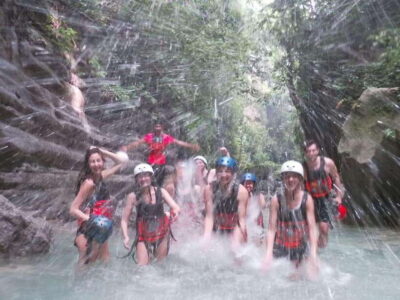
Cebu Moalboal: Kawasan Canyoneering Adventure with Lunch
Read our review →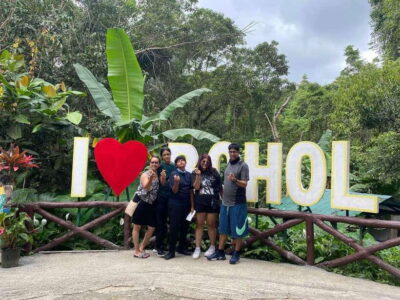
Cebu City: Bohol Countryside Tour with Loboc Cruise Lunch
Read our review →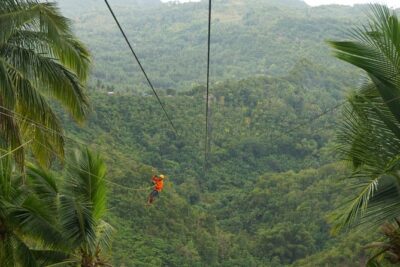
Canyoneering Experience in Kawasan Falls with Lunch
Read our review →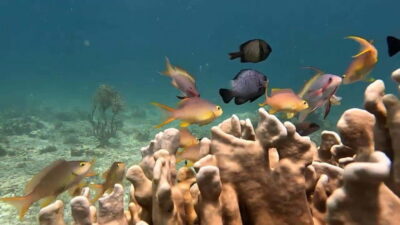
Cebu: Oslob Whale Sharks, Tumalog Falls & Sardine Snorkeling
Read our review →
Cebu: Whale Shark Swim and Kawasan Canyoneering Tour
Read our review →
Cebu: Oslob Whale Sharks, Moalboal Sardine Run & Turtles
Read our review →
Cebu: Kawasan Falls Canyoneering Tour with Ziplining & Lunch
Read our review →Browse the lists this tour appears in