
Reviewed · HISTORICAL TOURS
Full-Day Historical Heritage Guided Tour of Tacloban and Palo
Leyte’s past comes at you from several directions on this tour: General MacArthur’s return in World War II, the survival story of Super Typhoon Haiyan, and the everyday culture of the Waray people. You move between memorials, churches, government buildings, and coastal viewpoints rather than seeing history in a single museum room.
I like the personal guide service, especially with Kuya Jeff, whose explanations cover both the war and the 2013 typhoon. I also like the private air-conditioned vehicle, lunch, and pickup, since this route covers a lot of ground in one day. The main drawback is the pace: most stops last only 15 minutes, so you get an overview rather than long visits at each site.
Key points to know before booking
- MacArthur’s Leyte landing: Visit the memorial park linked to the Allied return to the Philippines during World War II.
- Haiyan stories with local context: See the M/V Eva Jocelyn Shrine and hear about the storm’s effect on Tacloban and its people.
- Kuya Jeff as guide: Expect a guide who explains both historical events and local culture in a friendly, clear way.
- Nine varied stops: The route includes churches, civic buildings, memorials, a museum, a bridge, and bay views.
- Private transport and lunch included: Your group travels in an air-conditioned vehicle, with no other participants joining.
- A full but brisk day: The tour lasts about 6 to 7 hours, including the driving time between attractions.
Why this tour gives Leyte more than a war memorial
Many visitors first connect Leyte with MacArthur’s famous return. That story matters, but it is only one part of the day. This tour adds the local view: how people in Tacloban and Palo lived through war, storms, damaged buildings, displacement, and recovery.
The Haiyan section is especially important. Super Typhoon Haiyan, known locally as Yolanda, struck on November 8, 2013, and caused enormous destruction in Tacloban and nearby areas. The M/V Eva Jocelyn Shrine helps you understand the force of the storm in a physical way. A ship was pushed into the middle of a street by the water surge, a sight that is difficult to grasp from written accounts alone.
You also hear about the Waraynons, the people of this part of Eastern Visayas. The tour is not limited to dates and monuments. It aims to connect those events with the people who rebuilt their lives afterward. That human focus gives the day more weight than a simple sightseeing loop.
A few more the Philippines day trips to weigh up
- Intramuros, Manila: Historical Bamboo Bike Tour
★ 4.8 · 583 reviews - The Original Cebu City Historical and Food Walking Tour
★ 4.5 · 81 reviews - Explore Intramuros: Introduction to Philippine History
★ 5.0 · 80 reviews
Starting at the Sto. Niño Shrine and Heritage Museum
The first stop is the Sto. Niño Shrine and Heritage Museum, where you see art collections gifted to the Marcos family during the time of former President Ferdinand Marcos Sr. You have about 30 minutes here, with admission included.
This is the longest scheduled stop, which makes sense. The museum gives you an indoor start to the day and a chance to look at objects and art before moving through the outdoor sites. It also introduces a political and social chapter of Philippine history that may not be familiar to you.
Thirty minutes is enough for a focused visit, but not for a slow examination of every collection. Listen closely to the guide’s explanation, since the context is likely to be more useful than trying to see everything at speed.
MacArthur Landing Memorial and the return to Leyte
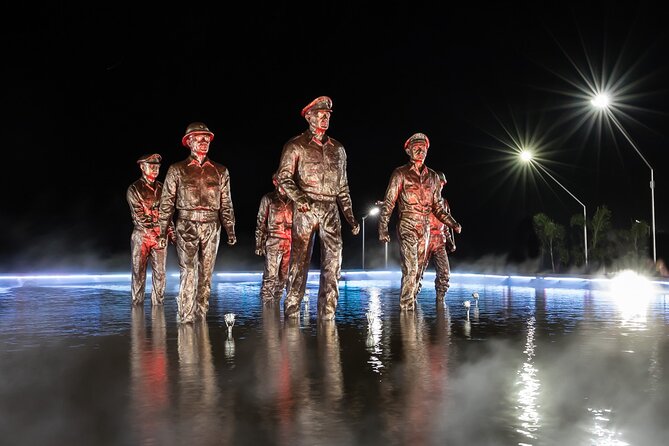
At the Leyte Landing Memorial, the tour turns to October 1944 and the Allied campaign to liberate the Philippines from Japanese occupation. The park commemorates General Douglas MacArthur’s landing in Leyte Gulf, an event connected to the largest naval battle of World War II.
You have around 15 minutes here. That is enough to take in the memorial setting and hear the central story, but it is a short visit for anyone who wants a detailed military history lesson.
One useful point is that the guide may add background beyond the basic landing narrative. Kuya Jeff has been praised for explaining both World War II and the Haiyan disaster, so you can expect the day’s history to be tied to the places around you rather than delivered as a list of dates.
Access can also depend on conditions at the memorial. During one visit, the main MacArthur Memorial was closed for repairs, but the guide and operator arranged access to the construction site so the visitor could still see it. Do not count on that exact arrangement, but it shows the value of having a local guide who can respond to changes.
Palo Cathedral and the wartime role of churches
The Metropolitan Cathedral of Our Lord’s Transfiguration is better known locally as Palo Cathedral. It sits in the heart of Palo and is one of the tour’s key religious and historical landmarks.
The cathedral was converted into a hospital during World War II for wounded Allied soldiers. That detail changes how you look at the building. It was not only a place of worship. During the war, it became a place of medical care and shelter.
The scheduled visit is about 15 minutes, so expect a brief look and an explanation rather than a long church visit. You should dress and behave respectfully, since this remains an active religious site.
Same island, a completely different kind of day:
- El Nido: Island Hopping Tour A Lagoons and Beaches
★ 4.3 · 1,572 reviews - From Puerto Princesa: Underground River Full-Day Trip
★ 4.3 · 1,460 reviews - Bohol: Premium Chocolate Hills, Tarsiers & River Experience
★ 4.7 · 804 reviews - Coron Ultimate Tour: 7 Destinations with Lunch & Transfers
★ 4.8 · 754 reviews
The M/V Eva Jocelyn Shrine and the memory of Haiyan
The M/V Eva Jocelyn Shrine is one of the most striking stops because it shows the storm’s power through a single ship. Seventeen ships ran aground during the onslaught of Super Typhoon Haiyan, and the Eva Jocelyn was pushed into a street by the rising water.
You spend about 15 minutes at the shrine. That may sound short, but the site is visually direct. The ship’s presence makes the scale and force of the storm easier to picture than a photograph or weather report can do.
This is also where the tour’s local storytelling matters most. You hear about the struggle after Haiyan and the work of recovery. The experience does not treat the disaster as a dramatic backdrop only. It connects the physical damage with the people of Tacloban and their efforts to rebuild.
Tacloban City Hall and Cancabato Bay views
Tacloban City Hall sits on a hill, giving you a useful pause from the memorials and churches. The stop is planned for about 15 minutes and includes time for photographs overlooking Cancabato Bay.
The view is one of the day’s lighter moments. After hearing about war and Haiyan, it helps to see the city and water together, with a local civic building anchoring the scene.
This is not a long sightseeing stop, and the purpose is mainly the viewpoint and the city’s seat of government. Keep your camera ready, since the schedule does not leave much room for lingering.
Leyte Provincial Capitol and the Commonwealth government
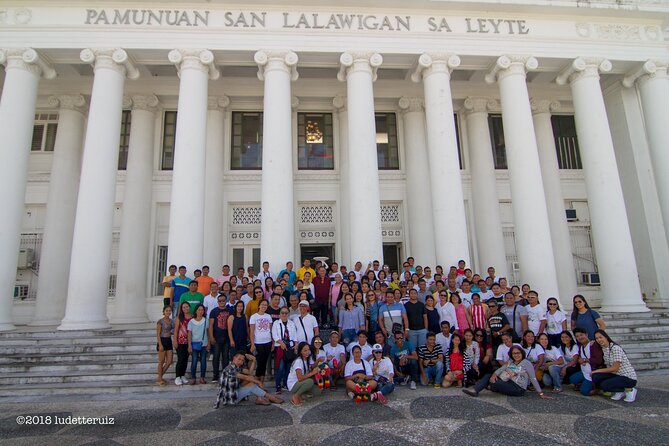
The Leyte Provincial Capitol Building adds another layer to the region’s political history. It served as the seat of government of Leyte until 2019 and also housed the Philippine Commonwealth government from October 23, 1944, to February 25, 1945.
That makes the building especially relevant when paired with the MacArthur Landing Memorial. The return of the Commonwealth government was not only a military event. It also involved restoring civil government in the Philippines.
You have about 15 minutes here. The building is best appreciated through the guide’s explanation, since the brief stop does not allow time for a detailed architectural visit.
San Juanico Bridge between Leyte and Samar
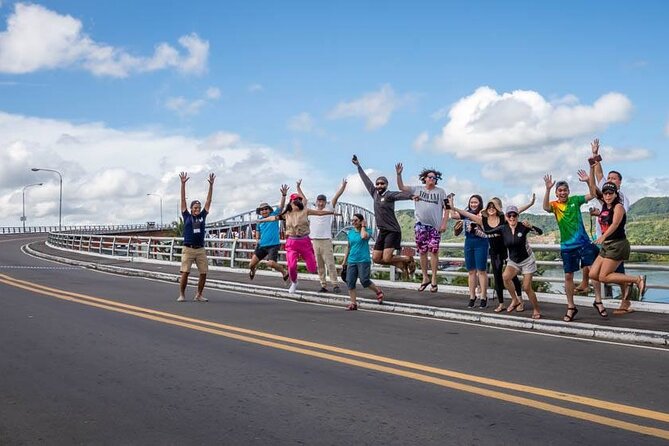
San Juanico Bridge is one of the tour’s most scenic stops. It stretches 2.16 kilometers across the water and was once the longest bridge in the Philippines. The bridge is an important link between Leyte and Samar and one of the best-known sights in the area.
You have about 15 minutes, enough for photographs and a quick look at the crossing. The bridge gives the day a wider regional frame: this is not only a Tacloban tour, but a look at how Leyte connects with neighboring Samar.
The visit is brief, so do not expect a long walk across the bridge or a full engineering presentation. The air-conditioned vehicle is useful here because it keeps the day moving between locations.
Madonna of Japan and a message of peace
The Madonna of Japan is a monument to peace between Filipinos and Japanese people. It was erected 33 years after World War II to remember the soldiers who fought and died in the conflict.
The statue sits on a rocky piece of land, adding a quiet setting to the visit. After the military history earlier in the day, this stop shifts attention toward remembrance and reconciliation.
Again, the schedule allows about 15 minutes. That is enough to hear the story, take in the monument, and reflect for a moment. The stop will appeal most to you if you value memorials that look beyond victory and defeat.
Sto. Niño Church and survival through disaster
The final listed stop is Sto. Niño Church in Tacloban, another church with a long connection to the city. It has endured typhoons and earthquakes and was partly damaged during Super Typhoon Haiyan.
The church also provided cover during the storm. That detail brings the day back to ordinary people and the buildings they relied on when danger arrived.
You have about 15 minutes here. It is a fitting end to the historical route because the church links faith, community, natural disaster, and recovery. You leave with a better sense of how the city’s buildings carry memory.
What the 6 to 7 hour schedule feels like
The advertised duration includes travel between attractions, not just time spent at the sites. With nine stops, the day is active and organized, but it is not a slow-paced museum tour.
The pattern is usually simple: arrive, hear the story, take photographs, and move on. That works well if you want to cover many important places in one outing. It works less well if you prefer sitting quietly in a church, reading every display, or spending an hour at a single memorial.
The private format helps. Only your group participates, so you can ask questions and may have more flexibility than on a large coach excursion. Pickup is offered, and the air-conditioned vehicle matters in the warm Philippine climate, particularly on a day with several outdoor stops.
Lunch is included, which improves the value and removes one planning task. Bicycle use is not included, so this is a vehicle-based experience rather than a cycling tour.
The guide makes the difference
Kuya Jeff is the guide name associated with this experience, and his role is central to its appeal. The strongest praise focuses on his friendly manner and his ability to explain local culture, World War II, and the 2013 typhoon in the same tour.
That combination is useful because the stops are spread across different periods. Without a guide, the museum, cathedral, capitol, bridge, and ship shrine could feel disconnected. With clear explanations, they form a story about war, government, religion, disaster, and recovery.
You should ask questions as you go. The schedule is tight, and the guide is your best source for connecting what you see with the people and events of Leyte.
Is the $51 price good value?
At $51 per person, the price is reasonable for a private 6 to 7 hour tour that includes an air-conditioned vehicle and lunch. The value is strongest for solo visitors or small groups who want a structured day without arranging separate rides between Tacloban, Palo, and the bridge area.
The price also pays for local interpretation, not only transportation. The Haiyan stories and Waray cultural context are difficult to gather from signs alone, and a good guide can turn a series of short stops into a meaningful day.
If you are traveling with a large group, compare the per-person cost with hiring transport and arranging your own route. You would still need to research each site and find someone to explain the connections between them. For many visitors, the saved time and local guidance make the cost worthwhile.
Who should book this Tacloban heritage tour?
I would recommend this tour to first-time visitors who want a broad introduction to Leyte. It suits people interested in World War II, Philippine government history, churches, local culture, and the story of Haiyan recovery.
It is also a good choice for anyone who wants a private outing rather than a group excursion. Families and mixed-interest groups can benefit from the variety, since the day includes museums, viewpoints, memorials, religious buildings, and a major bridge.
You may want something else if your priority is a relaxed schedule. The 15-minute stops are enough for orientation, but not for long contemplation or detailed photography. People with a strong interest in military history may also want a separate, more specialized visit focused only on the 1944 campaign.
Pickup, mobile tickets, and service animals are supported. Most people can participate, and the tour is near public transportation. Confirmation is normally provided at booking, though bookings made within 12 hours of departure are confirmed as soon as possible and remain subject to availability.
You can cancel up to 24 hours before the start time for a full refund. Poor weather can lead to a different date or a full refund, and changes made within 24 hours are not accepted.
Should you book it?
Book this tour if you want the big picture of Tacloban and Palo in one well-organized day, with a guide who can explain both MacArthur’s return and the painful, personal story of Haiyan. The strongest reasons are the private vehicle, included lunch, varied stops, and Kuya Jeff’s focus on culture as well as historical events.
Skip it if you want long visits at individual sites or a quiet, unhurried day. For everyone else, $51 is a fair price for a thoughtful introduction to Leyte, especially when you want the places and people connected rather than viewed as isolated photo stops.
FAQ
How long does the Tacloban and Palo tour last?
The tour lasts approximately 6 to 7 hours, including travel time between the attractions.
What time does the tour start?
The tour starts at 8:30 am.
Is this a private tour?
Yes. Only your group participates in the activity.
Is hotel pickup offered?
Pickup is offered, though the provided information does not specify the exact pickup locations.
Is lunch included?
Yes. Lunch and an air-conditioned vehicle are included.
Which guide may lead the tour?
Kuya Jeff is identified as a guide for this experience. The experience provider is Ma. Lourdes Bernadette Ruiz.
Are entrance fees included?
Admission to the Sto. Niño Shrine and Heritage Museum is included. The other listed attractions have free admission.
Can I cancel for a refund?
Yes. You can cancel at least 24 hours before the start time for a full refund. If poor weather cancels the tour, you are offered another date or a full refund.
Just added around the Philippines
- Soar & Explore: Boracay Parasailing + Island Hopping★ 5.0 · 3 reviews
- 2025 Tarsier, Waterfalls & Chocolate Hills Tour★ 5.0 · 3 reviews
- Sohoton Cove: Swim with Jellyfish & Explore Hidden Lagoons★ 3.6 · 3 reviews
- Private Transfers Puerto Princesa To Elnido★ 5.0 · 3 reviews
- Makati Street food walking tour with Dinner★ 5.0 · 3 reviews
- MANILA: HISTORICAL KALESA RIDE TOUR EXPERIENCE IN INTRAMUROS★ 4.0 · 3 reviews
- Philippines Intro 3 days 2 nights Tour Best of Manila and Beyond★ 5.0 · 3 reviews
- Kawasan Falls Canyoneering Transfers from Cebu with Lunch★ 5.0 · 3 reviews
Historical Tours, compared.
Intramuros, Manila: Historical Bamboo Bike Tour
Read our review →
The Original Cebu City Historical and Food Walking Tour
Read our review →
Explore Intramuros: Introduction to Philippine History
Read our review →
Experience Manila’s Heritage: Intramuros & More in Half a Day!
Read our review →
Cebu: Exploring Cebu City’s rich history and Uphill Tour
Read our review →
Browse the lists this tour appears in