
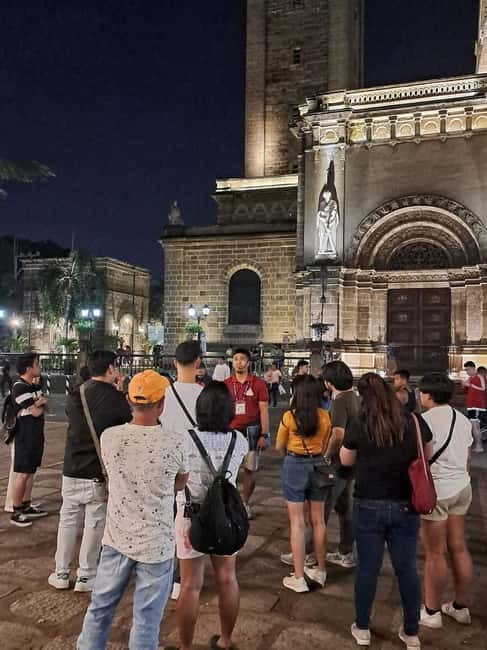
Reviewed · MANILA TOURS
A Night in Old Manila: Intramuros Walking Tour
Intramuros takes on a different mood after sunset. The old walls, cobbled lanes, and stone buildings look less like a busy daytime attraction and more like a preserved chapter of Manila’s past. The heart of this walk is Fort Santiago, where the guide connects the dungeon, wartime stories, and Dr. Jose Rizal’s final days.
I like the way the tour gives Fort Santiago a full hour instead of rushing through it. I also like the practical extras: admission fees, bottled water, and a DOT-accredited guide are included. The main drawback is the pace. You cover several landmarks in only two hours, so you get a strong introduction rather than a slow, detailed visit to every site.
- Fort Santiago after dark: Spend the longest part of the walk in Intramuros’ best-known citadel, including the dungeon and Rizal’s chapel cell.
- A guide-led history lesson: English and Tagalog guides such as Steven, Steve, and Cedhie have been praised for clear explanations, old photographs, and an easy way with questions.
- Six historic stops: The route links Fort Santiago with Manila Cathedral, Memorare Manila 1945, San Agustin Church, Plaza San Luis, and Casa Manila.
- Evening atmosphere: Lights on the old stone streets give familiar buildings a softer, more dramatic look.
- Simple pricing: The $23 fee includes site admissions, guiding, and bottled water, but not transport, meals, or hotel pickup.
- Small enough to manage: The public group can include up to 25 people, with private groups also available.
Why Intramuros Works Better After Sunset
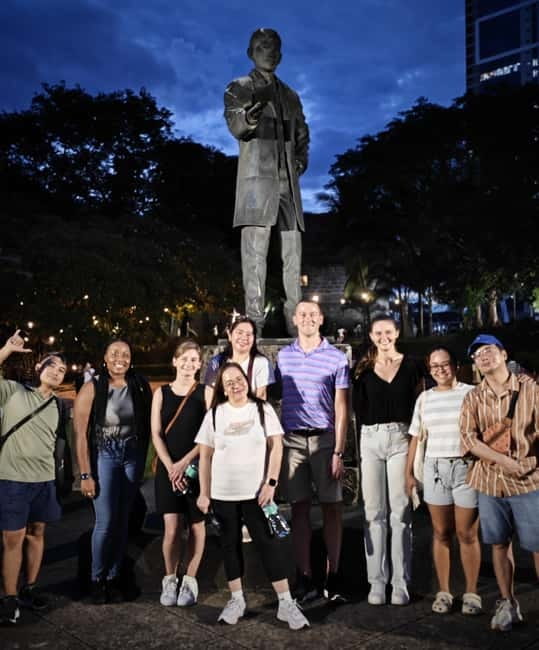
Intramuros is Manila’s walled city, and its strongest feature is not one single building. It is the way the walls, lanes, churches, plazas, and old houses fit together. At night, the light changes the feel of the place. Stone surfaces glow, shadows gather around the fortifications, and the modern city seems to pull back for a while.
You will not be wandering alone with a map and a list of dates. A live guide leads the walk and gives the sites a human scale. The best moments are likely to come when a guide links a building to a person, a wartime event, or a difficult choice in Philippine history.
The tour is especially useful if you have only a short time in Manila. In two hours, you see several major places without having to work out the route yourself. It also gives you enough background to return later to the church, museum, or house that caught your attention.
The evening setting has one trade-off. This is not the right format if you want to read every display, linger inside every building, or take a long series of architectural photographs. The attraction is the moving story, the sequence of places, and the atmosphere of old Manila at night.
Meeting at Fort Santiago at 5:15 PM
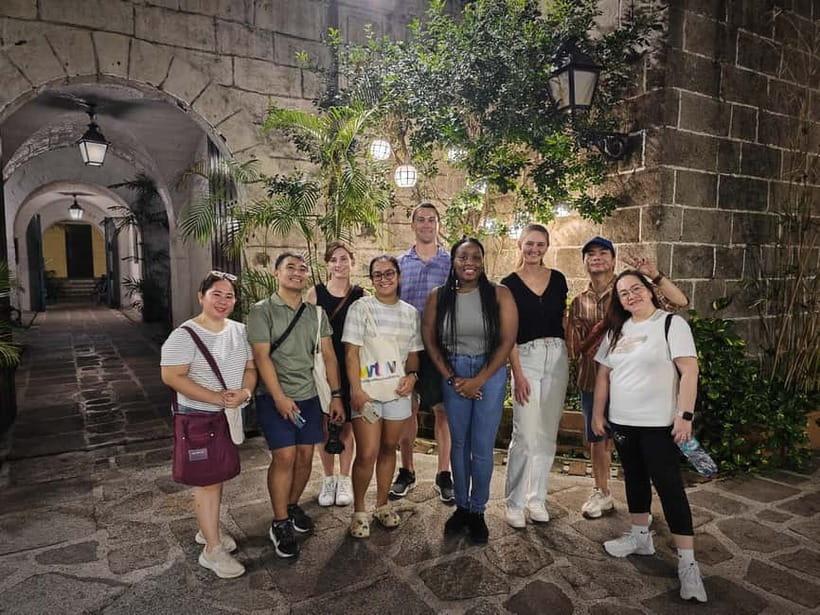
You meet at the Fort Santiago ticket booth at 5:15 PM, with the walk scheduled to begin at 5:30 PM. That half-hour window matters. Give yourself time to reach the booth, find the correct point, and contact the operator through WhatsApp or Viber if you have an arrival problem.
The tour does not include hotel pickup or drop-off. You also arrange your own transportation to and from Intramuros. Since the walk finishes at Casa Manila, you should think about your onward plans before setting out, especially if you want dinner or need to reach another part of Manila.
The listed starting location is United Philippine Lines, but the stated meeting instruction is the Fort Santiago ticket booth. Follow the meeting-point directions provided for your booking and message the operator if anything is unclear.
Bring an umbrella. That is not a minor suggestion in Manila, where a short shower can change your evening plans. Bottled water is included, but carrying your own water is still sensible. Wear shoes you can walk in comfortably, since the route uses old streets and fortress surfaces.
More Walking Tours in Manila
- Manila: Street Food and Drinks Walking Tour with Tastings
★ 4.8 · 114 reviews - Viva Old Manila: Intramuros Walking Tour
★ 4.9 · 104 reviews - Manila: Sightseeing and Food Walking Tour with Tastings
★ 4.7 · 68 reviews
Fort Santiago: The Main Event in One Hour
Fort Santiago receives about half of the tour’s time, and that is a sensible choice. It is the place where the walk’s military, political, and personal stories come together.
Your guide takes you through the citadel and explains how it shaped Philippine history. The fort is more than a set of walls for photographs. Its gates, passages, and enclosed spaces help you picture Intramuros as a defended city rather than simply an old district.
The dungeon adds a darker side to the visit. You hear its wartime stories and get a better sense of the suffering tied to this place. This part may not suit young children who dislike grim subjects, though one family found the overall tour worked well for an eight-year-old.
The tour also traces Dr. Jose Rizal’s final days at his chapel cell. Rizal is one of the central figures in Philippine history, and seeing the place associated with his last days gives the historical account a direct, personal focus. Your guide can explain the setting in a way that dates and names alone cannot.
This is where the guide’s skill matters most. Steven, Steve, and Cedhie have each been praised for making difficult subjects easier to follow. Cedhie used old photographs to make past scenes more tangible, while Steven was noted for welcoming questions and keeping the group comfortable.
Expect the fort portion to be the most serious section of the evening. It asks you to pay attention, and the wartime material can be heavy. Still, it is also the part most likely to stay with you after the tour.
Manila Cathedral in Fifteen Minutes
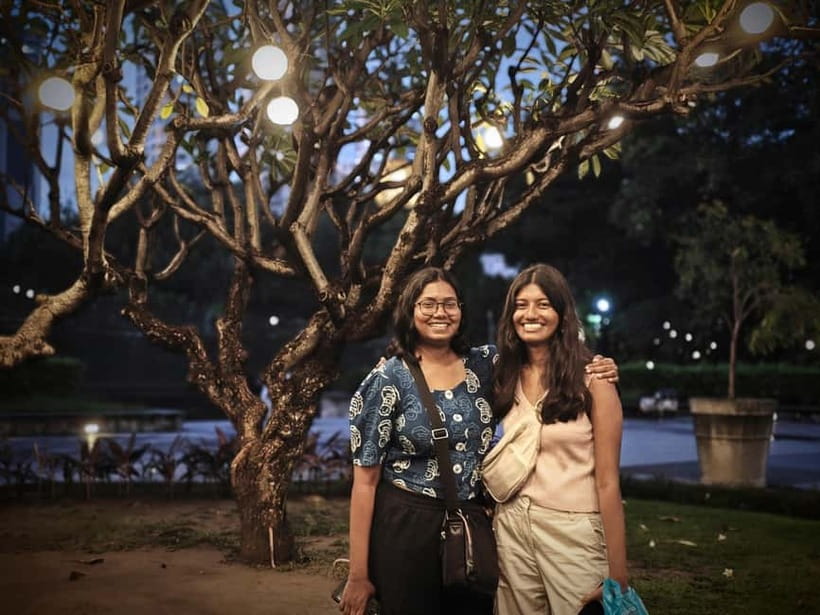
From Fort Santiago, the route continues to Manila Cathedral for a short guided visit. Fifteen minutes is enough for an introduction, a look at the setting, and a few key points from the guide.
You should approach this stop as an orientation rather than a full church visit. The cathedral helps you understand the religious and civic importance of Intramuros, but the schedule does not leave room for a long examination of every feature.
That short timing is part of the tour’s basic bargain. You see more places, but each stop after Fort Santiago is brief. If Manila Cathedral is your main interest, you may want to return independently with more time.
Memorare Manila 1945 and the Memory of War
Memorare Manila 1945 adds a memorial stop to the route. It gives the tour a clear connection to the destruction and loss experienced in Manila during World War II.
This visit is not just another photo pause. It changes the way you read the old city. Fort Santiago shows confinement and military power, while the memorial points toward the wider human cost of war. Together, the two stops give the evening a more serious shape.
Again, the scheduled fifteen minutes keeps the visit focused. You hear the essential story and have time for photographs, but you should not expect a long memorial program.
More walks through old Manila:
- Intramuros, Manila: Historical Bamboo Bike Tour
★ 4.8 · 583 reviews - Experience Intramuros with Bamboo Bicycle – Ecotours
★ 5.0 · 508 reviews - Manila: Intramuros, Chinatown, and Old Manila Half-Day Tour
★ 4.8 · 475 reviews - Manila: Guided Sunset Bamboo Bike Tour in Intramuros
★ 4.8 · 119 reviews
San Agustin Church, One of the Evening’s Best Visual Stops
San Agustin Church is another short guided stop, with about fifteen minutes set aside. Its age and stone construction fit naturally into a night walk through Intramuros, when the old buildings take on a warm, almost theatrical look.
I like this part of the route because it gives you a different kind of historical evidence. Fort Santiago speaks through walls, cells, and military spaces. San Agustin Church shows how faith, architecture, and daily life shaped the old city.
The visit is still brief, so listen closely when the guide points out the most important details. If you enjoy churches and architecture, you may wish the schedule allowed more time here. That is the pattern of the tour: broad coverage, clear explanation, and limited independent browsing.
Plaza San Luis and a Glimpse of Colonial Life
The walk then reaches Plaza San Luis Complex, where the emphasis shifts toward colonial-era domestic life and the built setting of old Manila.
This stop prepares you for the final arrival at Casa Manila. Rather than treating Intramuros as only a fort and a group of churches, the route shows how people lived within the walled city. That wider view makes the district easier to understand.
The complex is also a useful change of pace after the heavier wartime and political stories. You continue learning, but the focus moves toward houses, streets, and the social world behind the grand walls.
With fifteen minutes scheduled here, take the opportunity to look around while the guide speaks. The evening light should help with photographs, but the purpose is not simply to collect attractive images. It is to connect the architecture with the lives once lived inside it.
Finishing at Casa Manila
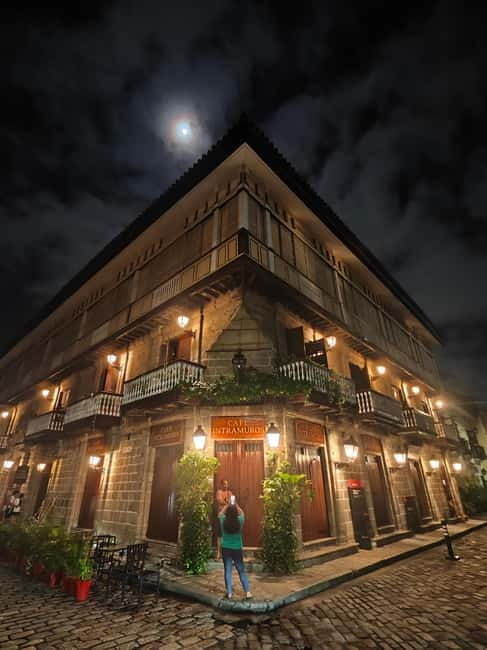
The tour ends at Casa Manila, a fitting final stop for a walk that begins with fortifications and moves toward home life. The house gives you a glimpse of colonial living and brings the route back to the everyday world of Intramuros.
Ending here also gives the tour a natural arc. You begin with the city’s defenses, pass through religious and memorial landmarks, and finish with the interiors and habits of a colonial household.
Casa Manila is the endpoint, not a promise of a long, self-guided house visit after the group disperses. If you want extra time inside, check what access is available when you book or ask the guide during the walk.
What the $23 Price Really Covers
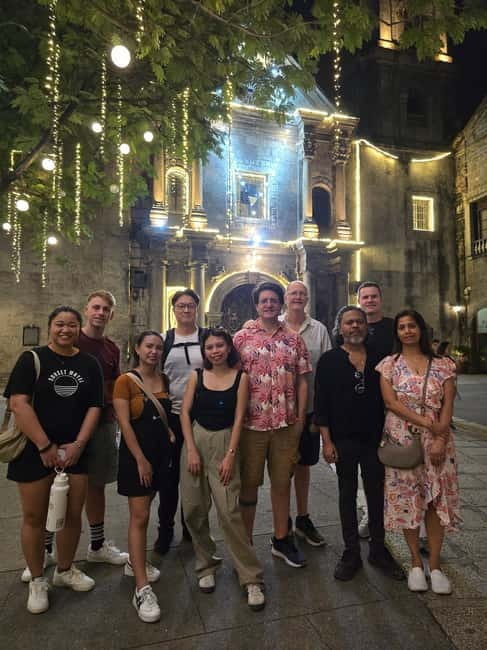
At $23 per person, the tour offers fair value for a two-hour guided introduction. The fee includes admission fees to the sites, the tour guide, bottled water, and the services of a Department of Tourism-accredited English-speaking local guide.
That combination matters in Intramuros. You are not paying only for someone to lead you down the street. You are also covering entry to the places on the route and getting a person who can explain why they matter.
The price does not include food, drinks beyond the bottled water, transportation, or hotel pickup and drop-off. Those costs are easy to manage, but you should add them to your evening budget. You may also want dinner afterward, since the tour does not include a food component.
The value is strongest for first-time visitors, short-stay visitors, and anyone who prefers a guide to explain the setting as they walk. It is less compelling if you already know Intramuros well or want to spend most of your time inside one particular museum or church.
The Guides Make the Difference
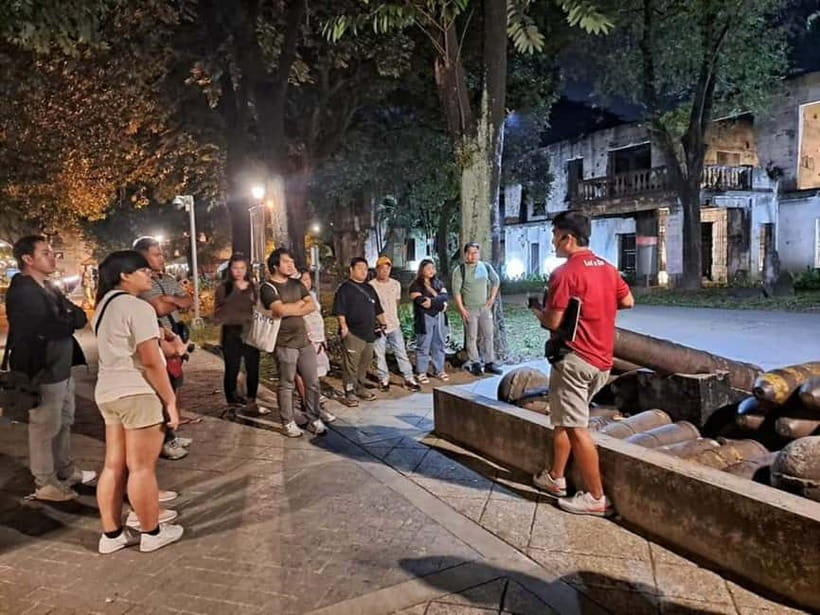
The strongest praise is directed toward the guides, and the comments give useful clues about what to expect. Steven is described as warm, easy to talk with, and full of stories. Steve is praised for passion and for structuring the information clearly. Cedhie is noted for explaining Manila’s difficult past in simple terms and using old photographs to make it easier to picture.
Guide assignments can vary, so you should not book on the assumption that one specific person is guaranteed unless the operator confirms it. Still, the pattern is encouraging: the experience depends on live explanation rather than a fixed audio script.
That matters because Intramuros contains several layers of history. A good guide can move from Spanish colonial rule to wartime destruction, then explain Rizal’s final days without turning the walk into a list of unrelated facts.
The guides speak English and Tagalog. The tour is public, with a maximum of 25 people, and private groups are available. A group of 25 is not tiny, so people who want frequent personal discussion may prefer the private option. The public format should suit most people who are comfortable staying with a group and listening as they walk.
Family Appeal and Physical Comfort
This walk can work for families, especially if children are interested in stories, forts, and old buildings. An eight-year-old joined the experience and enjoyed it, which suggests the guide’s storytelling can help keep younger participants engaged.
Still, the dungeon and wartime material are serious. Parents should prepare children for difficult subjects rather than presenting this as a light sightseeing stroll.
The activity is listed as wheelchair accessible. Because the tour moves through an old walled district and includes fortress and historic-site settings, anyone with specific mobility needs should contact the operator before arrival to confirm the route and current access conditions.
The activity is not suitable for people over 95 according to the supplied booking information. That is an unusually specific restriction, so check it carefully if it applies to anyone in your party.
Weather, Group Size, and Timing
The call time is 5:15 PM and the tour begins at 5:30 PM, with a duration of two hours. Starting in the evening helps with the mood and may make the walk more comfortable than a hot midday visit, but Manila weather remains a factor.
Bring an umbrella, even if the sky looks clear. One participant received a reminder about this before the tour, and light rain did arrive during that evening. The walk continued, but a wet-weather plan makes the experience easier.
The tour is open to joiners and can have up to 25 people. That size keeps the price down and makes it easy to meet others, but it may feel less personal than a private walk. A private group is available if you want more control over questions, pace, or family needs.
Alcohol and drugs are not allowed. Food and beverages are not included, apart from bottled water, so plan your meal before or after the walk.
Who Should Book This Walk
I would recommend this tour to you if you want a clear first look at Intramuros without spending half a day planning a route. It suits culture lovers, history fans, families with school-age children, and people who enjoy seeing old streets after dark.
It is also a good choice if Philippine history is new to you. The guides are used to explaining difficult subjects in an accessible way, and the route gives you several points of reference for later sightseeing.
You may want something else if your priority is food. One participant suggested that food-focused tours would be a useful addition, and this experience does not include tastings or restaurant visits. You may also prefer a longer daytime visit if museums, church interiors, and detailed photography are your main goals.
Should You Book A Night in Old Manila?
Book it if you want an affordable, well-organized introduction to Intramuros with a strong focus on Fort Santiago and the city’s wartime and colonial past. The $23 fee covers the main practical costs, and the evening setting gives the old district a special look.
Go in knowing that the tour is brisk. Fort Santiago gets the attention it deserves, while the cathedral, memorial, church, plaza, and Casa Manila receive short introductions. For most first visits, that balance works well. You leave with a map in your head, a better sense of Manila’s past, and several places you may want to explore again at your own pace.
FAQ
Where does the Intramuros night tour meet?
Meet your guide at the Fort Santiago ticket booth. The call time is 5:15 PM, and the tour starts at 5:30 PM.
How long does the walking tour last?
The tour lasts two hours.
What places are included on the route?
The route includes Fort Santiago, Manila Cathedral, Memorare Manila 1945, San Agustin Church, Plaza San Luis Complex, and Casa Manila.
Is Fort Santiago included?
Yes. Fort Santiago receives about one hour of guided touring and includes the dungeon and Dr. Jose Rizal’s chapel cell.
What is included in the $23 price?
The price includes a Department of Tourism English-speaking local guide, site admission fees, the tour guide fee, and bottled water.
Is transportation included?
No. Hotel pickup and drop-off, transportation, food, beverages, and other personal expenses are not included.
What languages are available?
Live guiding is available in English and Tagalog.
Can I cancel or book without paying today?
You can cancel up to 24 hours in advance for a full refund. The reserve-now, pay-later option lets you hold a spot without paying at the time of booking.
More Evening Experiences in Manila
- Manila by Night: Discovering City Highlights with Intramuros
★ 4.5 · 70 reviews - Manila: Guided Night Market Experience
★ 5.0 · 54 reviews - Manila Street food and Night Market Tour
★ 4.7 · 21 reviews - Manila Motorcycle Night Tour
★ 5.0 · 17 reviews
Just added around Manila
- Philippines Intro 3 days 2 nights Tour Best of Manila and Beyond★ 5.0 · 3 reviews
- MANILA: HISTORICAL KALESA RIDE TOUR EXPERIENCE IN INTRAMUROS★ 4.0 · 3 reviews
- Makati Street food walking tour with Dinner★ 5.0 · 3 reviews
- Bites and Sights: Tagaytay Food and Nature Excursion from Manila★ 4.0 · 3 reviews
- Authentic Manila Chinatown Food Tour Exploration★ 5.0 · 3 reviews
- 4 Day Banaue Ifugao Rice Villages Private tour Trekking★ 4.5 · 3 reviews
- Embark on a 7-Day Banaue-Sagada Adventure of a Lifetime★ 5.0 · 3 reviews
- From Manila: Philippines Private Tour Guide★ 4.1 · 3 reviews
Manila Tours, compared.

Intramuros, Manila: Historical Bamboo Bike Tour
Read our review →
Experience Intramuros with Bamboo Bicycle – Ecotours
Read our review →
Manila: Intramuros, Chinatown, and Old Manila Half-Day Tour
Read our review →
Manila Food Tour: Introduction to Philippine Street Food
Read our review →
Spectacular Manila to Tagaytay: Full-Day Sightseeing Tour
Read our review →
Makati Nightlife: VIP Access to Clubs, Rooftops & Go-Go Bars
Read our review →
Discover Tagaytay’s Countryside: Half-Day Sightseeing Tour
Read our review →
From Manila: Tagaytay Countryside Wonders: A Half-Day Tour
Read our review →Browse the lists this tour appears in