
Reviewed · MANILA TOURS
Manila: Street Food and Drinks Walking Tour with Tastings
Manila’s best food lesson may happen beside a crowded street stall, not at a polished restaurant. This two-hour Binondo walk takes you through local food streets for 6 to 10 tastings, with dishes such as kwek kwek, turon, pancit palabok, grilled squid, mango with shrimp paste, and halo-halo. I like the way the guide explains what you are eating, and I especially like the chance to use a jeepney or limousine tricycle between stops.
The tour also gets you into parts of old Manila that can feel hard to read on your own, including busy sections of Binondo and nearby neighborhoods. The main drawback is the food list: it leans heavily toward meat, seafood, and other animal products, so this is not a good fit for vegetarians, vegans, or anyone with a very cautious palate. Come hungry, wear good shoes, and expect a real street meal rather than a few sample bites.
Key points to know
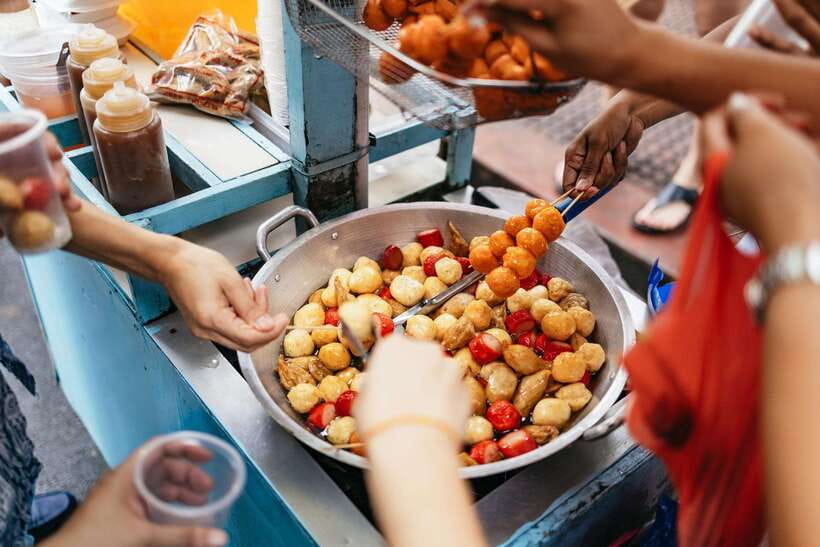
- Six to ten tastings in two hours: Expect enough food to replace breakfast for many people, with portions and availability changing by day.
- Binondo meeting point: Start at Grand Cafe 1919 on Juan Luna Street, a useful place to meet, have a drink, and use the facilities.
- Local transport included: Depending on conditions, the route may include a jeepney or the tour’s distinctive limousine, sometimes called Lamborghini, tricycle.
- Mari is a frequent guide: She is known for high energy, clear explanations, local stories, and helping solo visitors handle crowded streets.
- Street food with cultural context: The value comes not only from eating, but from learning about vendors, neighborhoods, Filipino customs, and everyday city life.
- Not suitable for several groups: Wheelchair users, pregnant women, vegetarians, and vegans should choose another experience.
Why this food walk works so well in Manila
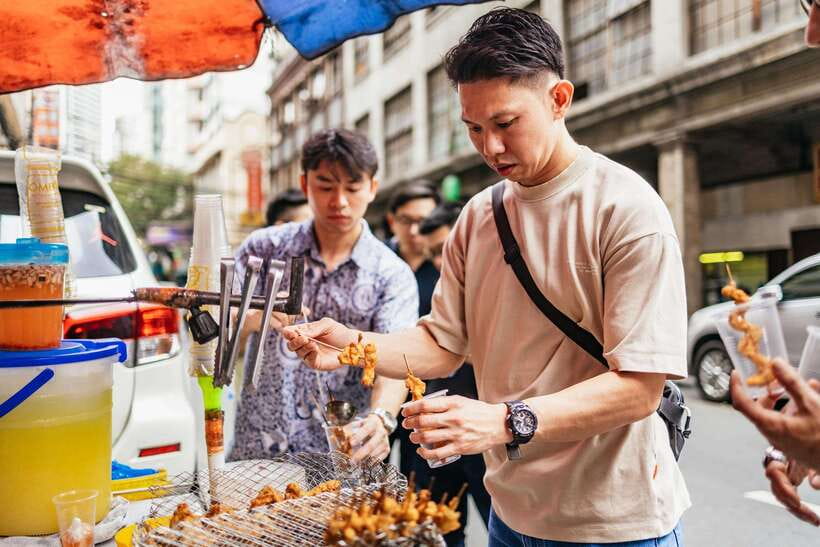
A Manila street food tour can solve two common problems at once. First, you may not know which stall to choose. Second, even if you find a promising one, you may not know what to order, how to eat it, or whether the dish fits your tastes.
Here, the guide handles that first step. Mari is the name that appears most often among the guides, though Tess, Tessie, Jessie, and Chai have also led tours. The strongest pattern is a guide who does more than point at food. You get explanations about ingredients, local habits, the surrounding streets, and the people running the stalls.
That matters in Binondo. The area can feel crowded and confusing, especially around festivals or busy market periods. One group found Chinese New Year traffic made walking harder, though the parade added a memorable local setting. A guide who keeps the group together is useful here, particularly when you are watching traffic, looking for a stall, and trying not to lose sight of the people with you.
The group is limited to 10 participants in the practical details, with another description giving a limit of 12. Either way, this is intended to be a small-group outing rather than a large bus tour. A smaller group makes it easier to ask questions and easier for the guide to manage crossings, food orders, and crowded lanes.
More Food Tours in Manila
- Manila Food Tour: Introduction to Philippine Street Food
★ 5.0 · 417 reviews - Manila Food Tour: Explore World’s Oldest Chinatown
★ 5.0 · 158 reviews - Manila: Sightseeing and Food Walking Tour with Tastings
★ 4.7 · 68 reviews
Meeting at Grand Cafe 1919 in Binondo
The tour begins at Grand Cafe 1919, on Juan Luna Street in Manila’s Binondo district. This is more than a pin on a map. It gives you a clear indoor place to find the guide, have a beverage, and use the restroom before the walking starts.
Arrive ready to eat, but do not plan a large breakfast. The tastings can add up quickly, and several people describe the amount of food as generous. You may be moving from a fried snack to soup, noodles, grilled food, and dessert in a fairly short period.
Bring comfortable shoes. This is a walking tour, and the streets can be crowded, uneven, and warm. The activity runs rain or shine, so a small umbrella or light rain protection is sensible, though only comfortable shoes are specifically required.
There is one detail worth checking before you pay. The supplied location information says Nueva Vizcaya, while the meeting point and the tour description place the experience in Binondo, Manila. Since the starting point is specifically Grand Cafe 1919 in Manila, confirm the exact location and pickup instructions with Mstartours before departure.
The first bites: sweet, fried, and familiar
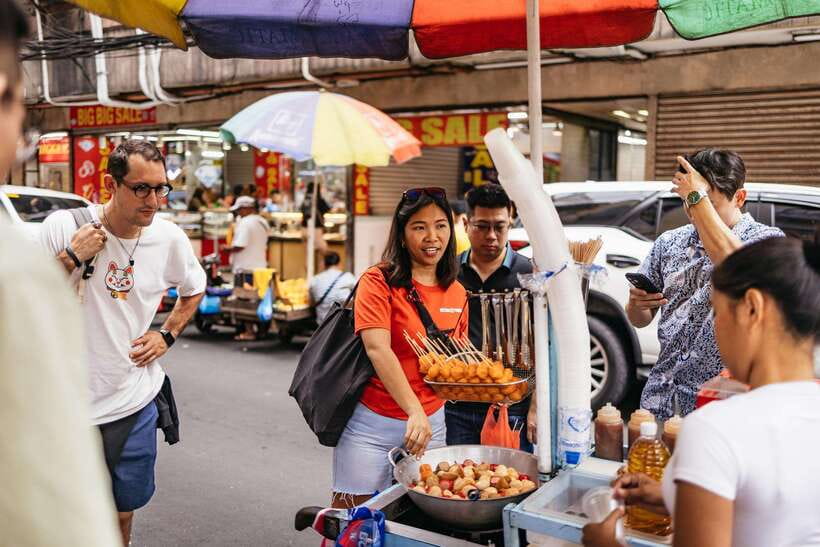
The tasting route depends partly on what is available on the street that day. That is normal for this kind of experience, but it means you should treat the menu as a guide rather than a fixed restaurant-style sequence.
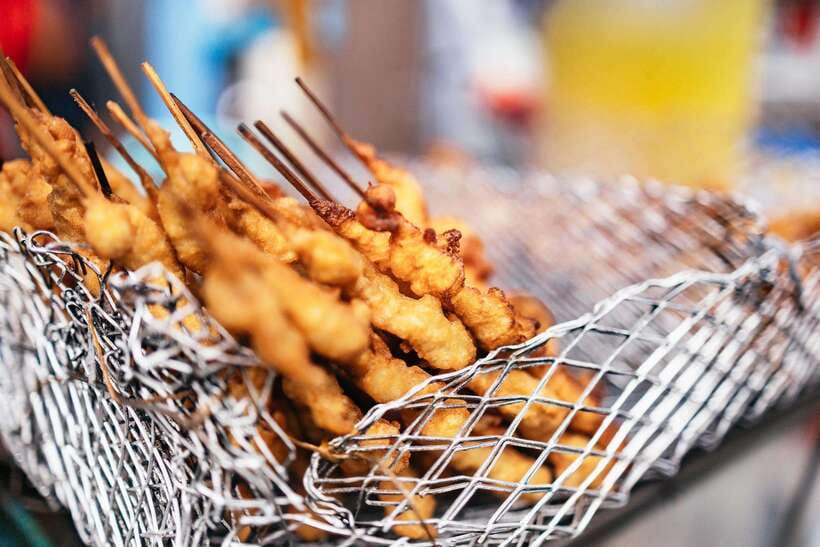
Early stops may include banana cue, kamote fries, turon, and kwek kwek. Banana cue is banana fried with brown sugar, while turon is a sweet fried banana roll. Kamote fries bring sweet potato into the same snack world. These are approachable introductions to Filipino street food, especially if you are unsure about trying stronger flavors.
Kwek kwek is a quail egg coated in orange batter and fried. It is one of the tour’s recognizable street snacks, but the bright color and unfamiliar setting can make it easier to try with a guide nearby. The guide can explain what you are buying and help you pace yourself.
Mango with shrimp paste gives you a sharper contrast. The fruit is sweet and tart, while the shrimp paste adds salt and an intense savory note. This is a good example of why the tour is useful: you are not just sampling isolated dishes, you are seeing how Filipino snacks balance sweet, salty, sour, and savory tastes.
If you have a sweet tooth, turon and banana cue may be your early favorites. If you prefer savory food, do not fill up too quickly. The larger dishes are still ahead.
Savory stops with noodles, soup, and grilled food
The middle of the tour shifts toward more substantial food. Possible tastings include siomai, sotanghon soup, palabok, Filipino pansit, grilled squid, and other items selected according to street availability.
Sotanghon soup gives the walk a warm, brothy pause. Palabok is a noodle dish with a savory sauce and toppings, while pansit offers another look at the importance of noodles in Filipino cooking and celebrations. One particularly memorable stop for some people is pancit palabok, which can be more filling than a small snack.
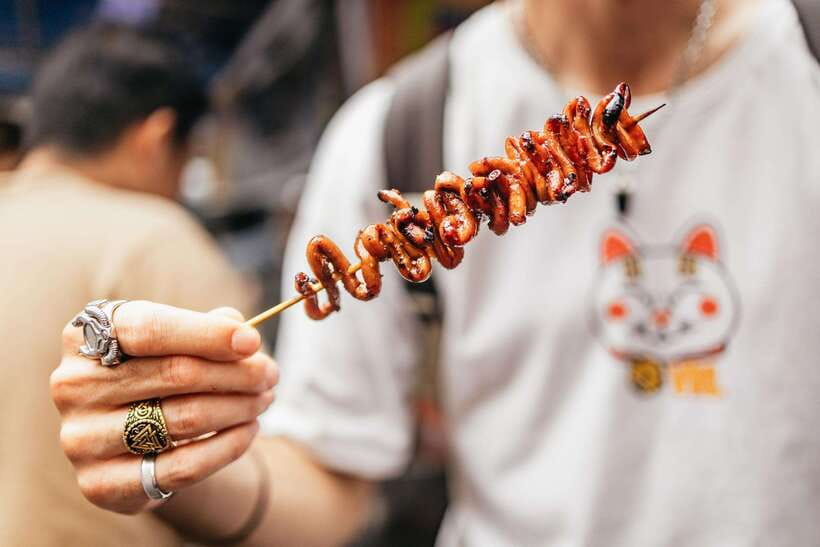
You may also encounter grilled squid, pork on a stick, calamari, chicken intestine, or other street proteins. The exact selection is not guaranteed, and the experience is clearly designed for people willing to try meat and seafood. One visitor even tried balut, the fertilized duck egg, though another person chose to skip it. Balut is not listed as a guaranteed tasting, so think of it as a possible challenge rather than a promise.
This is where the guide’s role becomes most important. If you have never seen a particular dish, a friendly explanation can turn an intimidating snack into a manageable experiment. You can still say no. The tour encourages curiosity, but you are not required to force down something you dislike.
Food safety is also part of the value. The guides select stalls they consider suitable for visitors, and one guide was careful to provide hand sanitizer during the walk. That does not remove every risk associated with street food, but it gives you a more sensible starting point than choosing random stalls with no local help.
More Walking Tours in Manila
- Viva Old Manila: Intramuros Walking Tour
★ 4.9 · 104 reviews - Manila: Intramuros Walking Tour.
★ 4.9 · 63 reviews - Intramuros Walking Tour with Transportation by Don’t Skip Manila
★ 5.0 · 46 reviews - Manila: Intramuros Walled City Guided Walking Tour
★ 4.5 · 30 reviews
Halo-halo and the final ride
The tour typically finishes with halo-halo, a Filipino dessert made with a mix of sweet ingredients, shaved ice, milk, and other toppings. After fried food, noodles, and grilled items, the cold dessert provides a welcome finish, particularly in Manila’s heat.
The final transport ride is another reason this is more than a basic tasting route. Depending on the day and route, you may ride a jeepney or a limousine tricycle, which the activity description playfully calls a Lamborghini tricycle. The ride gives you a short taste of everyday transportation and adds a bit of fun at the end.
Do note that the jeepney is not guaranteed. One person specifically missed that part of the experience, while other outings included jeepneys, tricycles, buses, or even other local transport. The route and vehicle can change with traffic, availability, and local conditions. If riding a jeepney is your main reason for booking, ask ahead rather than assuming it is certain.
The tricycle ride is generally a short part of the experience, not a replacement for the walking. Most of the tour still happens on foot, through food streets and market areas.
What the neighborhoods add to the food
The tour’s best feature may be the setting. You are not eating Filipino dishes in an isolated dining room. You are walking through open areas, narrow crowded sections, neighborhood markets, and streets where local residents shop and eat.
Some routes have included parts of Binondo, Santa Cruz, and Quiapo. The precise path can vary, but the basic idea remains the same: use food to enter parts of Manila that many first-time visitors would not find easily on their own.
A guide may point out places and details as you walk, giving the food a wider context. You might learn how a snack fits into daily life, why a neighborhood matters, or how local vendors serve their regular customers. The commentary is meant to be conversational rather than a long lecture. One useful description of the pacing is a walk with friends, with time to talk and learn without feeling overloaded.
For a first visit to Manila, this can be a strong way to get your bearings. You see how people move through the streets, how stalls operate, and how different food traditions meet in the city. For someone who has already visited Manila, the route can still reveal a less polished, more ordinary side of the city.
The guide makes or breaks the experience
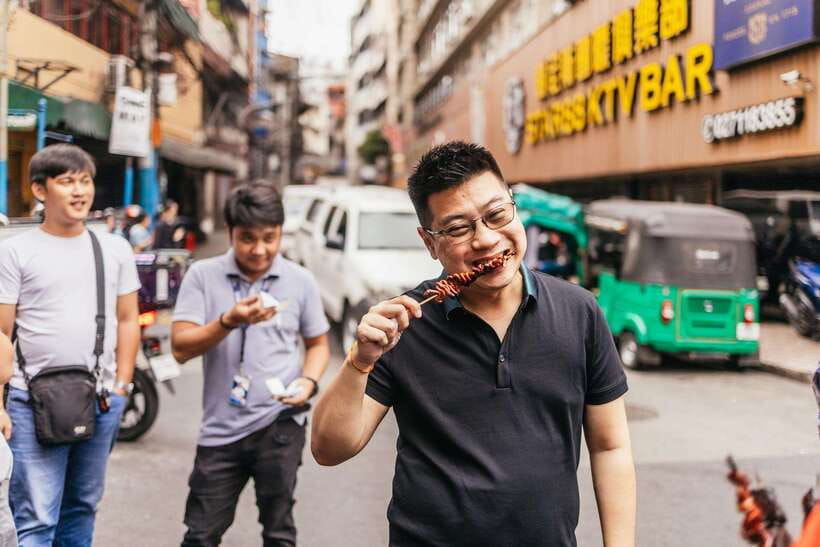
The guide is central to the tour, and Mari receives the most consistent praise. She is described as energetic, funny, warm, organized, and eager to share her country. She also helps with practical matters, such as keeping the group together, taking photos, pacing food and drinks in the heat, and guiding solo visitors through crowded streets.
That high energy will suit you if you like a social tour with plenty of conversation. Mari often adds personal touches, history, and stories about the neighborhoods. She has also led other Manila and Philippine tours, so you may find this outing useful as an introduction to further sightseeing.
Other guides have received positive feedback as well. Tess and Tessie have been described as friendly and informative, while Chai and an assistant led one especially broad food outing. Since guides can vary, do not book solely on the expectation of one person unless the reservation confirms the guide’s name.
The guide also shapes how adventurous the meal becomes. You may be offered familiar dishes such as fried bananas and noodles, then invited to try something more challenging. You control your limits, but the small-group setting makes it easier to ask what something is before tasting it.
Is $68 a fair price?
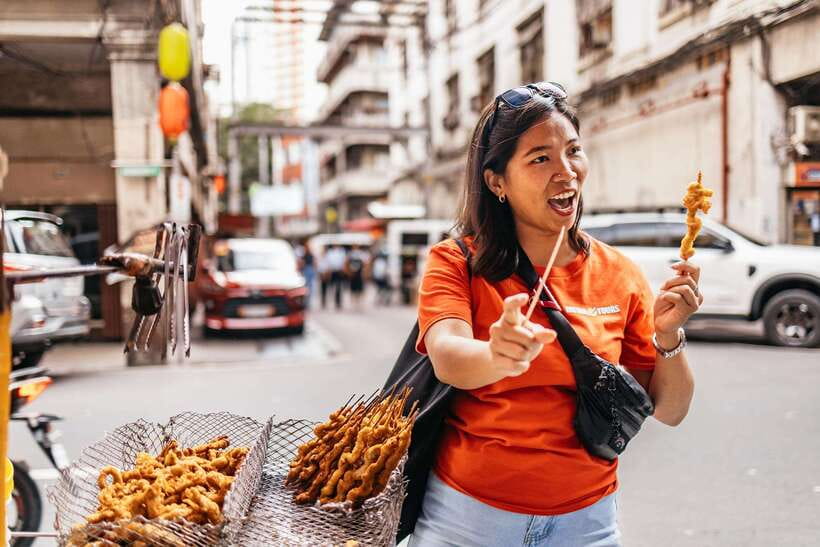
At $68 per person, this is not the cheapest way to eat in Manila. You could buy individual snacks for much less if you already knew the streets, the stalls, and the dishes you wanted.
The comparison changes if you value guidance. The fee includes 6 to 10 food tastings, drinks or water, the walking route, an English and Tagalog-speaking local guide, and local transportation when available. You are also paying for the time spent choosing stalls, explaining unfamiliar food, managing the route, and helping the group navigate busy streets.
The quantity makes the price easier to justify. This is not a single snack followed by a short talk. You may eat banana cue, turon, kwek kwek, siomai, soup, palabok, pansit, seafood, mango with shrimp paste, and halo-halo during the outing. The menu can vary, but the overall meal is substantial.
I would book it if you have only a day or two in Manila, are nervous about street food, or want a local introduction without spending hours planning. I would skip it if you are comfortable exploring food stalls alone, have a strict diet, or mainly want a formal sightseeing tour.
Who should book, and who should pass
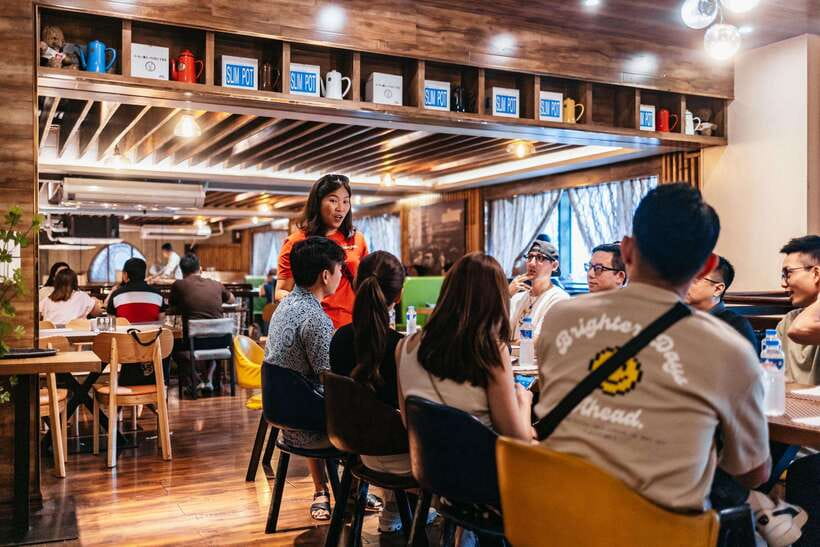
This tour suits:
- First-time visitors who want food and neighborhood context together
- Solo visitors who want help navigating crowded streets
- Food enthusiasts interested in Filipino snacks and local transport
- People willing to try seafood, meat, organ meats, and unfamiliar textures
- Families with children aged 3 to 7, provided the children have guidance
- Anyone who wants a two-hour introduction rather than a full-day food expedition
It is not suitable for vegetarians or vegans because several dishes cannot be replaced. It is also listed as unsuitable for pregnant women, wheelchair users, and people who need step-free access.
The food volume may also be too much for light eaters. A person who wanted the same price with smaller tastings found the portions generous. You can ask about portion size and tell the guide if you need to pace yourself, but you should still arrive hungry.
Practical tips for a smoother walk
Wear shoes that can handle two hours on foot. Manila’s heat, crowds, and street surfaces can make flimsy footwear a nuisance.
Bring questions. The tour works best when you ask about ingredients, customs, the neighborhoods, and the way dishes are eaten. The guides are there to explain, not simply hand you food.
Expect the route to change. Street availability, crowds, rain, and transport conditions can affect what you eat and how you move. The rain-or-shine policy means you should check the forecast and dress sensibly.
Book at least 24 hours before the start time. The activity offers free cancellation up to 24 hours ahead and a reserve-now, pay-later option, which helps if your Manila schedule is still shifting.
Should you book the Manila street food tour?
Book this tour if you want an efficient, social introduction to Filipino street food and prefer local help over trial and error. The combination of 6 to 10 tastings, neighborhood walking, and a possible jeepney or tricycle ride gives you a lot to experience in two hours.
I would especially recommend it for solo visitors and cautious eaters who want to try dishes such as kwek kwek, balut, grilled seafood, or halo-halo with someone explaining each one. Skip it if you need vegetarian food, wheelchair access, or a fixed menu.
Before booking, confirm the Binondo meeting point and ask which guide is scheduled. Then bring an open mind, comfortable shoes, and a very empty stomach.
FAQ
Where does the Manila street food tour meet?
The meeting point is Grand Cafe 1919 in Binondo, on Juan Luna Street in Manila.
How long does the tour last?
The walking and food tour lasts two hours.
How many food tastings are included?
The tour includes between six and ten food tastings. The exact dishes depend on what is available on the street.
What foods might be included?
Possible tastings include banana cue, kamote fries, turon, kwek kwek, siomai, sotanghon soup, palabok, Filipino pansit, grilled squid, mango with shrimp paste, and halo-halo. Water or refreshing juice may also be included.
Is transportation included?
The experience includes a jeepney ride or a limousine tricycle when available. The exact vehicle is not guaranteed, and the tour also includes walking.
Is the tour suitable for vegetarians or vegans?
No. The activity is not suitable for vegetarians or vegans because several of the planned dishes contain meat or seafood and cannot be eaten by them.
What should I bring?
Bring comfortable shoes. The tour runs rain or shine, so suitable clothing for the weather is also sensible. You should arrive hungry and book at least 24 hours before the start time.
Just added around Manila
- Makati Street food walking tour with Dinner★ 5.0 · 3 reviews
- Philippines Intro 3 days 2 nights Tour Best of Manila and Beyond★ 5.0 · 3 reviews
- MANILA: HISTORICAL KALESA RIDE TOUR EXPERIENCE IN INTRAMUROS★ 4.0 · 3 reviews
- Bites and Sights: Tagaytay Food and Nature Excursion from Manila★ 4.0 · 3 reviews
- Authentic Manila Chinatown Food Tour Exploration★ 5.0 · 3 reviews
- 4 Day Banaue Ifugao Rice Villages Private tour Trekking★ 4.5 · 3 reviews
- Embark on a 7-Day Banaue-Sagada Adventure of a Lifetime★ 5.0 · 3 reviews
- From Manila: Philippines Private Tour Guide★ 4.1 · 3 reviews
Manila Tours, compared.
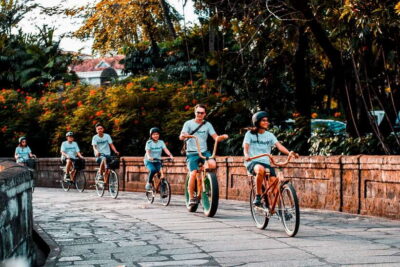
Intramuros, Manila: Historical Bamboo Bike Tour
Read our review →
Experience Intramuros with Bamboo Bicycle – Ecotours
Read our review →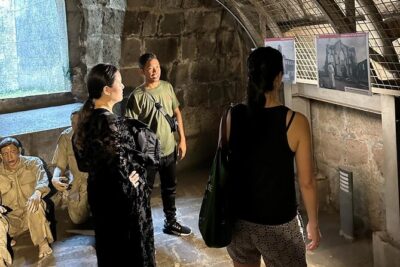
Manila: Intramuros, Chinatown, and Old Manila Half-Day Tour
Read our review →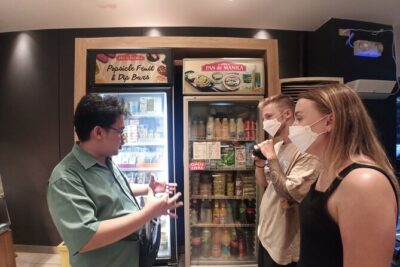
Manila Food Tour: Introduction to Philippine Street Food
Read our review →
Spectacular Manila to Tagaytay: Full-Day Sightseeing Tour
Read our review →
Makati Nightlife: VIP Access to Clubs, Rooftops & Go-Go Bars
Read our review →
Discover Tagaytay’s Countryside: Half-Day Sightseeing Tour
Read our review →
From Manila: Tagaytay Countryside Wonders: A Half-Day Tour
Read our review →Browse the lists this tour appears in