
Reviewed · MANILA TOURS
Makati: Hands on Manila Cooking Class
Filipino food makes its strongest impression when you learn how everyday dishes fit into family life. In this two-hour Makati cooking class, Chyl guides you through pancit, lumpia, and turon, turning a simple snack session into a full, filling meal with dessert. I like the hands-on format and the way food stories explain more than recipes alone. I also like that the group is capped at four, so you can actually handle the ingredients and ask questions.
The main thing to consider is the price: $60 per person is not cheap for a two-hour activity, especially if you are an experienced cook. The outdoor setting can also be affected by rain, and the meeting point may take some care to find. Still, for first-time cooks, solo visitors, and anyone keen to understand Filipino food beyond restaurant menus, this is a strong use of an afternoon.
Key points at a glance
- Three Filipino snacks become a full meal: Prepare pancit noodles, savory lumpia, and sweet turon.
- Chyl is the local guide: Expect calm instruction, cultural stories, and patient help at every stage.
- Small groups matter: With no more than four participants, you get room to cook instead of simply watching.
- An open-air Makati location: The class is convenient for the Greenbelt and Peninsula Hotel area, though rain can cause problems.
- Useful recipes for home: The dishes use simple ingredients and straightforward methods that you can repeat after your trip.
- Food and family context: You learn why snacks, celebrations, home cooking, and shared food matter in the Philippines.
Three dishes, one very serious snack
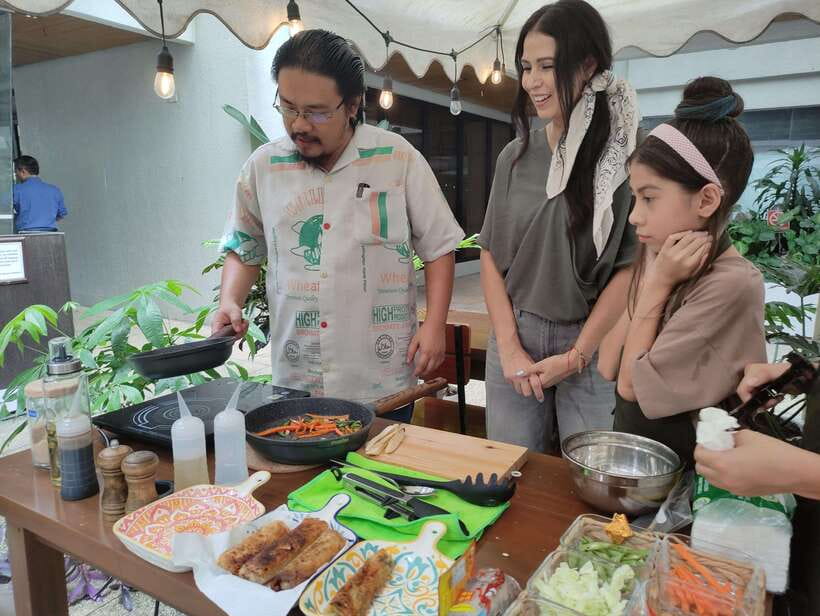
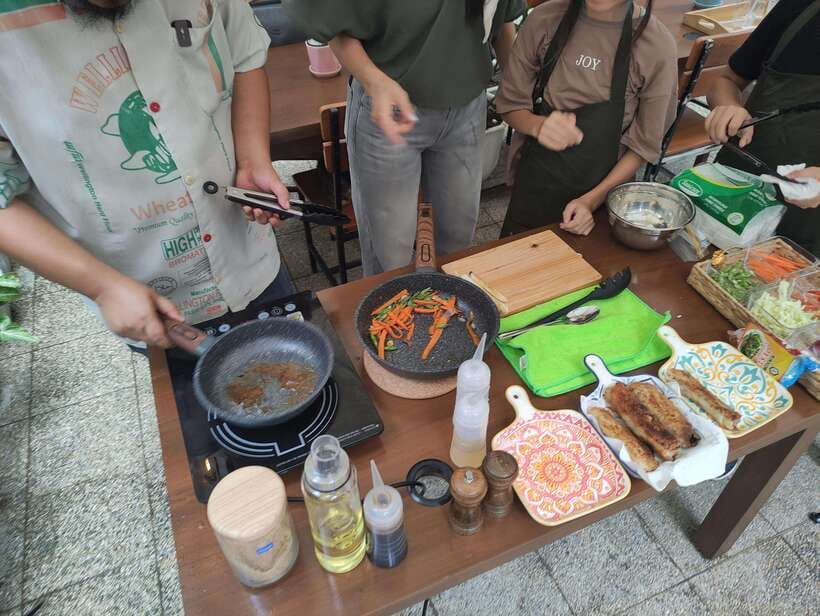
The class centers on a Filipino meryenda, the local idea of a snack or light meal. Do not picture a small plate and a quick taste. The planned menu includes two savory dishes and one sweet dish, and the portions can add up to what feels like two meals.
You prepare pancit, a noodle dish made with stir-fried ingredients. You also make lumpia, the crisp spring rolls that are familiar across the Philippines, then finish with turon, a sweet banana treat wrapped and fried. The menu gives you a good spread of Filipino cooking: noodles, vegetables, frying, wrapping, and dessert.
I like this choice because it avoids making the class too narrow. You are not spending two hours on one elaborate dish. Instead, you learn several techniques that can fit into a home kitchen. You chop, assemble, cook, and eat. That makes the class useful even if you have little cooking experience.
The food is called snack food, but the amount is generous. Come hungry, or plan to save some for later if that is possible. Several participants have found the portions far larger than expected.
A few more Makati day trips to weigh up
- Manila Filipino Cooking Class: Meryenda Favorites
★ 5.0 · 80 reviews - Private Filipino cooking class in a local Manila Home
★ 5.0 · 28 reviews - Private Market Tour and Filipino Cooking Class in Manila with Isi
★ 4.5 · 15 reviews
Meeting Chyl in the heart of Makati
The class is held in an outdoor courtyard in front of a coffee kiosk. The location is described as being in central Makati, close to the Peninsula Hotel and Greenbelt Mall, making it a practical choice if you are already in this part of the city.
Look for the instructor at the courtyard rather than expecting a formal cooking-school entrance. One useful warning: the meeting point can be hard to spot without prior coordination. Save the organizer’s contact details, confirm the exact location before leaving, and allow time to find the courtyard.
The supplied location information contains a mismatch, with Nueva Vizcaya listed in one place and Makati used throughout the activity details and participant directions. Since the class is repeatedly described as being in central Makati, verify the confirmed meeting address before booking. This is the sort of small check that can prevent a very large Manila detour.
Getting around Makati is easier with Grab, the local ride-hailing app. Download it before the class if you do not already have it. Hotel pickup and drop-off are not included, so you are responsible for reaching the courtyard.
Chyl’s teaching style and the value of a small group
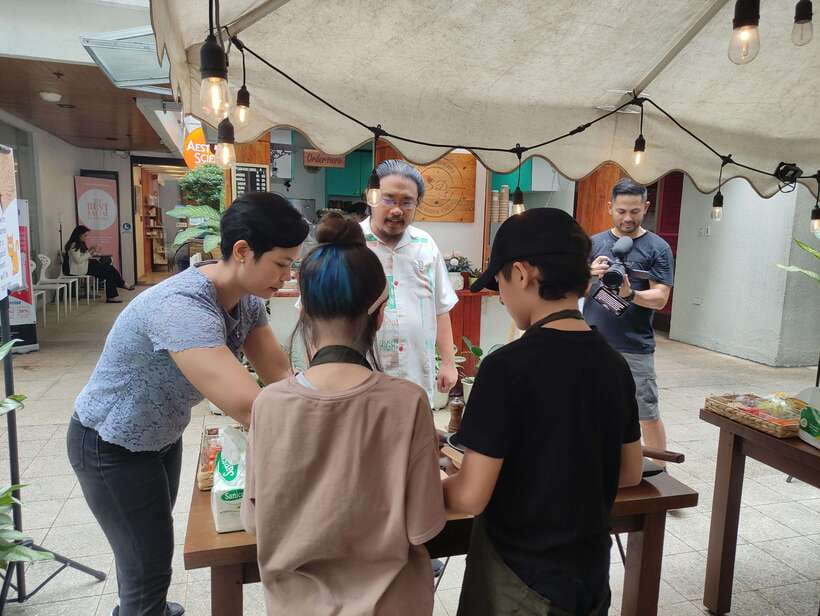
Chyl is the heart of the experience. Her teaching style is calm, warm, and patient. She explains each step clearly, helps beginners without taking over, and leaves room for more experienced cooks to work independently.
The cultural side adds real value. As you prepare the food, Chyl shares stories about Filipino family life, childhood meals, food traditions, and the role of dishes at celebrations. The stories help you understand why Filipino people care so much about food, rather than treating the class as a list of mechanical instructions.
The group limit of four is one of the best features. Each person has a proper station with ingredients and equipment, so you are not standing behind someone else trying to see the pan. You get to prep your own food, operate the cooker, and taste the result of your own decisions.
A solo booking can work especially well. If you are the only person scheduled, the class may still go ahead, and Chyl can turn it into a private lesson. That gives you more time to ask questions and adjust the pace. For couples, siblings, and small groups of friends, the format is social without becoming noisy or crowded.
Starting with ingredients and Filipino food culture
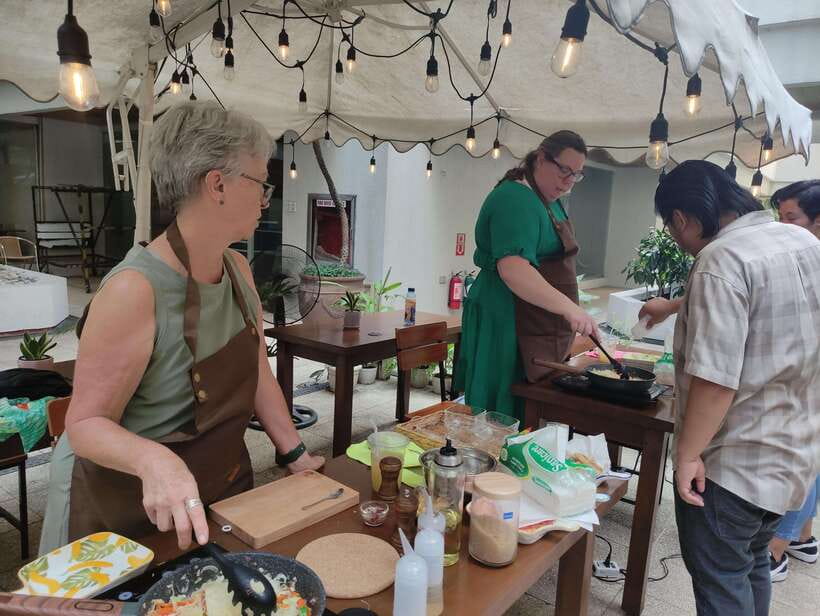
The class begins with the ingredients prepared for the menu. You receive cooking equipment, food ingredients, and a non-alcoholic drink. A cold lemonade has been offered at the start, which is a welcome touch in Manila’s warm weather.
Before the cooking gets busy, Chyl sets the dishes in context. Filipino cuisine reflects the country’s island geography and long history of movement between communities, but this class keeps the explanation practical. You hear how food connects with family routines, simple home cooking, and celebrations.
That context is important because Filipino food is sometimes reduced to a few restaurant staples. Here, you see how ordinary dishes can carry family memories and local identity. Turon, for example, is not just fried fruit. Its simple ingredients and familiar preparation show how a humble home treat became a daily snack for many people.
The class is not a formal lecture, and that is a strength. The stories come while you work, so the information stays tied to the food in front of you.
Same island, a completely different kind of day:
- Makati Nightlife: VIP Access to Clubs, Rooftops & Go-Go Bars
★ 4.9 · 278 reviews - Makati Rooftop and Hidden Bars Experience
★ 4.9 · 30 reviews - Makati Rooftop Barhopping with Local Guide
★ 4.8 · 26 reviews - Makati Street Food Tour Experience
★ 5.0 · 20 reviews
Pancit: your first lesson in Filipino stir-frying
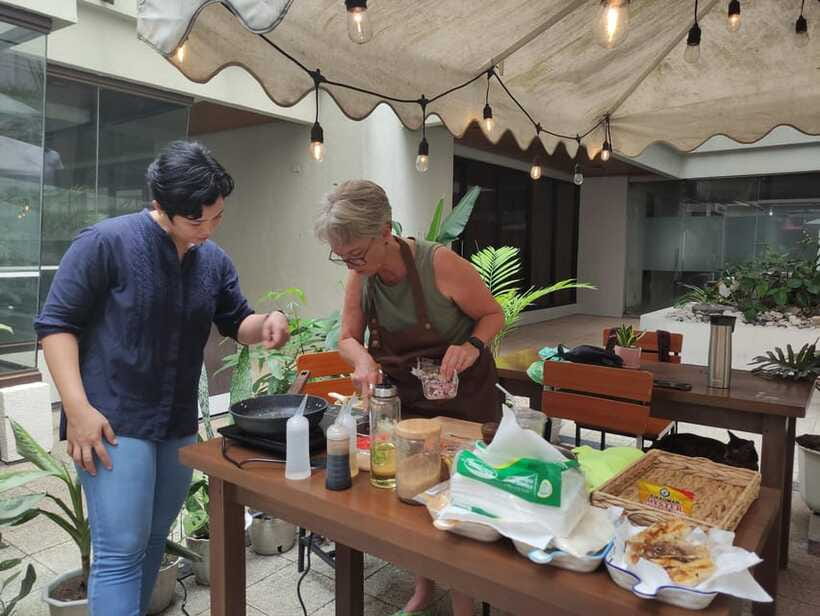
Pancit is likely the first major savory dish. You prepare the ingredients, learn the order of cooking, and bring the noodles together in the pan. The method is accessible, but the timing still teaches you something useful about stir-fried food.
For a beginner, this is a forgiving place to start. Chyl guides you through the process and helps you avoid the common problem of adding everything at once. You learn how preparation matters before the heat goes on. Once the cooking begins, you can see how quickly the dish comes together.
I find pancit a smart class dish because it is practical at home. It is filling, adaptable, and built from ingredients that can often be changed according to what you have available. You leave with more than a pleasant lunch. You have a recipe that can become part of your normal cooking routine.
The shared comparison at the end is also interesting. Even when everyone follows the same basic method, each plate can turn out slightly different. That gives you a clear lesson in seasoning, timing, and personal taste.
Lumpia: the hands-on part that makes the class worthwhile
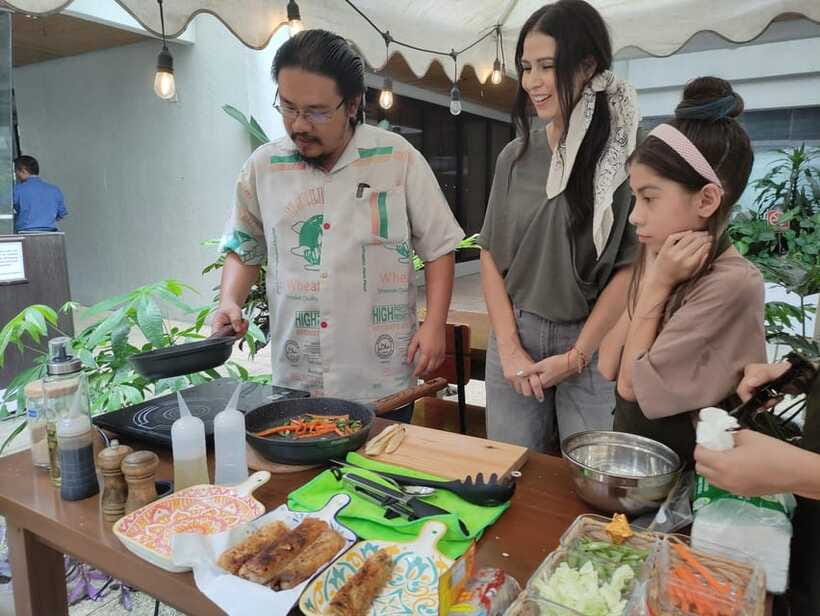
Lumpia brings a different skill set. You prepare the filling, portion it, and wrap the rolls before cooking them until crisp. The rolling takes some care, but Chyl is there to show you how to handle the wrappers and keep the filling in place.
This is the point where the small class size pays off. You need enough room to assemble the rolls, and you benefit from being able to ask for help without interrupting a large demonstration. Beginners can work slowly, while experienced cooks can focus on getting neat, even rolls.
The finished lumpia offers a satisfying contrast to the soft noodles. It is savory, crunchy, and easy to share. It also gives you a recipe with clear home value. Once you understand the filling and rolling method, you can see how the basic idea might fit into a family meal or party spread.
The class is not only about eating a finished dish. You handle the whole process from raw ingredients to cooked food. That sense of completion is a major reason the activity feels more substantial than a demonstration.
Turon: a sweet finish with a family story
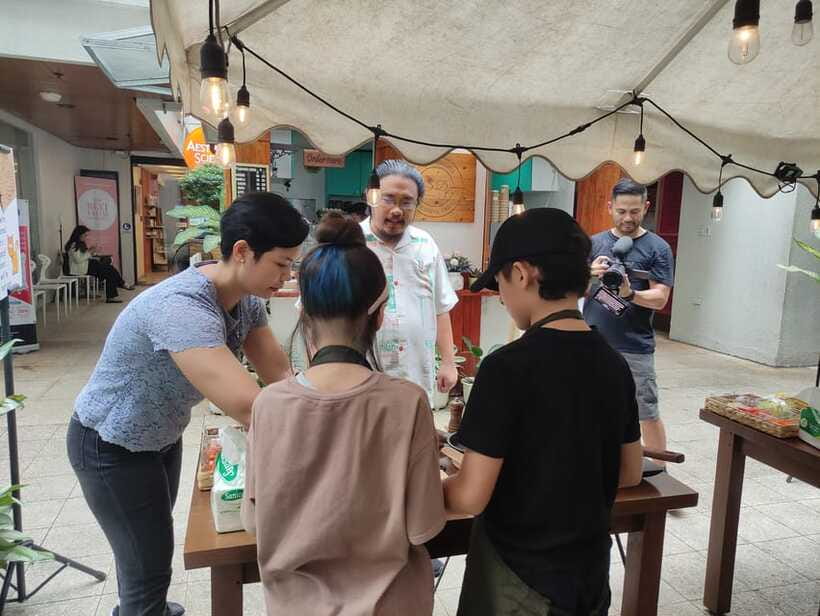
Turon is the dessert, made with banana wrapped in a thin wrapper and fried. The result is sweet, crisp, and filling. It is an easy favorite, but the class also uses it to show how food traditions can grow from modest home kitchens into widely loved everyday snacks.
This is a good final dish because it changes the pace. After the preparation and frying involved in pancit and lumpia, turon feels like a simple reward. It also gives you another wrapping technique and another example of how Filipino cooking makes generous use of basic ingredients.
You may find the dessert more substantial than expected. With pancit, lumpia, and turon on the table, the so-called meryenda becomes a complete eating experience. If you have plans for a large dinner soon afterward, keep that in mind.
An open-air setting with one clear weakness
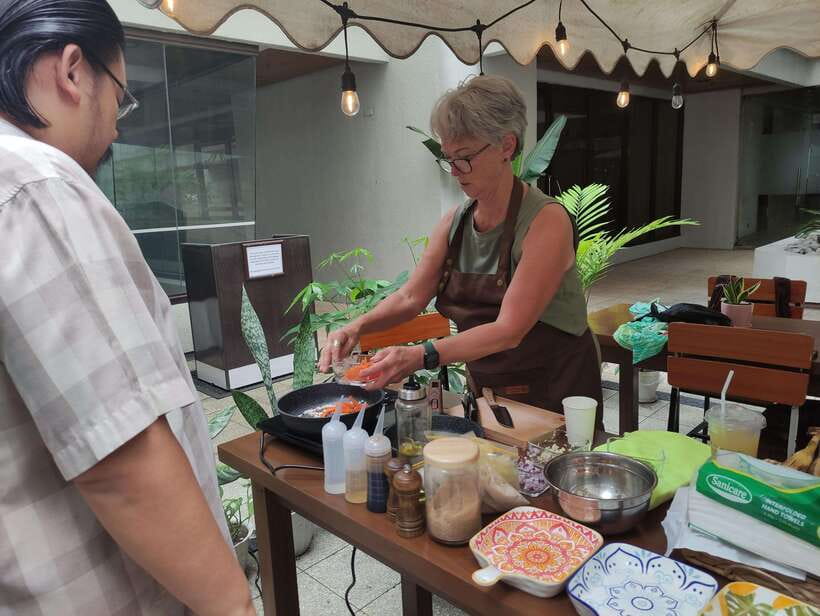
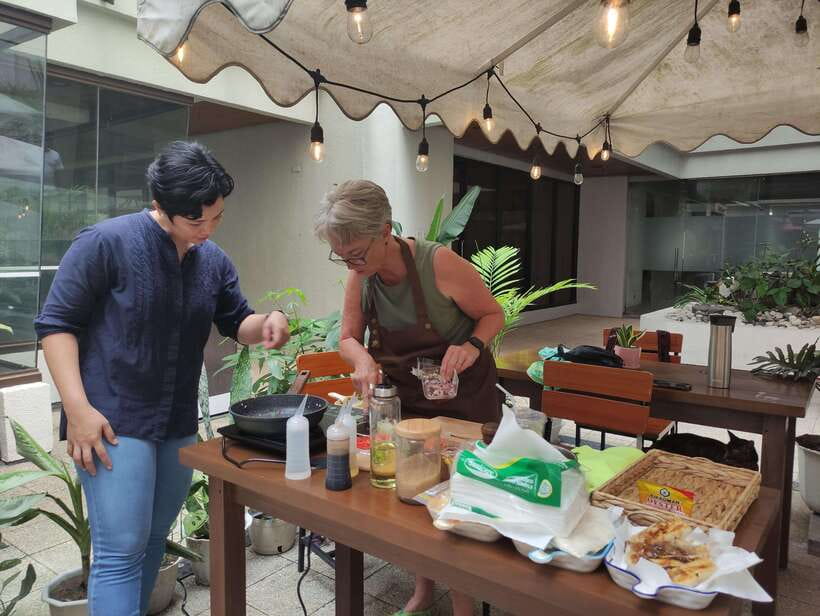
The courtyard setting gives the class a relaxed, informal feel. You cook at individual tables, with the ingredients and utensils laid out in advance. The equipment has been described as clean and in good condition, including induction cookers and pans.
I like the fact that the setting is not hidden away in a distant suburb. You can combine the class with time around Greenbelt or other central Makati sights. It is a convenient way to add a food activity to a city day without committing to a full-day excursion.
The weakness is weather. The area is not fully covered, and rain has caused the setup to be rearranged and dried during a class. Manila weather can change quickly, so bring comfortable clothing and check the conditions. If rain would seriously affect your plans, confirm the backup arrangement with the provider.
The activity is wheelchair accessible, but the outdoor layout and weather conditions are still worth discussing in advance if you have specific mobility needs.
Is $60 a fair price?
At $60 per person, this is priced above a casual meal and above many simple short activities in Manila. The value depends on what you want from the afternoon.
If you only want to eat pancit, lumpia, and turon, the price will feel high. You are paying for ingredients, equipment, instruction, a small group, and the chance to cook three dishes yourself. You are also paying for Chyl’s personal stories and one-on-one help, which matter more if you are a beginner or book with only one or two people.
The price makes better sense for someone who wants to take the recipes home. The dishes are not just decorative cooking-school projects. They are practical Filipino snacks that you can try again. The class also saves you the trouble of shopping for unfamiliar ingredients and organizing a first attempt in an unfamiliar kitchen.
For experienced cooks, the cultural explanation and personal attention are the main reasons to book. If your priority is advanced technique, a longer class, or a more elaborate menu, this may not be the best match. The two-hour format is intentionally approachable rather than demanding.
Who should book this class?
I would recommend it most strongly to:
- First-time visitors who want a direct introduction to Filipino food
- Solo visitors who enjoy conversation and personal instruction
- Couples, siblings, and small groups of friends
- Beginner cooks who want recipes that are realistic at home
- Families with children aged nine and older
- Anyone who prefers doing the work rather than watching a chef perform
Children under nine are not suitable for this activity. It is also not suitable for people with visual impairments, according to the activity guidance.
Wear comfortable clothes. You will be preparing food, handling cooking equipment, and eating a substantial amount. The class is conducted in English, and no alcohol is included.
Should you book the Makati cooking class?
Book it if you want a friendly, compact introduction to Filipino food with real cooking time and plenty of conversation. Chyl’s calm guidance, personal stories, and willingness to adjust the lesson make the experience work for complete beginners, while the small group keeps it engaging for confident cooks.
Think twice if $60 feels steep for a two-hour activity, if you want advanced culinary training, or if an uncovered outdoor venue would cause problems. Also confirm the exact Makati meeting address, given the conflicting location label, and plan your transport with Grab.
For most visitors who want to bring home a useful skill rather than only a souvenir, I think this class earns its place in a Makati itinerary. Just arrive hungry, wear something comfortable, and leave enough room for what turns out to be a very large snack.
FAQ
How long does the cooking class last?
The class lasts two hours.
How much does the class cost?
The listed price is $60 per person.
Where does the activity take place?
The activity is described as taking place in the heart of Makati, in an outdoor courtyard in front of a coffee kiosk. The information also lists Nueva Vizcaya as a location, so confirm the exact meeting address before going.
What dishes will I prepare?
You will prepare pancit noodles, lumpia spring rolls, and sweet turon.
Is food included?
Yes. Food ingredients are included, along with cooking equipment and a non-alcoholic drink.
Is hotel transportation included?
No. Hotel pickup and drop-off are not included.
What language is the class conducted in?
The class is conducted in English.
How many people can join the class?
The class is limited to four participants.
Is the activity wheelchair accessible?
Yes, the activity is listed as wheelchair accessible.
What should I bring?
Wear comfortable clothes. You should also download the Grab app to make local transport easier.
Just added around Makati
- Makati Street food walking tour with Dinner★ 5.0 · 3 reviews
- Poblacion Makati Bar Hopping Experience★ 5.0 · 4 reviews
- Makati Hidden Bars and Rooftop Bars with Venus★ 5.0 · 4 reviews
- Makati Bar Crawl – Hidden Bar, Speakeasy and Pub★ 5.0 · 6 reviews
- Makati Street food Tour, End with a Rooftop City View★ 4.7 · 9 reviews
- Manila Ultimate Nightlife Pub Crawl★ 4.9 · 10 reviews
- ⭐ Makati Bar Hopping and Pub Crawl Tour with Venus ⭐★ 4.9 · 10 reviews
- Manila Old & New City Private Tour★ 4.5 · 16 reviews
Manila Tours, compared.

Intramuros, Manila: Historical Bamboo Bike Tour
Read our review →
Experience Intramuros with Bamboo Bicycle – Ecotours
Read our review →
Manila: Intramuros, Chinatown, and Old Manila Half-Day Tour
Read our review →
Manila Food Tour: Introduction to Philippine Street Food
Read our review →
Spectacular Manila to Tagaytay: Full-Day Sightseeing Tour
Read our review →
Makati Nightlife: VIP Access to Clubs, Rooftops & Go-Go Bars
Read our review →
Discover Tagaytay’s Countryside: Half-Day Sightseeing Tour
Read our review →
From Manila: Tagaytay Countryside Wonders: A Half-Day Tour
Read our review →Browse the lists this tour appears in