
Reviewed · MANILA TOURS
Manila: Sightseeing and Food Walking Tour with Tastings
Manila makes its best first impression at street level. This tour takes you from the noisy stalls of Quiapo Market to the food lanes of Binondo, then into Intramuros on a traditional bamboo bike. In six hours, you get markets, snacks, local transport, Spanish-era sights, and plenty of stories without spending the day inside a van.
I like two things here: the food is part of the sightseeing, not an afterthought, and the transport gives you a taste of ordinary city travel. Guides such as Jen, Eric, Grace, and Dani have been praised for keeping the day moving while explaining food, religion, history, and daily life in clear English.
The trade-off is simple: this is a full-on walking day in crowded areas, with heat, traffic, uneven paths, and little quiet time. It is not a good fit for anyone with mobility problems, and you should bring water, a hat, and comfortable clothes.
Key points to know before booking
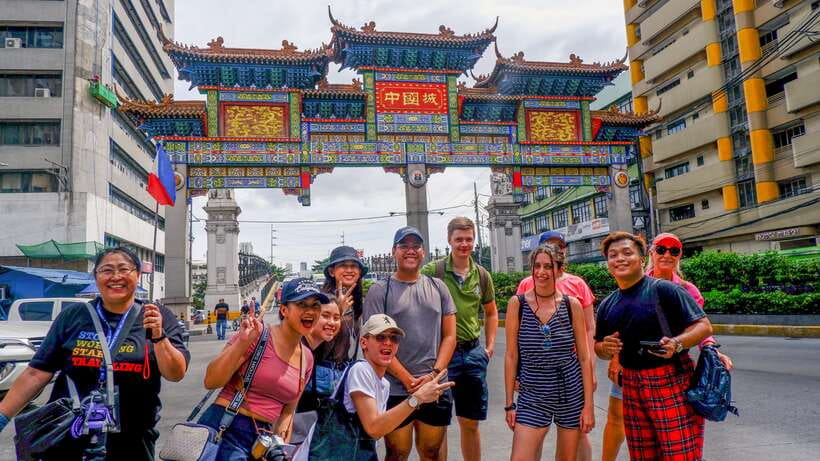
- Quiapo to Binondo on foot: Start amid market stalls, herbal remedies, noodles, produce, and everyday Manila commerce.
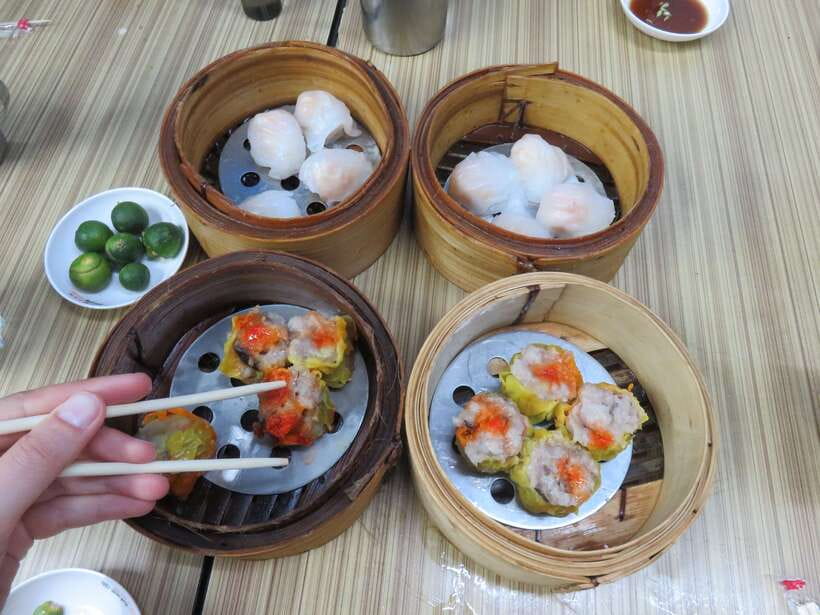
- Food is spread across the morning: Expect Filipino and Chinese-influenced snacks, fruits, dumplings, hopia, desserts, and other local tastes.
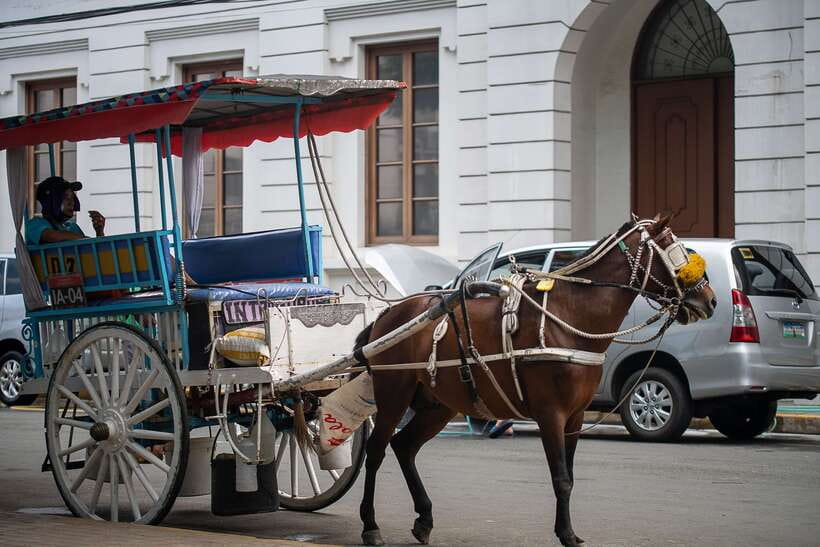
- Local transport is part of the lesson: The route uses public transportation, including a jeepney, with some departures also including a tricycle or ferry.
- Intramuros gets a bamboo-bike finish: Cycle past churches, fortifications, cobblestone streets, and old Manila landmarks.
- Six hours covers a lot: You see more than on a single-neighborhood food walk, but the pace can feel demanding.
- $58 includes the main costs: Guiding, transport to the stops, entrance fees, tastings, and the bike are included. Drinks are extra.
Why this tour gives you a useful first look at Manila
Manila can be hard to read at first. Its major sights are spread across busy districts, and the city’s story is not confined to one pretty old quarter. This experience helps you connect the pieces: Quiapo shows present-day commerce and devotion, Binondo shows the Filipino-Chinese mix, and Intramuros brings in the Spanish colonial period.
I like that the day does not treat Manila as a museum. You walk through places where people shop, work, eat, and get around. That matters because the city’s character is found as much in a market aisle or jeepney ride as it is in a church or stone fort.
The schedule begins at 9:00 a.m. in front of Quinta Market. The first section starts around 9:15, Binondo follows at about 11:00, transport to Intramuros is planned around 12:30, and the bike portion ends near Casa Manila at roughly 2:30 p.m. Times are approximate, so expect the guide to adjust for traffic, crowds, and the pace of the group.
More Food Tours in Manila
- Manila Food Tour: Introduction to Philippine Street Food
★ 5.0 · 417 reviews - Manila Food Tour: Explore World’s Oldest Chinatown
★ 5.0 · 158 reviews - Manila: Street Food and Drinks Walking Tour with Tastings
★ 4.8 · 114 reviews
Starting at Quinta Market and entering Quiapo
Quinta Market is a practical meeting point because it places you close to the first major part of the experience. Your guide meets you in front of the market, then leads you into Quiapo for about two hours of walking, explanation, shopping, and food sampling.
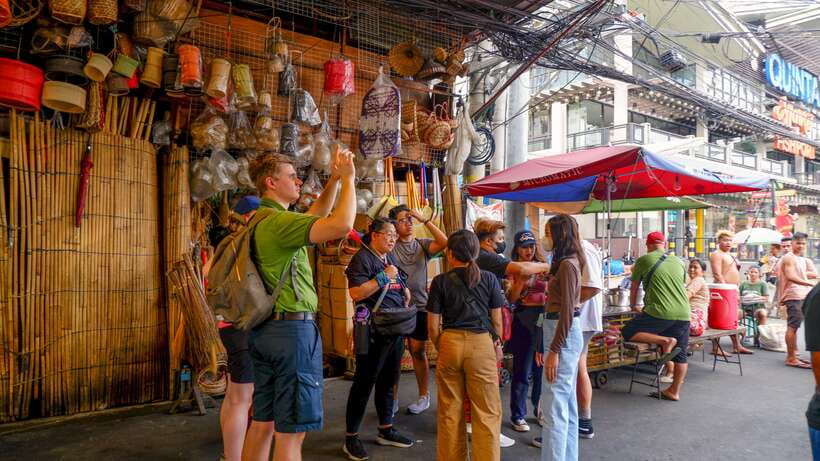
Quiapo is not polished sightseeing. It is loud, crowded, colorful, and packed with ordinary commerce. You might see fresh noodles, produce, prepared food, herbal cures, and small stalls selling items you would miss if you stayed on the main roads. The value of having a guide here is not simply finding a snack. It is understanding what you are looking at and how the market fits into Manila life.
This is also where you should settle into the pace. You will be on your feet, moving through narrow and crowded areas. Keep your bag close, watch your footing, and avoid bringing anything you do not want to carry for six hours. The tour information specifically advises a hat, water, comfortable clothing, and a passport or identity card, with a copy accepted.
The market section is especially useful for first-time visitors because it gives you a quick sense of Manila beyond the major monuments. You are not just looking at stalls. You are learning how people buy food, what ingredients appear in local cooking, and how commerce and faith occupy the same parts of the city.
Tasting your way through Binondo Chinatown
Around 11:00 a.m., the route moves into Binondo, known as the oldest Chinatown in the world. The walking section is shorter than Quiapo, listed at about 30 minutes, but the food makes it a concentrated stop.
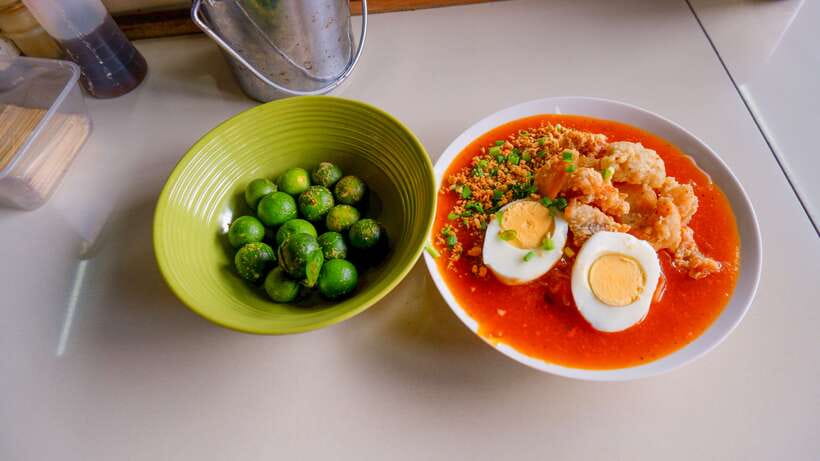
Expect tastes shaped by both Filipino and Chinese cooking. The advertised examples include dumplings, hopia, local fruits, desserts, and other small bites. Past food stops have also included unusual choices such as cheese ice cream. The point is variety, not one large restaurant meal.
That makes Binondo a strong part of the tour for curious eaters. You can try several small portions and ask what you are eating instead of ordering a full dish blindly. The guide can also explain the cultural links behind the food, which turns a quick snack into a bit of place-based context.
Do not assume that every tasting will suit your palate. Street food is personal, and the exact selection may change. Drinks are not included, so buy water as needed and budget for it. If you have dietary restrictions, ask the operator before booking rather than relying on the general description.
Binondo can also be difficult to walk through. Narrow streets, crowds, and changing foot traffic make it less relaxing than a quiet food market. That is part of the setting, but it means you should not expect a slow, leisurely tasting crawl. You are moving through a working neighborhood.
Riding local transport toward Intramuros
The next stage connects Binondo with Intramuros by local transportation. The main description calls for a jeepney ride, while the detailed schedule lists a 30-minute tuk-tuk segment. Past departures have also included tricycles and, in some cases, a Pasig ferry ride.
The safe way to understand this is that transport is part of the experience, but the exact mix may vary. The core promise is transportation between the sightseeing areas, and the jeepney is the key local ride highlighted for the tour. You may learn how fares work, how to communicate with the driver, and what it feels like to travel as people do across Manila.
This is one of the most useful parts of the day because transport becomes a practical lesson rather than dead time. You see the city between stops, deal with its traffic, and get a better feel for distance. It also adds fun without requiring you to arrange unfamiliar public transport on your own.
Still, local transport is not controlled like a private car. A jeepney or tuk-tuk can be crowded, traffic can slow the route, and the ride may not feel smooth. If you want a quiet, air-conditioned transfer, this is the wrong tour. If you want a small taste of Manila’s everyday movement, it is a good match.
More Walking Tours in Manila
- Viva Old Manila: Intramuros Walking Tour
★ 4.9 · 104 reviews - Manila: Intramuros Walking Tour.
★ 4.9 · 63 reviews - Intramuros Walking Tour with Transportation by Don’t Skip Manila
★ 5.0 · 46 reviews - Manila: Intramuros Walled City Guided Walking Tour
★ 4.5 · 30 reviews
Cycling through Intramuros on a bamboo bike
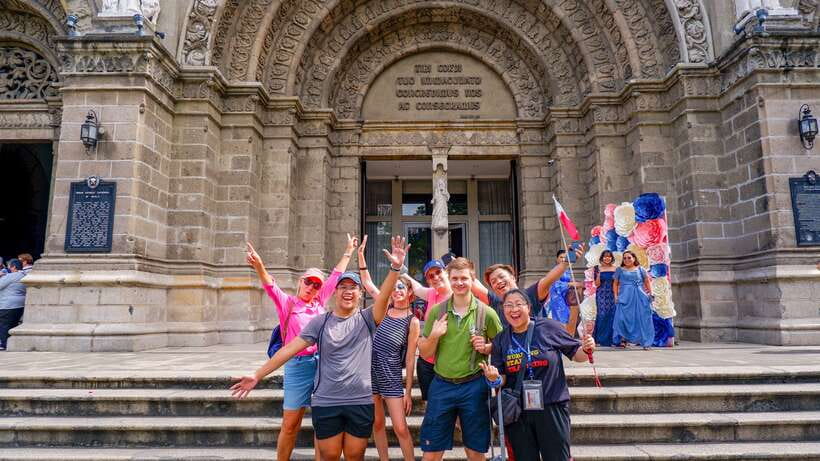
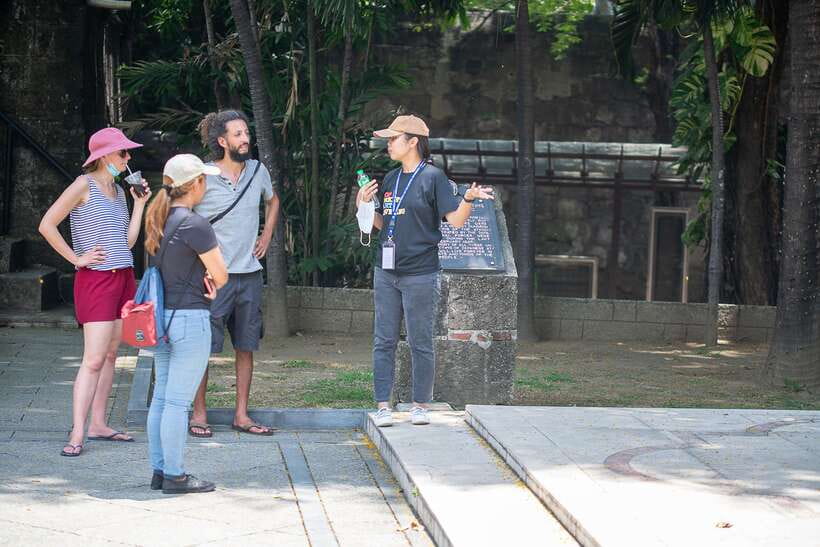
Around 1:00 p.m., the tour reaches Intramuros, Manila’s old walled city. Here the tone changes. After markets, food stalls, narrow streets, and public transport, you move into an area of stone walls, cobbled streets, churches, fortifications, and Spanish-era buildings.
The 1.5-hour Intramuros section uses the famous traditional bamboo bike. You are not racing through the district. The bike gives you an easy way to cover more ground while keeping the focus on the streets and buildings around you. It also makes the final part of the day feel different from the morning walk.
The route includes guided sightseeing, photographs, and stops connected with Intramuros landmarks. The end point is near Casa Manila. Some past outings have included coffee or local treats along the way, though you should not treat a particular café stop as guaranteed.
The bike is a highlight for many people, but it comes with a few practical points. You need to be comfortable mounting and riding a bicycle, and the experience is not suitable for people with mobility impairments. Cobblestones and city conditions can also make riding less effortless than a smooth bike path.
Intramuros is valuable here because you see it after spending time in modern Manila. The old walls are not presented as the whole city. Instead, they become one chapter in a much larger story that includes Filipino, Chinese, Spanish, Catholic, and contemporary urban influences.
What the guides add to a busy day
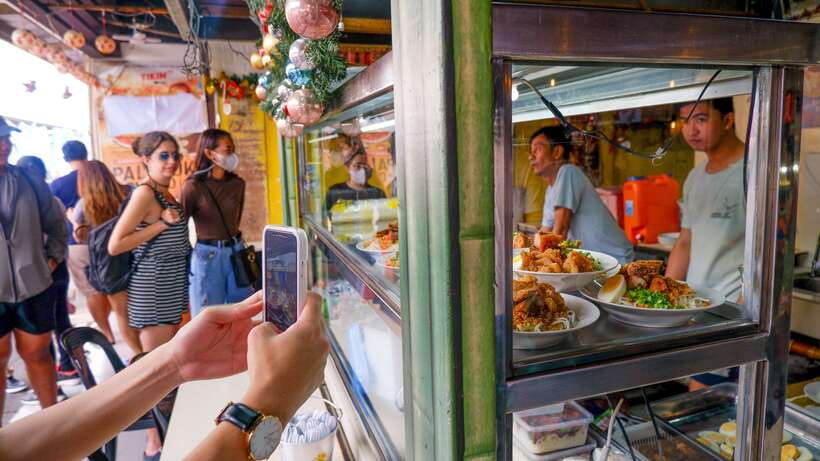
A tour with this many moving parts depends heavily on the guide. The strongest praise has gone to guides who explain the food, answer questions, manage timing, and keep the group together in crowded areas.
Jen is repeatedly described as friendly, organized, funny, patient, and full of information. She has also been praised for making room for water stops, toilet breaks, questions, and photos without making the group feel rushed. Eric has been noted for giving a clear overview of the plan and completing the day in good order.
Grace and Dani have led departures that focused on Philippine history, culture, and daily life, while assistants have helped groups manage the route. Names and staffing can change, but the useful thing to look for is an English-speaking live guide and a small-group feel. A private group is also available if you prefer a more personal pace.
Do not book this only for the transport or the food. The guide is what connects the pieces. A market, dumpling, church, and bike ride can feel like random stops without explanation. With a good guide, the contrasts make sense.
How much value do you get for $58?
At $58 per person, the price is reasonable if you want a packed introduction to several parts of Manila. The fee includes the guided tour, transport to the sites, entrance fees, food tastings, and the bamboo bike. Those inclusions matter because arranging the same combination independently would take time, local knowledge, and several separate payments.
The tastings also make the price easier to justify than a basic sightseeing walk. You are paying for a series of small food experiences, not just a guide pointing out buildings. The transport adds another layer, and Intramuros entrance costs and bike use are already covered.
The value is lower if you dislike group pacing or prefer to spend a whole day in one district. You may want more time in Binondo, a longer meal, or a slower visit to Intramuros than this schedule allows. This is a broad sampler, not a deep food tour or a leisurely historic walk.
For a first day in Manila, or for a short stay, I think the combination works well. You cover Quiapo, Binondo, and Intramuros in one organized outing and finish with a clearer sense of how the city’s parts relate to one another.
Who should book this experience?
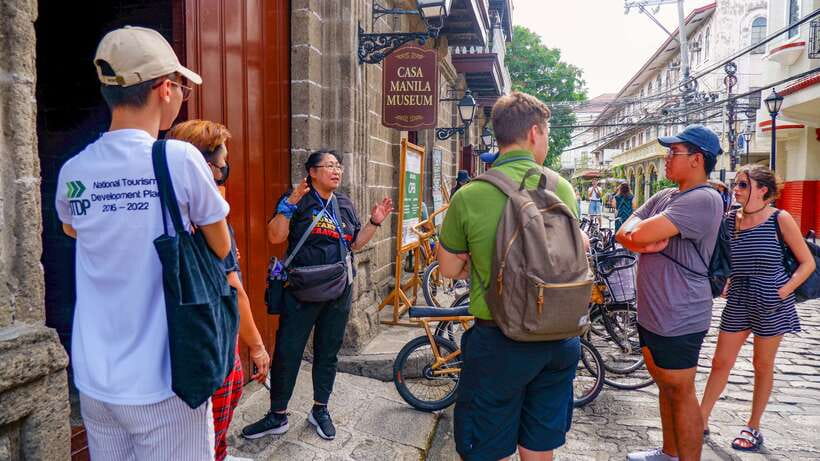
I would choose this tour if you are visiting Manila for the first time and want more than the standard monuments. It suits people who like to walk, sample unfamiliar food, ask questions, and use local transport with a guide nearby.
Families can enjoy the variety, especially if everyone is comfortable with heat and a busy route. The transport changes, food tastings, and bamboo bike keep the day from feeling like one long museum visit. A private group may be worth considering if you need more control over pace.
This is also a good choice for a short Manila stop. If you have only one free day, it gives you a broad introduction without forcing you to plan several districts yourself.
I would hesitate if you have limited mobility, do not enjoy crowded markets, or want a quiet food experience. The tour involves substantial walking, and the timetable leaves little room to linger at every stop. Bring water, use the planned breaks, and wear shoes that can handle uneven urban surfaces.
Booking details worth knowing
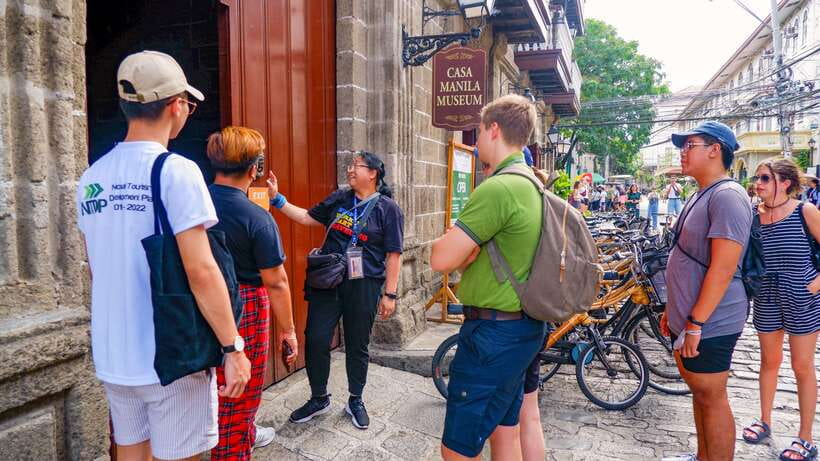
Meet in front of Quinta Market at 9:00 a.m. The tour lasts about six hours and ends near Casa Manila. Times are approximate, so leave flexibility around the finish.
The live guide speaks English. A private group option is available. You can cancel up to 24 hours ahead for a full refund, and reserve now while paying later, which helps if your Manila plans are still shifting.
The tour lists a passport or identity card as required, with a copy accepted. Drinks are not included. The activity is not suitable for people with mobility impairments.
Should you book the Quiapo, Binondo, and Intramuros tour?
Book it if you want a lively, active introduction to Manila that combines street food and local transport with the old walls of Intramuros. The strongest reasons are the range of experiences, the included tastings and transport, and the guides’ record of keeping a complicated day friendly and well organized.
Skip it if you want a slow food lunch, a private vehicle, or a quiet historical tour. For most first-time visitors who can manage a hot six-hour day on foot, $58 buys a useful and unusually varied introduction to the city.
FAQ
Where does the Manila walking tour start?
It starts in front of Quinta Market. The scheduled meeting time is 9:00 a.m.
How long does the tour last?
The tour lasts about six hours. The listed schedule runs from 9:00 a.m. until about 2:30 p.m., though times are approximate.
Which areas does the tour visit?
The route includes Quiapo Market, Binondo Chinatown, and Intramuros. It begins at Quinta Market and ends near Casa Manila.
What food is included?
Food tastings are included. The experience description lists dumplings, hopia, fruits, desserts, and other local favorites, though the exact selection can vary. Drinks are not included.
Is transportation included?
Yes. Transportation to the sites is included. The main description highlights a jeepney ride, while the detailed schedule mentions a tuk-tuk. Some past departures have also used other local transport.
Is the bamboo bike included?
Yes. Bike use and the Intramuros bike tour are included in the price.
What language is the tour conducted in?
The live tour guide speaks English.
Is the tour suitable for people with mobility impairments?
No. The activity is listed as unsuitable for people with mobility impairments. It also involves considerable walking, crowded markets, and bicycle riding.
What should I bring?
Bring a hat, water, comfortable clothing, and a passport or identity card. A copy of the passport or ID is accepted.
Just added around Manila
- MANILA: HISTORICAL KALESA RIDE TOUR EXPERIENCE IN INTRAMUROS★ 4.0 · 3 reviews
- Makati Street food walking tour with Dinner★ 5.0 · 3 reviews
- Philippines Intro 3 days 2 nights Tour Best of Manila and Beyond★ 5.0 · 3 reviews
- Bites and Sights: Tagaytay Food and Nature Excursion from Manila★ 4.0 · 3 reviews
- Authentic Manila Chinatown Food Tour Exploration★ 5.0 · 3 reviews
- 4 Day Banaue Ifugao Rice Villages Private tour Trekking★ 4.5 · 3 reviews
- Embark on a 7-Day Banaue-Sagada Adventure of a Lifetime★ 5.0 · 3 reviews
- From Manila: Philippines Private Tour Guide★ 4.1 · 3 reviews
Manila Tours, compared.
Intramuros, Manila: Historical Bamboo Bike Tour
Read our review →
Experience Intramuros with Bamboo Bicycle – Ecotours
Read our review →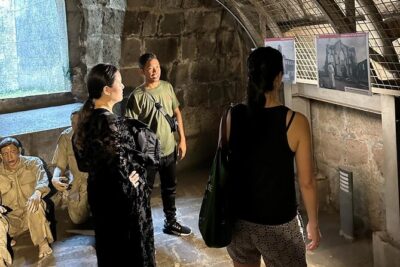
Manila: Intramuros, Chinatown, and Old Manila Half-Day Tour
Read our review →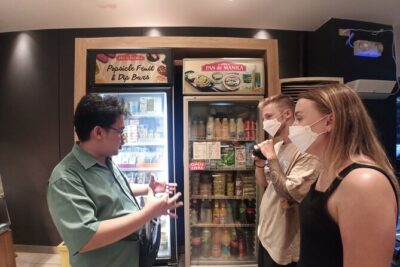
Manila Food Tour: Introduction to Philippine Street Food
Read our review →
Spectacular Manila to Tagaytay: Full-Day Sightseeing Tour
Read our review →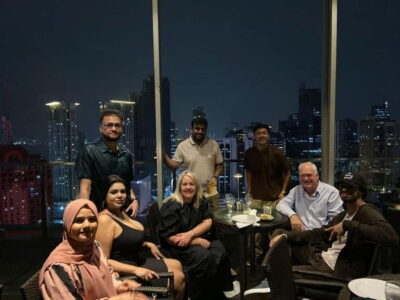
Makati Nightlife: VIP Access to Clubs, Rooftops & Go-Go Bars
Read our review →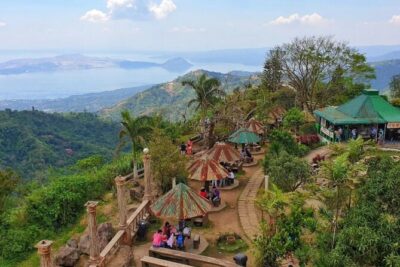
Discover Tagaytay’s Countryside: Half-Day Sightseeing Tour
Read our review →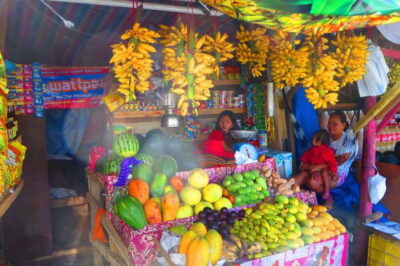
From Manila: Tagaytay Countryside Wonders: A Half-Day Tour
Read our review →Browse the lists this tour appears in