
Reviewed · TUK-TUKS
The Jeepney & Tuk Tuk Adventure ride with Local Guide
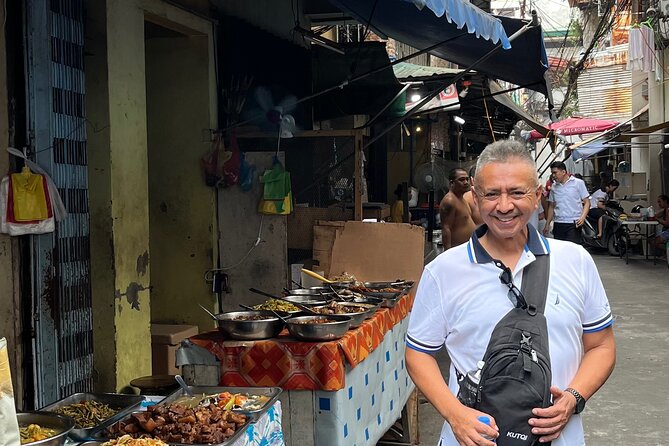
Manila reveals itself best from street level, and this jeepney and tuk-tuk ride puts you right in the middle of daily city life. You move through local neighborhoods, visit the busy Divisoria district, and see how people shop, work, eat, and get around. It is less about famous monuments and more about the ordinary scenes that give Manila its character.
I like two things here. First, you use the same types of transport that many locals rely on, rather than watching the city pass from a private vehicle. Second, the guide can help you handle the narrow market streets, local food, and busy traffic without having to work out every detail alone. The main drawback is clear: there is a lot of walking, and the route is not fully wheelchair-friendly.
Key points at a glance
- Jeepneys and tuk-tuks: Ride two familiar forms of local transport instead of seeing Manila only from a tourist vehicle.
- Divisoria market: Walk through one of Manila’s best-known shopping areas, with produce, seafood, goods, food stalls, and narrow lanes.
- Local neighborhoods: See colorful housing areas and everyday community life beyond the main tourist sights.
- Small-group format: The maximum group size is 10, which should make it easier to hear the guide and ask questions.
- Two-hour outing: The short duration works well as a first look at Manila or as a compact addition to a busy city schedule.
- Walking matters: Comfortable shoes are important, and the experience is not a good fit for anyone who cannot manage extended walking.
Why local transport changes the way you see Manila
A ride in a jeepney or tuk-tuk is not just a way to get from one stop to another. It changes your view of the city. You hear traffic, watch people move through the streets, and see shops and homes at close range. You also get a more direct sense of how local transport fits into daily routines.
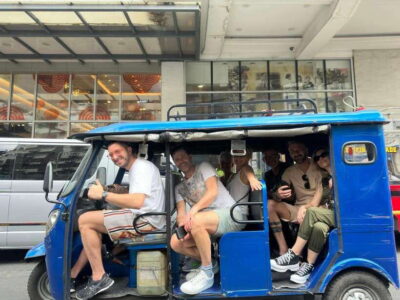
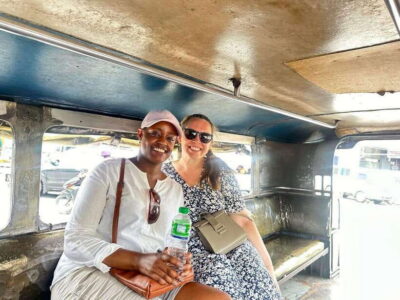
The experience uses jeepneys and tricycles, described in the tour material as tuk-tuks. These are iconic Manila vehicles, and they offer a more grounded view than a standard sightseeing bus. You are not simply passing the city behind glass. You are moving through it at street level, with the noise, congestion, and quick changes that come with it.
That can be exciting, but it is not polished sightseeing. Roads may be crowded, the ride may feel basic, and the surroundings can change quickly. If you want air-conditioning, a set route, and long stops at major landmarks, this is probably not your ideal outing. If you want to understand how Manila feels between the postcard views, the local transport is one of the strongest parts of the experience.
The tour lasts about two hours. That gives you enough time to see several sides of the city without taking up a full day. It also means the route has to move at a fair pace. You should expect a compact introduction rather than a slow, exhaustive market visit.
A few more Luzon day trips to weigh up
- Discover the Real Manila with Tuktuk and Jeepney
★ 5.0 · 12 reviews - Manila: Guided Tuk Tuk Ride
★ 4.8 · 57 reviews - Manila Tuktuk and Jeepney Ride Guided Tour
★ 4.9 · 16 reviews
Starting in Binondo at 1919 Grand Cafe
The meeting point is 1919 Grand Cafe, 117 Juan Luna Street, Binondo, in Manila. The activity returns to the same point at the end, which makes the start and finish easy to plan around. The location is near public transportation, another useful detail if you are arranging the rest of your day independently.
Starting in Binondo places you in one of Manila’s active central districts from the beginning. You do not spend the first part of the experience driving out to the city. Instead, you begin close to streets filled with commerce, food, and local movement.
You should arrive ready to walk soon after meeting the guide. This is not a sit-down introduction followed by a long vehicle ride. The walking tour is part of the main experience, and the guide helps connect the transport rides with the streets and markets around them.
A small group can make this opening easier. With no more than 10 people, you should have a better chance of hearing explanations in a crowded area and asking for help when the route becomes confusing. The guide’s role matters here, since narrow streets and busy market areas are much easier to handle with someone who knows the setting.
Divisoria market and the sounds of daily trade
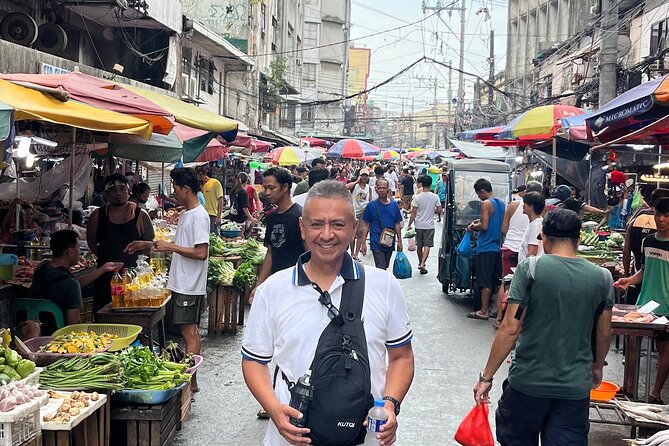
The main attraction is Divisoria, a famous Manila shopping district known for low prices and a wide range of goods. It is a place for shopping, food, and local trade, not a staged cultural display. You will see people moving through narrow lanes, comparing prices, buying supplies, and carrying goods through the market.
The wet-market side brings you closer to everyday food shopping. Fresh produce and seafood are part of the scene, along with other goods sold in the surrounding streets. The market can feel crowded and intense, so keep your belongings secure and stay aware of where the group is moving.
This is also where the guide can add real value. Divisoria is not the kind of place where a visitor can always understand what is happening at a glance. A guide can help explain what you are seeing, point out food and shopping areas, and make it easier to interact politely with local people.
Street food is part of the experience, but snacks are not included. You may have chances to sample something during the outing, but you should plan to pay for anything you eat yourself. That arrangement is useful because it lets you choose instead of receiving a fixed food package, though it means you should carry some spending money.
The food side of Divisoria may appeal to you if you like trying local dishes in ordinary settings. It may be less comfortable if you prefer carefully selected restaurants or have strict dietary needs. The available food is not specified, so ask the guide before buying anything if you need to avoid particular ingredients.
Neighborhood streets beyond the shopping district
The route is not limited to market stalls. It also passes through colorful housing areas where you can see the close-knit feel of Manila neighborhoods. These streets offer a different view from Divisoria’s commercial energy, showing how shops, homes, transport, and community life sit close together.
You might notice the resilience of residents in the way these areas are used and maintained. The value of this part of the tour is not a list of famous sights. It is the chance to look at Manila as a living city rather than a collection of visitor attractions.
The tour information also points to historical sites and lesser-known corners along the way. Since the exact stops are not listed, you should not book this expecting a fixed checklist of named monuments. The route appears to focus on local streets, market areas, and the guide’s view of what is worth seeing during the two-hour window.
That flexibility can be a strength. A local guide may adjust the walk around street conditions and the group’s pace. It can also be a limitation if you want a tightly defined itinerary. Ask at the start what the guide plans to cover, especially if you have one particular market area or historic site in mind.
Same island, a completely different kind of day:
- Manila Old and New: Sightseeing Tour Including Intramuros and Fort Santiago
★ 4.5 · 377 reviews - Manila’s Walled City: Intramuros Walking Tour
★ 5.0 · 82 reviews - Manila Filipino Cooking Class: Meryenda Favorites
★ 5.0 · 80 reviews - Batad Guided Tour
★ 5.0 · 78 reviews
What the walking portion really requires
The walking is not a minor add-on. One customer needed an alternative arrangement because the amount of walking was difficult, and the guide was able to help. That suggests some flexibility in practice, but you should still treat the outing as a walking tour first and a vehicle ride second.
The experience is not wheelchair-friendly. It is also not fully suitable for people with limited mobility. Narrow market lanes, uneven surfaces, crowds, and the need to move between transport and walking sections can make the route difficult. If you use a wheelchair or have mobility concerns, contact the provider before booking rather than relying on an adjustment on the day.
For everyone else, wear sturdy shoes and bring water. One bottle of water is included, but you may want more in warm weather. The tour does not include snacks, so a small amount of cash can be useful for food or market purchases.
You should also dress for a warm, active city outing. The supplied details do not specify a dress code or weather plan, so keep your clothing practical and comfortable. A small bag is easier to manage in crowded streets than a large daypack.
Is $50 a fair price for two hours?
At $50 per person, this is not the cheapest way to take local transport in Manila. You are paying for more than the rides themselves. The price includes a local guide, the walking tour, and bottled water, along with the convenience of having the market and neighborhood experience organized for you.
The value depends on what you want from the outing. If your goal is simply to ride a jeepney or tuk-tuk, you could spend far less by using public transport independently. If you want help making sense of Divisoria, moving through unfamiliar streets, and connecting the transport with local culture, the guide may justify the higher price.
The maximum group size of 10 also matters. This is not a private tour, but it is smaller than a large coach group. You should have a more personal experience, though the exact group size on your date is not provided.
The two-hour length keeps the total cost from becoming a full-day commitment. I see it as a focused introduction, best combined with your own later exploration of Binondo or other Manila districts. It is less convincing value if you expect a long market visit, a meal, and several major attractions all within the same booking.
How the guide affects the experience
The guide is central to the quality of this tour. Local transport is easy to experience on your own, but interpreting the city is harder. A good guide can explain how the streets work, identify what you are seeing in the market, manage the group through crowded spaces, and help you interact with people in a respectful way.
The available information does not give the guide’s name, so you cannot select a specific person in advance. You can expect a local tour guide, but the exact personality and depth of explanation may vary.
One useful sign is the guide’s response to mobility problems. An alternative arrangement was made for a participant who struggled with the walking. That does not remove the accessibility limits, but it indicates that speaking up may help the guide adapt part of the experience.
I would ask three questions at the start: how much walking remains, which market areas you will visit, and whether there will be time to buy or sample food. Those answers will help you use the short tour well.
Who will enjoy this Manila outing?
I would recommend it most strongly to first-time visitors who want a quick introduction to everyday Manila. It suits people who enjoy markets, street scenes, local transport, and guided walks more than people who want formal museum visits or landmark photography.
It can also work for returning visitors who have already seen the standard sights and want a closer look at neighborhoods. The route provides a way to see daily routines without having to arrange every jeepney ride and market stop yourself.
Food lovers may enjoy the chance to look at local stalls and eateries, but remember that snacks are extra and no specific tasting menu is promised. Shoppers may like Divisoria’s low-price reputation and wide range of products, though the tour is too short to serve as a serious shopping expedition.
You should think twice if you dislike crowds, have difficulty walking, or want a quiet, comfortable ride. The tour is designed around active streets and local conditions. That is its appeal, but also its challenge.
Booking, cancellation, and practical details
Confirmation is received when you book, and the ticket is mobile, so you do not need a printed voucher according to the supplied details. The activity begins and ends at 1919 Grand Cafe in Binondo, making it simple to plan a nearby meal or continue exploring after the tour.
Free cancellation is available if you cancel at least 24 hours before the local start time. Cancellations made less than 24 hours ahead are not refunded, and changes inside that period are not accepted. Check the local time carefully if you are booking from another country.
The experience has a rating of 4.5 from four reviews. That is a positive early signal, but the sample is small. I would put more weight on the clear practical facts: the local guide, the small maximum group, the market focus, and the significant amount of walking.
Should you book the Jeepney and Tuk Tuk Adventure?
Book this tour if you want a short, active look at real Manila, especially through Divisoria and local neighborhoods. The strongest reasons are the street-level transport, the guide’s help in a complicated market area, and the chance to see parts of city life that a standard sightseeing route may skip.
Skip it if you need wheelchair access, cannot walk comfortably for much of two hours, or want a polished attraction-by-attraction itinerary. At $50, the value comes from guidance and context rather than from the cost of the rides.
For the right person, this is a useful first taste of Manila: busy, practical, social, and very much on the city’s own terms. Wear good shoes, carry modest spending money for food, and keep your expectations focused on local life rather than a long list of grand sights.
FAQ
Where does the Jeepney and Tuk Tuk Adventure start?
It starts at 1919 Grand Cafe, 117 Juan Luna Street, Binondo, Manila, 1006 Metro Manila, Philippines.
Where does the activity end?
The activity ends back at the meeting point at 1919 Grand Cafe.
How long does the tour last?
The experience lasts approximately two hours.
What transport is used?
The tour uses local transportation, including jeepneys and tricycles described as tuk-tuks.
Is a guide included?
Yes. A local tour guide and a walking tour are included.
Is bottled water included?
Yes. One bottle of water is included.
Are snacks included?
No. Snacks are not included, so you pay separately for anything you choose to eat.
How many people can join the tour?
The activity has a maximum of 10 participants.
Is the tour wheelchair accessible?
No. The tour is not fully suitable for wheelchairs and includes substantial walking. An alternative arrangement was made for one participant with mobility difficulties, but you should not assume the full route is wheelchair-friendly.
Can I cancel for a full refund?
Yes, if you cancel at least 24 hours before the experience start time. Cancellations made less than 24 hours before the start are not refunded, and changes within that period are not accepted.
Just added around Luzon
- Private Airport Transfer Manila to Hotel in Manila or vice versa★ 5.0 · 3 reviews
- Pagsanjan Falls Adventure with Lunch and Rapids Experience★ 4.5 · 3 reviews
- Manila Food Tour Experience with Local Guide★ 5.0 · 4 reviews
- Angeles City / Clark Airport to La Union (Bauang, San Fernando, San Juan)★ 3.5 · 4 reviews
- Sagada and Banaue Rice Terraces 4-Day Tour★ 5.0 · 4 reviews
- The Oldest Chinatown in Manila with Local Guide★ 5.0 · 4 reviews
- Manila Social and Political Walk★ 5.0 · 4 reviews
- Mt. Pinatubo Day Tour from Manila★ 5.0 · 4 reviews
Tuk-Tuks, compared.

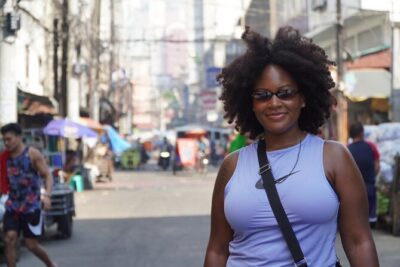
Discover the Real Manila with Tuktuk and Jeepney
Read our review →
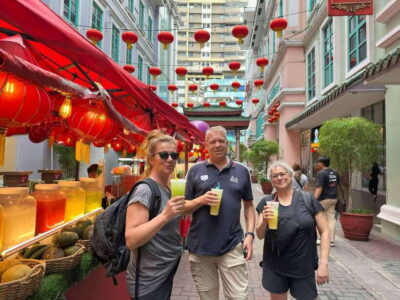
Manila Street Food and Drinks with Tuktuk Experience
Read our review →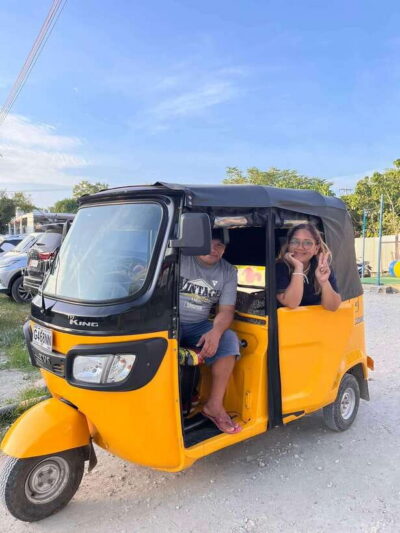
Browse the lists this tour appears in