Reviewed · GUIDED
The Oldest Chinatown in Manila with Local Guide
Binondo is Manila at full volume: Chinese temples, food stalls, old shops, jeepneys, and market lanes all packed into a small part of the city. With Venus, also called V, you explore one of the world’s oldest Chinatowns through its food and street life rather than from behind a bus window.
I like the personal touch here. Venus takes you to food stalls and local eateries, and the experience can include jeepney and tricycle rides. I also like that the tour connects Binondo with Divisoria, giving you both cultural context and a look at Manila’s bargain-shopping center.
The main drawback is the short two-hour schedule. Binondo and Divisoria can easily fill a whole day, so this tour gives you a lively introduction rather than a slow, thorough exploration. The exact food included is not clearly stated, so confirm that before booking if meals are central to your plans.
Key points to know before you book
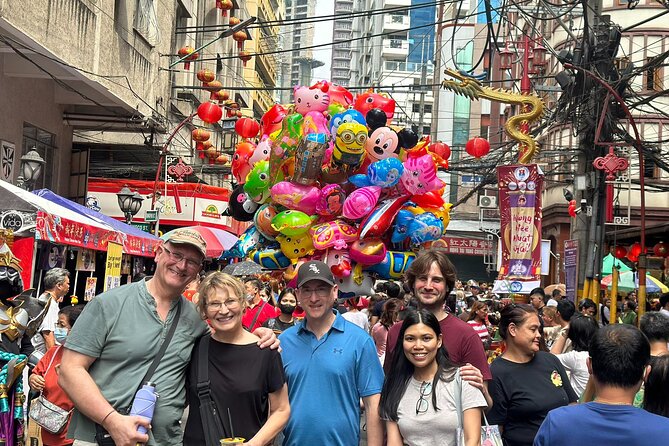
- Venus leads the walk: You explore with a local guide who knows the food stalls, streets, and transport options.
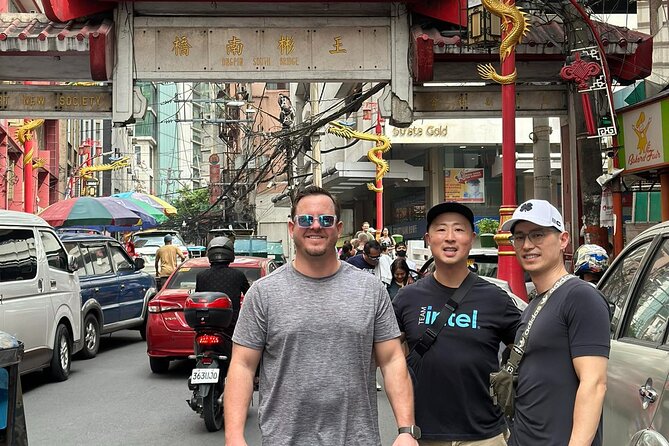
- Binondo is the main attraction: Chinese temples, markets, shops, and Filipino-Chinese food come together in Manila’s oldest Chinatown district.
- Divisoria adds bargain shopping: The second hour takes you through a market known for low prices on clothing, accessories, home goods, and electronics.
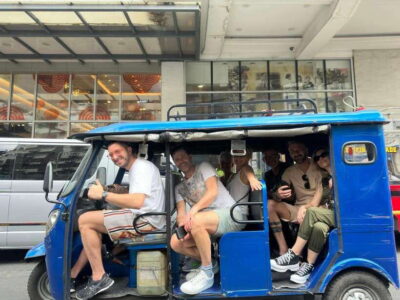
- Local transport may be part of the fun: Previous outings with V included jeepneys and tricycles, giving the experience a distinctly Manila feel.
- Small groups keep it personal: The maximum is 10 people, a useful size for narrow streets and food stops.
- The price is $55 per person: That can be good value if food guidance, local transport, and personal attention matter to you, but check exactly what is included.
Why Binondo is worth your time
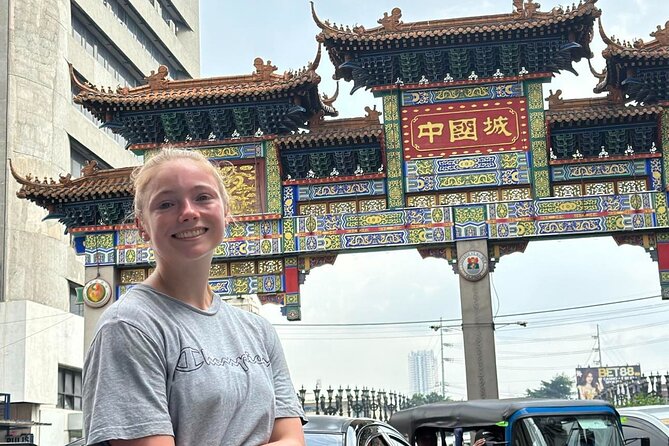
Binondo is not a polished heritage quarter built only for sightseeing. It is a working Manila district where Chinese and Filipino traditions meet in ordinary daily life. You see that mix in the food, religious buildings, shop signs, market traffic, and family-run businesses.
The area is often described as Manila’s Chinatown and one of the oldest Chinatowns in the world. That label matters because the district is not just a place to eat noodles or buy inexpensive goods. It reflects centuries of Chinese influence in Manila, shaped over time by Filipino customs and Spanish colonial rule.
I like this kind of introduction to a city because it gives you several ways in. You can pay attention to the buildings, ask about local history, focus on food, or simply watch how people move through the streets. Venus helps connect those pieces, which is useful if you would otherwise see Binondo as a confusing collection of crowded lanes.
The walking format also suits the district. Cars can pass through major roads, but the smaller streets, stalls, temples, and shopfronts are better understood on foot. You get close to the details, and you can stop when something catches your eye.
A few more Luzon day trips to weigh up
- Batad Guided Tour
★ 5.0 · 78 reviews - The Hidden Gems of Manila Guided Tour
★ 5.0 · 42 reviews - Manila Intramuros Walking tour with Local Tour Guide
★ 5.0 · 33 reviews
A food-focused walk through Chinese-Filipino Manila
Food is one of the strongest reasons to choose this experience. The focus is not simply on famous restaurants. Venus takes you toward stalls and eateries that show how Chinese and Filipino cooking have shaped each other.
The available information does not name specific dishes, so you should not book expecting a fixed tasting menu. Instead, think of this as a guided introduction to the area’s food culture. You may sample Chinese-Filipino flavors at selected stops, with Venus helping you understand what you are eating and how the local food scene developed.
That distinction is important. A food tour with a printed menu and several guaranteed courses offers predictability. This experience appears more flexible and street-focused. I prefer that style when I want to see how a neighborhood eats in daily life, but you may prefer a formal restaurant tour if you have allergies, strict dietary needs, or a strong preference for set portions.
The food is also tied to memory and place. V has been praised for taking people to stops that reminded them of childhood, which suggests that her choices are personal rather than generic. She also knows how to keep the afternoon social and easygoing, adding suggestions for bars and nightclubs for those who want to continue exploring Manila after the walk.
Before the tour begins, ask what food and drinks are covered by the $55 price. The description promises food stops, but it does not clearly spell out whether tastings are included or paid separately. That small question can make a big difference when comparing value.
Binondo’s temples, shops, and street life
The first hour centers on Binondo. You can expect a mix of Chinese temples, traditional shops, food businesses, and market activity rather than a neat sequence of isolated monuments.
A guide is especially useful here because the district’s appeal is spread across its streets. The most meaningful details may be a temple tucked beside commercial buildings, a food tradition shaped by both Chinese and Filipino tastes, or a shopping lane that makes little sense until someone explains how it works.
I would treat this part as a neighborhood walk with cultural context. You are not simply checking off landmarks. You are learning how the district functions and how its Chinese heritage has blended with Manila’s wider culture.
The tour also gives you a chance to compare old and new Manila. Traditional religious and commercial life sits beside modern shops and city traffic. That contrast is part of the experience, not a flaw to be edited out.
The pace may feel brisk. One hour is enough to get a first look and sample several aspects of the district, but not enough to explore every temple, street, and restaurant. If you want long photography stops or detailed architectural study, you may wish to return independently.
Divisoria adds a second side of Manila
The second stop is Divisoria Market, a major shopping area known for bargain prices. The goods range from clothing and accessories to home decor and electronics.
Divisoria changes the tone of the experience. Binondo focuses more on food, heritage, and the Chinese-Filipino character of the district. Divisoria is about commerce, crowds, and finding a deal. Even if you do not plan to buy anything, the market shows you another important part of Manila’s daily economy.
I like the pairing because it prevents the tour from feeling one-note. You get culture and food first, then a market where price and practical shopping take center stage. Venus can help you understand how to approach the area, what kinds of goods you might find, and how the market fits into the wider city.
The drawback is that bargain markets are not restful places. You may encounter noise, tight spaces, and a fast pace. The tour description does not promise a specific shopping list, so think of Divisoria as a look at Manila’s market culture rather than a guaranteed place to find a particular product.
You also have only about an hour there. That is enough to browse and get a sense of the district, but not enough for a serious shopping expedition. If you want to compare prices carefully or shop for household goods, plan a separate visit.
Same island, a completely different kind of day:
- Manila Old and New: Sightseeing Tour Including Intramuros and Fort Santiago
★ 4.5 · 377 reviews - Manila’s Walled City: Intramuros Walking Tour
★ 5.0 · 82 reviews - Manila Filipino Cooking Class: Meryenda Favorites
★ 5.0 · 80 reviews - Manila Super Saver: Manila Sightseeing plus Tagaytay Tour with Taal Volcano
★ 4.0 · 75 reviews
Why the jeepney and tricycle rides matter
The walking tour can include local transportation, and the strongest praise for V’s outings centers on rides in jeepneys and tricycles. One outing included two types of tricycle as well as a jeepney, while another included several forms of local transport.
These rides add something a standard food walk cannot. Manila’s public transport is part of the city’s character, and riding it gives you a closer look at how people get around. The vehicles are not included as a themed attraction in the same way as a museum ride. They are part of ordinary city movement, which makes the experience feel more connected to local life.
Still, the exact transport plan may vary. The supplied details do not promise a particular number of rides for every departure, and the tour lasts only about two hours. Ask Venus or the operator what transport is expected on your date and whether any fares are separate.
I would see the rides as a welcome bonus rather than the main reason to book. The heart of the experience is still Binondo’s food and streets. But if you want to do more than walk from one restaurant to another, local transport adds real character.
What the $55 price gets you in practical terms
At $55 per person, this is not the cheapest way to walk around Binondo. You can enter the district and Divisoria without an admission fee, and independent visitors can explore the streets on their own.
The value comes from having Venus organize the route, explain the cultural mix, guide you toward food stops, and help you handle a busy part of Manila. A small group of no more than 10 people is another plus. Narrow streets and food stalls are easier to manage when you are not part of a large tour group.
The price makes the most sense for a first visit. If you are new to Manila, a local guide can save time and reduce the uncertainty of choosing where to eat or how to move between districts. It is also useful if you want a social afternoon with a clear route.
Independent visitors may find less value if they already know Binondo, speak comfortably with local vendors, or want to spend hours shopping. The two-hour limit also means you are paying for a focused introduction, not a full-day exploration.
Food inclusion is the key point to clarify. Since the exact number of tastings and transport fares is not stated, ask before paying. If several food stops and local rides are included, $55 is easier to justify. If you pay separately for most tastings and fares, the guide’s local knowledge and small-group format become the main value.
Meeting points and timing you should note
The experience begins in Tondo, Manila, Metro Manila. It ends at the Samsung Experience Store on the third floor of SM City Manila, on San Marcelino Street near Manila City Hall.
That start and finish are not the same place, so allow time to reach the starting point and plan your next stop from SM Manila. The end point is near Manila City Hall, which can be useful if you are continuing around central Manila, but you should not assume the tour returns you to Tondo.
The listed duration is approximately two hours, with about one hour in Binondo and one hour in Divisoria. Because the route involves streets, food stops, and possibly public transport, keep your schedule flexible around the stated finish.
Confirmation is provided when you book, and the ticket is mobile. The tour is near public transportation, and most people can participate. The maximum group size is 10, which should make it easier to hear the guide and move through crowded areas.
The cancellation terms are straightforward: you can receive a full refund if you cancel at least 24 hours before the start time. Cancellations or changes made within 24 hours are not refunded or accepted.
Who will enjoy this Manila Chinatown experience

I would recommend this tour to you if you want a quick, food-centered introduction to Manila and prefer local streets to formal sightseeing. It suits first-time visitors who want someone else to handle the route and point out what matters.
It is also a good match if you enjoy trying unfamiliar food, watching everyday city life, and using local transport. The combination of Chinese-Filipino food, temples, markets, jeepneys, and tricycles gives you several distinct impressions in a short time.
Families and small groups may like the capped group size, though the busy market setting may be tiring for anyone who dislikes crowds. Most people can participate, but the activity is still a walking experience through active commercial streets, so it is wise to consider your comfort with that setting.
I would be more cautious if you need a fully structured meal, detailed accessibility information, or a long historical lecture. The available details do not specify a fixed menu, exact walking distance, or accessibility arrangements. Ask the provider directly if any of those points affect your decision.
Should you book it?
Book this experience if you want a compact, guided taste of Binondo and Divisoria rather than a slow day of independent exploration. Venus appears to be the main reason to choose it: she leads you to food stops, adds local context, and can make the city’s transport part of the fun.
The strongest reasons to book are the Chinese-Filipino food focus, the personal guide, and the chance to ride a jeepney or tricycle. The main reasons to hesitate are the short two-hour schedule and unclear details about exactly what food and transport costs are included.
For a first visit to Manila, I think the tour offers a useful starting point. Just confirm the inclusions, arrive ready for crowded streets, and treat the experience as an energetic introduction. You can always return to Binondo later for the temples, restaurants, and shopping stops that deserve more time.
FAQ
How long does the experience last?
The tour lasts approximately two hours. The schedule allows about one hour in Binondo and one hour at Divisoria Market.
How much does the tour cost?
The listed price is $55 per person.
Who guides the tour?
Venus is the named guide. She is also referred to as V in the experience details.
How many people can join?
The group is limited to a maximum of 10 people.
Where does the tour begin?
The meeting point is in Tondo, Manila, Metro Manila, Philippines.
Where does the tour end?
The tour ends at the Samsung Experience Store on the third floor of SM City Manila, on San Marcelino Street near Manila City Hall.
Does the experience include local transportation?
The tour can include local transport, and the experience details refer to jeepney and tricycle rides. Confirm the exact transport plan and any separate fares before booking.
What is the cancellation policy?
You can cancel at least 24 hours before the start time for a full refund. Cancellations or changes made less than 24 hours before the start time are not accepted, and the amount paid is not refunded.
Just added around Luzon
- Private Airport Transfer Manila to Hotel in Manila or vice versa★ 5.0 · 3 reviews
- Pagsanjan Falls Adventure with Lunch and Rapids Experience★ 4.5 · 3 reviews
- The Jeepney & Tuk Tuk Adventure ride with Local Guide★ 4.5 · 4 reviews
- Manila Food Tour Experience with Local Guide★ 5.0 · 4 reviews
- Angeles City / Clark Airport to La Union (Bauang, San Fernando, San Juan)★ 3.5 · 4 reviews
- Sagada and Banaue Rice Terraces 4-Day Tour★ 5.0 · 4 reviews
- Manila Social and Political Walk★ 5.0 · 4 reviews
- Mt. Pinatubo Day Tour from Manila★ 5.0 · 4 reviews
Guided, compared.

Coron: Private Boat Hire with Guided Tour and Lunch on Beach
Read our review →
From Puerto Princesa: Underground River Guided Day Trip
Read our review →

Bohol: Waterfall Hopping & Secret Jungle Trails Guided Tour
Read our review →
Manila: Guided Sunset Bamboo Bike Tour in Intramuros
Read our review →