
Reviewed · INTRAMUROS WALKING TOURS
Manila’s Walled City: Intramuros Walking Tour
Intramuros is where Manila’s long story becomes easy to read. Inside its old stone walls, you’ll move from Fort Santiago and José Rizal’s prison cell to churches, grand houses, war memorials, and streets shaped by Spanish rule. The tour connects Malay, Spanish, American, and Japanese chapters instead of treating the city as a collection of old buildings.
I like the strong storytelling and the useful mix of walking and riding. Guides such as Andre and Ann have been praised for clear English, humor, energy, and an easy pace. I also like that the tour includes Fort Santiago, San Agustin Church, Casa Manila, snacks, water, and a kalesa or tram ride for $35.
The main thing to consider is the heat. Three and a half hours of walking in Manila’s tropical climate can be tiring, and the tour has a moderate amount of walking. Wear light clothing, bring sun protection, and dress properly for churches and museums.
Key points to know before you book
- Fort Santiago anchors the tour: You spend about an hour exploring Intramuros’s main citadel, including its links to José Rizal and the Second World War.
- The history comes in layers: Your guide explains the city before Spanish rule, then follows its development through Spanish, American, and Japanese periods.
- The kalesa or tram adds a welcome change: The ride gives you a broader look at the walled city after time on foot.
- San Agustin Church is a major highlight: This 1607 church is part of the UNESCO-listed Baroque Churches of the Philippines.
- Snacks are simple but local: Bottled water and light refreshments, including treats such as taho and ice cream on some departures, help during the walk.
- The group can reach 30 people: That keeps the cost reasonable, though a larger group may make quiet listening harder in busy areas.
Intramuros is Manila’s old walled quarter, but a quick visit can leave you with only fragments: a fortress here, a church there, a horse-drawn carriage passing by. This half-day tour gives those fragments a clear order.
Over about three hours and 30 minutes, you walk through the district with an English-speaking local guide. The route begins at Fort Santiago and ends at Casa Manila in the Plaza San Luis Complex. Along the way, you see the Manila Cathedral, the Memorare Manila 1945 Monument, and San Agustin Church.
The price is $35 per person. That is fair for a guided visit that includes admission to Fort Santiago, the Rizal Shrine, and Casa Manila, along with bottled water, snacks, and a ride by kalesa or Tranvia tram. You are not simply paying for entry tickets. You are paying for someone to explain why these places matter and how they connect.
Why Intramuros deserves a guided walk
Intramuros can be visited independently, but its meaning is not always obvious from the walls and ruins alone. The district reflects several different periods, and the tour’s value comes from linking them.
You hear about the peoples living in the Philippines before Spanish colonization, then follow Manila’s growth under Spanish control. The story continues through American administration and the destruction caused during the Japanese occupation and the 1945 battle for Manila.
That broad view helps you avoid a common mistake: seeing Intramuros as only a Spanish colonial attraction. The district is also tied to Filipino resistance, the life and death of national hero José Rizal, the devastation of war, and the difficult rebuilding of Manila.
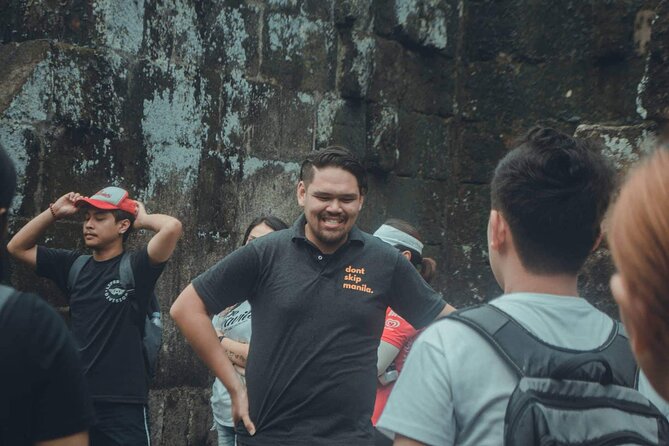
Guides Andre and Ann have been especially associated with warm, energetic presentations. Andre is described as easy to understand, funny, and willing to answer questions. Ann has been praised for her friendly manner, energy, and command of Philippine history. Guide assignments can change, but the experience clearly depends on having a person who can make a long historical story feel human.
More walks through old Manila:
- Manila Old and New: Sightseeing Tour Including Intramuros and Fort Santiago
★ 4.5 · 377 reviews - Express Bamboo Bike Tour inside Intramuros
★ 4.5 · 66 reviews - Manila: Intramuros, Chinatown, and Old Manila Half-Day Tour
★ 5.0 · 37 reviews
Fort Santiago: the tour’s strongest opening
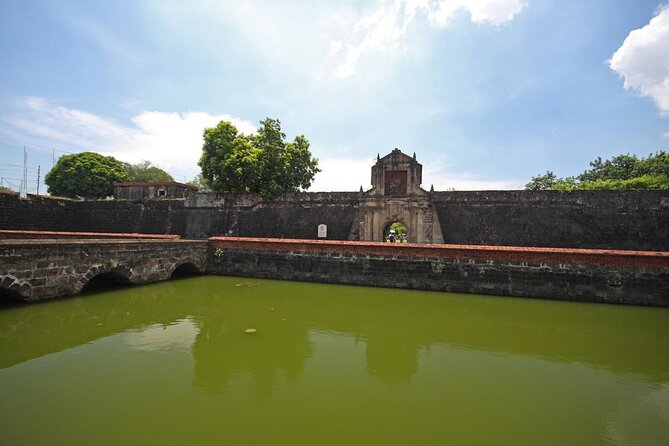
Fort Santiago receives about an hour, making it the most substantial stop. Miguel López de Legazpi first built the citadel for the newly established Spanish city of Manila. Its walls and defensive role introduce the political purpose of Intramuros better than a simple street walk can.
You will have time to look around rather than rush through for a photograph. The fort is also tied closely to José Rizal, whose final days are part of the site’s story. The setting can feel calm today, but the fort’s function was military and its later use as a prison gives it a darker edge.
Fort Santiago is also one of the better places to see how Manila’s location shaped its past. The walled city was built as a seat of Spanish power and defense. Your guide’s explanation helps turn stonework and gates into evidence of how the colonial city operated.
The fort is described as well maintained and visually appealing, with artifacts connected to Rizal and other figures. Allow yourself time to listen and look closely. This is not only a photo stop, and the one-hour allocation gives the guide room to explain the site without racing.
The Rizal Shrine and the story of a national hero
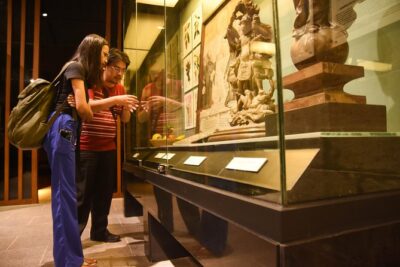
The Rizal Shrine takes about 30 minutes and focuses on José Rizal, who was imprisoned at Fort Santiago before his execution in 1896. The museum contains memorabilia connected with his life.
This stop matters because Rizal is not presented as a distant name on a monument. His imprisonment and execution are part of the political story that shaped Filipino national identity. The guide can place his life within the wider Spanish period and explain why he remains such a central figure.
The museum portion is relatively short, so do not expect a full museum tour. Its value is in the connection between the objects on display and the actual rooms and fort grounds around you. If you have children or teenagers with you, the personal story can provide a more direct entry into Philippine history than dates and political titles alone.
Manila Cathedral and the route through Intramuros
The Manila Cathedral receives about 20 minutes. Officially known as the Minor Basilica and Metropolitan Cathedral of the Immaculate Conception, it is the cathedral of Manila and one of Intramuros’s most important religious buildings.
Admission is free, but appropriate clothing is required for places of worship. Avoid mini-shorts and sleeveless tops. The same advice applies to selected museums on the route, so modest casual clothing is the practical choice for the whole tour.
The short stop is enough to see the cathedral and hear its place in Intramuros, but it is not a long church study. If you are deeply interested in religious architecture, you may want extra time in the area after the tour ends. The official route, however, has several other stops to cover, so the brief visit keeps the group moving.
More walking tours in Luzon:
- Manila Intramuros Walking tour with Local Tour Guide
★ 5.0 · 33 reviews - Intramuros & Chinatown Manila Tour – Walking, Food & Culture
★ 4.5 · 32 reviews - Manila: Binondo Walking Tour ( Oldest Chinatown )
★ 5.0 · 30 reviews - Manila Old & New City Walking Tour With A Guide
★ 4.0 · 9 reviews
A kalesa or Tranvia ride breaks up the walking
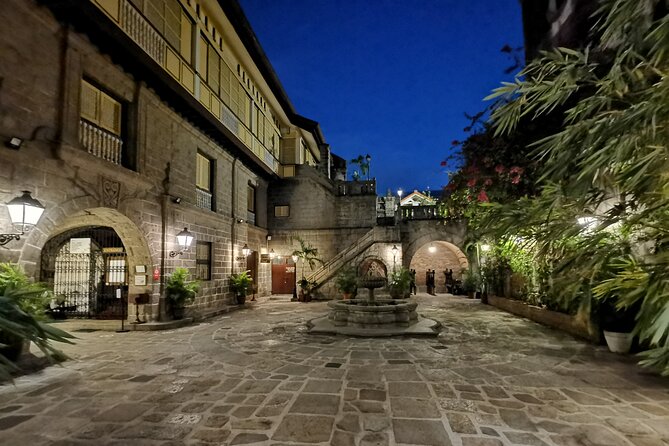
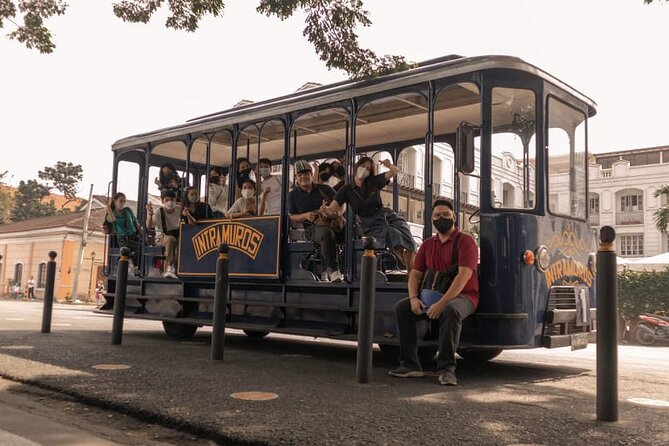
At one point, the tour includes either a kalesa, a traditional horse-drawn carriage, or a Tranvia tram ride around Intramuros. The exact option is not specified in advance, so you should treat this as a planned riding segment rather than expect one particular vehicle.
This is a useful change of pace. After Fort Santiago, the shrine, the cathedral, and the streets between them, sitting back lets you see more of the walled city as a whole. A carriage ride also offers a distinct way to experience the old quarter, while a tram gives the group a simple overview of the district.
The ride is not a substitute for walking. You still need comfortable shoes and enough stamina for a moderate amount of time on foot. But it adds variety and gives you a chance to rest in Manila’s heat.
Memorare Manila 1945: remembering the cost of liberation
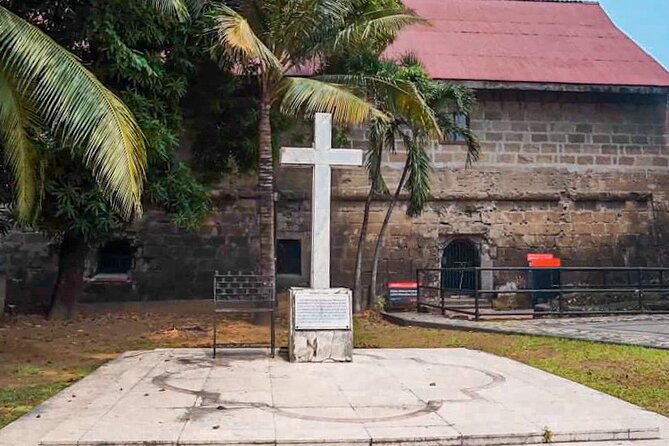
The Memorare Manila 1945 Monument receives about 20 minutes. It commemorates the lives lost during the battle to liberate Manila, fought by Filipino and American forces against Imperial Japanese troops from February 3, 1945.
This stop broadens the tour beyond Spanish architecture. Intramuros is often photographed for its old walls and churches, but the monument points to the destruction and human cost of the Second World War. It also reminds you that the district’s present appearance is linked to a much more recent and painful chapter.
The stop is short, yet it gives the guide a chance to explain why wartime memory matters in Manila. The contrast between colonial buildings and the 1945 story is one of the tour’s most useful features.
San Agustin Church, built in 1607
San Agustin Church receives about 15 minutes. Completed in 1607, it is one of the major churches built during the Spanish colonial period and forms part of the UNESCO World Heritage listing known as the Baroque Churches of the Philippines.
Even with a short visit, this is an important stop. The church helps you understand the role of Catholic institutions in colonial Manila, while its age gives a real sense of how long the Spanish period lasted.
Because it is an active place of worship, dress respectfully and follow any instructions on entry. The tour does not promise a long museum-style examination of every feature, so use the guide’s explanation to focus your attention. You can also return later if you want a slower look at the church.
Casa Manila ends the route with domestic history
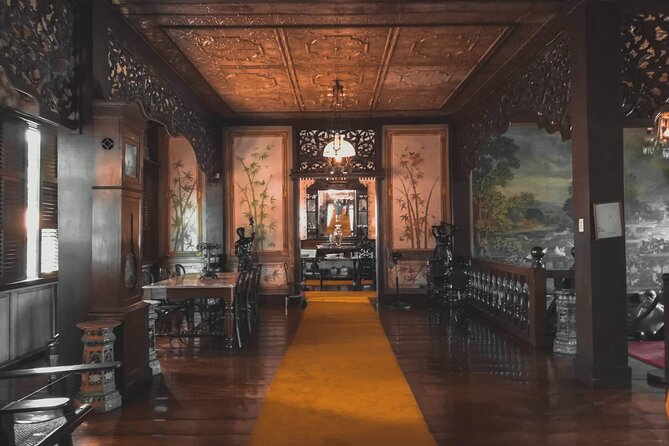
Casa Manila is the final stop and the tour’s endpoint. You spend about 30 minutes in this museum, housed in an imposing stone-and-wood structure dating to around 1850.
The museum presents colonial domestic life during Spanish rule. That makes it a useful counterpoint to Fort Santiago’s military setting and San Agustin’s religious role. Instead of looking only at government, defense, and faith, you get a sense of how an affluent household was arranged.
Casa Manila is part of the Plaza San Luis Complex on General Luna Street. Since the tour ends here, you can plan your next activity from the same general area without needing to return to Fort Santiago. The end point is practical for anyone who wants to continue exploring Intramuros on foot.
How much walking and heat should you expect?
This is a walking tour in a tropical city, not a bus-based sightseeing loop. The activity lasts roughly three and a half hours and includes a moderate amount of walking between the main sites.
I would choose the morning departure if you are sensitive to heat or want more energy for the fort and museums. The afternoon option works well if your Manila schedule is tight earlier in the day, but sunlight and humidity can make the route feel harder.
Wear comfortable clothing and walking shoes. Carry sun protection, and use the bottled water provided. The light snacks are welcome, especially during a longer walk. Some departures have included local treats such as taho and ice cream, though the exact snack selection may vary.
Children can take part if accompanied by an adult. A family with a six-year-old and a teenager found the pace manageable, but every child handles heat and walking differently. The tour may suit families who want history presented through stories, buildings, and a ride rather than through a long museum visit.
Group size, guide style, and the value of $35
The maximum group size is 30 people. That is large enough to keep the price down, but it means the experience may feel less personal than a private tour. In narrow spaces or around busy attractions, you may need to stay close to the guide to hear clearly.
The strongest part of the tour is the guide’s ability to organize a complicated subject. Andre has used a visual aid booklet to help explain the layers of Philippine history, which can be useful when several centuries and political changes come in quick succession.
At $35, the tour offers good value if you want the main Intramuros admissions arranged and prefer not to work out the historical links yourself. Fort Santiago and Casa Manila are included, and the ride plus refreshments add practical value. Tips are not included, so plan to tip separately if you feel the guide has earned it.
The price is less compelling if you only want to stroll the streets or see the churches from outside. You can explore parts of Intramuros independently. The guided explanation is the reason to pay.
Who should book this Intramuros experience?
I would recommend this tour to first-time visitors to Manila, anyone with only a short stay, and people who want a clear introduction to Philippine history. It also suits visitors with Filipino family connections who want a structured look at the city’s past.
Families can benefit from the steady pace and the change from walking to a kalesa or tram. History-minded visitors will appreciate the range of subjects, from pre-colonial life and Spanish rule to Rizal and the Battle of Manila.
You may want another option if you dislike group tours, have difficulty walking in heat, or want to spend a great deal of time inside each church and museum. The route covers many places, so individual stops are sometimes brief.
Free cancellation is available when you cancel at least 24 hours before the start time. Changes made inside that window are not accepted, and the tour can be moved or refunded if poor weather or insufficient bookings cause cancellation.
Should you book the Intramuros walking tour?
Book it if you want context, not just old walls. Fort Santiago, the Rizal Shrine, Manila Cathedral, San Agustin Church, the 1945 memorial, and Casa Manila cover a wide stretch of the city’s story in one organized visit.
The best reasons to go are the engaging English-speaking guides, the sensible mix of sites, and the kalesa or tram ride. Just prepare for heat, moderate walking, and a group that may reach 30 people.
If you have one half-day for historic Manila, this is a strong use of it. If you already know Intramuros well and prefer a slow, independent visit, use the tour as a guide to what you may want to explore on your own instead.
FAQ
How long does the Intramuros walking tour last?
The tour lasts approximately three hours and 30 minutes.
What is the tour price?
The listed price is $35 per person.
What is included in the tour?
The tour includes an English-speaking local guide, bottled water, snacks, admission to selected sites, and a kalesa or Tranvia ride around Intramuros.
Where does the tour begin?
The meeting point is 1 Sta. Clara Street, Intramuros, Manila, 1002 Metro Manila, Philippines.
Where does the tour end?
The tour ends at Casa Manila in the Plaza San Luis Complex on General Luna Street, Intramuros.
Which places are visited?
The route includes Fort Santiago, the Rizal Shrine, Manila Cathedral, the Memorare Manila 1945 Monument, San Agustin Church, and Casa Manila.
Are morning and afternoon departures available?
Yes. You can choose a morning or afternoon departure.
Is the tour suitable for children?
Children may participate, but they must be accompanied by an adult. The child rate applies only when sharing with two paying adults.
What should I wear?
Wear comfortable clothing suitable for a tropical climate. Modest clothing is required for places of worship and selected museums. Mini-shorts and sleeveless tops are not allowed at those locations.
Can I cancel for a refund?
You can cancel at least 24 hours before the experience begins for a full refund. Cancellations or changes made less than 24 hours before the start time are not accepted for a refund.
Just added around Luzon
- Private Airport Transfer Manila to Hotel in Manila or vice versa★ 5.0 · 3 reviews
- Pagsanjan Falls Adventure with Lunch and Rapids Experience★ 4.5 · 3 reviews
- The Jeepney & Tuk Tuk Adventure ride with Local Guide★ 4.5 · 4 reviews
- Manila Food Tour Experience with Local Guide★ 5.0 · 4 reviews
- Angeles City / Clark Airport to La Union (Bauang, San Fernando, San Juan)★ 3.5 · 4 reviews
- Sagada and Banaue Rice Terraces 4-Day Tour★ 5.0 · 4 reviews
- The Oldest Chinatown in Manila with Local Guide★ 5.0 · 4 reviews
- Manila Social and Political Walk★ 5.0 · 4 reviews
Intramuros Walking Tours, compared.

Intramuros, Manila: Historical Bamboo Bike Tour
Read our review →
Experience Intramuros with Bamboo Bicycle – Ecotours
Read our review →
Manila: Intramuros, Chinatown, and Old Manila Half-Day Tour
Read our review →
Manila: Guided Sunset Bamboo Bike Tour in Intramuros
Read our review →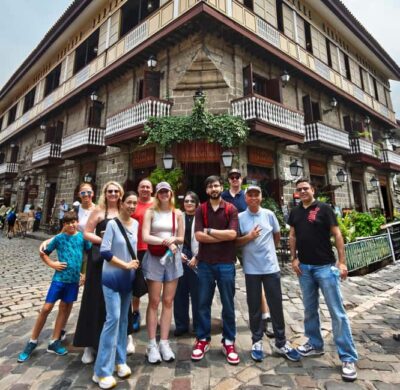
Explore Intramuros: Introduction to Philippine History
Read our review →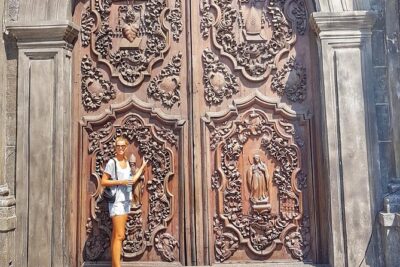
Experience Manila’s Heritage: Intramuros & More in Half a Day!
Read our review →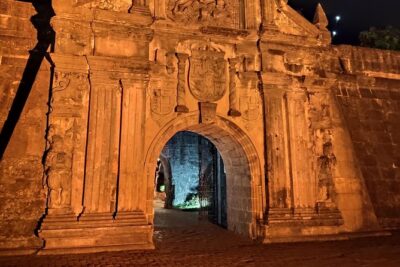
Manila by Night: Discovering City Highlights with Intramuros
Read our review →Browse the lists this tour appears in